US army scraps Ukraine war-inspired drone unit: Putin, Mojtaba laugh as Trump makes huge mistake?
Source Entity
Latest News: Todays Latest News Headlines from India & World | Hindustan Times | Hindustan Times
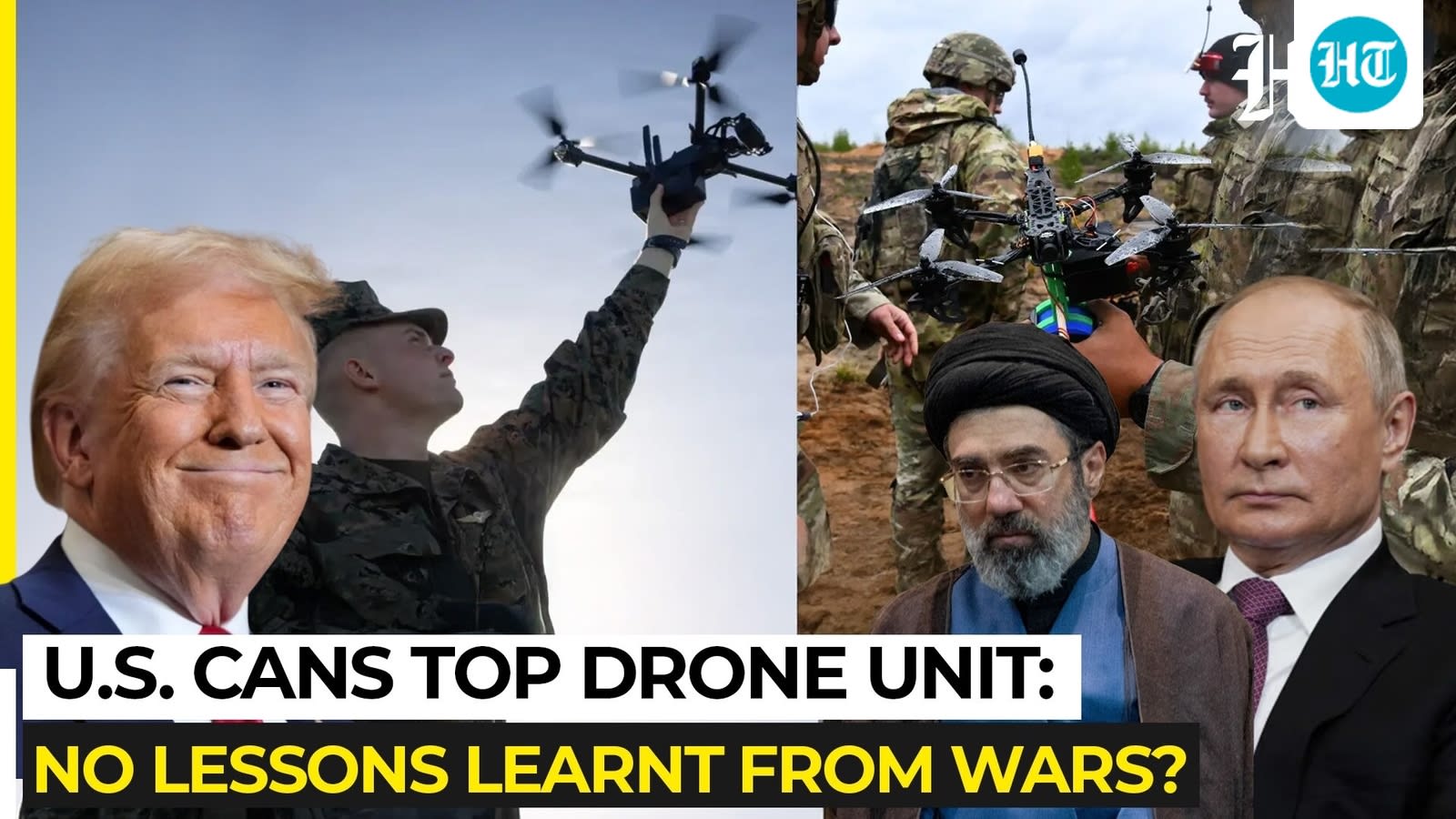
The U.S. Army is dissolving its experimental 3rd Battalion, 504th Parachute Infantry Regiment drone unit to return to conventional operations. This shift toward a 'back-to-basics' approach has sparked debate regarding the future of specialized drone warfare expertise.
The Shift in U.S. Army Drone Strategy
The U.S. Army has announced a significant pivot in its tactical structure, confirming that the 3rd Battalion, 504th Parachute Infantry Regiment will conclude its experimental mission focused on drone and robot integration. Originally established to synthesize the rapidly evolving lessons from the ongoing conflict in Ukraine, this unit served as a critical testbed for how small-scale unmanned systems could alter the battlefield. Following the completion of the Saber Junction exercise in Germany, the 600-soldier battalion will revert to its traditional role as a conventional airborne infantry unit.
The 'Back-to-Basics' Mandate
This strategic redirection is being orchestrated under the guidance of acting Army Chief of Staff Gen. Christopher LaNeve. The 'back-to-basics' approach signals a desire to stabilize conventional force readiness within the 82nd Airborne Division's framework. While the battalion successfully integrated loitering munitions and ground robots into its training maneuvers, the Army has determined that the data gathered is now sufficient to inform broader, service-wide institutional changes rather than requiring a single dedicated experimental formation.
Institutionalizing Lessons Learned
By dissolving the specialized unit, the Army aims to distribute the knowledge gained during the experiment across the wider force. The challenge, however, lies in whether a decentralized model can effectively replicate the deep, concentrated expertise developed by a unit solely focused on drone operations. Critics of the move argue that by returning to conventional training, the Army risks losing the nuanced operational 'know-how' that only a dedicated, specialized unit can maintain in a rapidly changing technological landscape.
The Shadow of Modern Conflict
The urgency behind this experiment was largely driven by the war in Ukraine, where the proliferation of cheap, commercial off-the-shelf drones has forced military powers worldwide to reconsider traditional infantry tactics. Loitering munitions have become a fixture of modern combat, effectively turning every soldier into a potential sensor or strike operator. The 3rd Battalion’s work provided a glimpse into how U.S. forces might fight in high-intensity, peer-to-peer conflicts where drone density is high and air superiority is contested.
Future Implications for Drone Warfare
While the U.S. Army maintains that it is not abandoning drones, the decision to fold these capabilities back into conventional units will be closely monitored. If the transition results in a dilution of drone proficiency, the Army may face pressure to re-establish specialized formations. Conversely, if the integration proves successful, it could set a precedent for how the U.S. military embeds autonomous systems into every echelon of its infantry, effectively normalizing the presence of robots on the modern battlefield.
Verification Required?