U.S. auto industry races to purge Chinese connected-car hardware amid federal push
Source Entity
Yahoo Finance
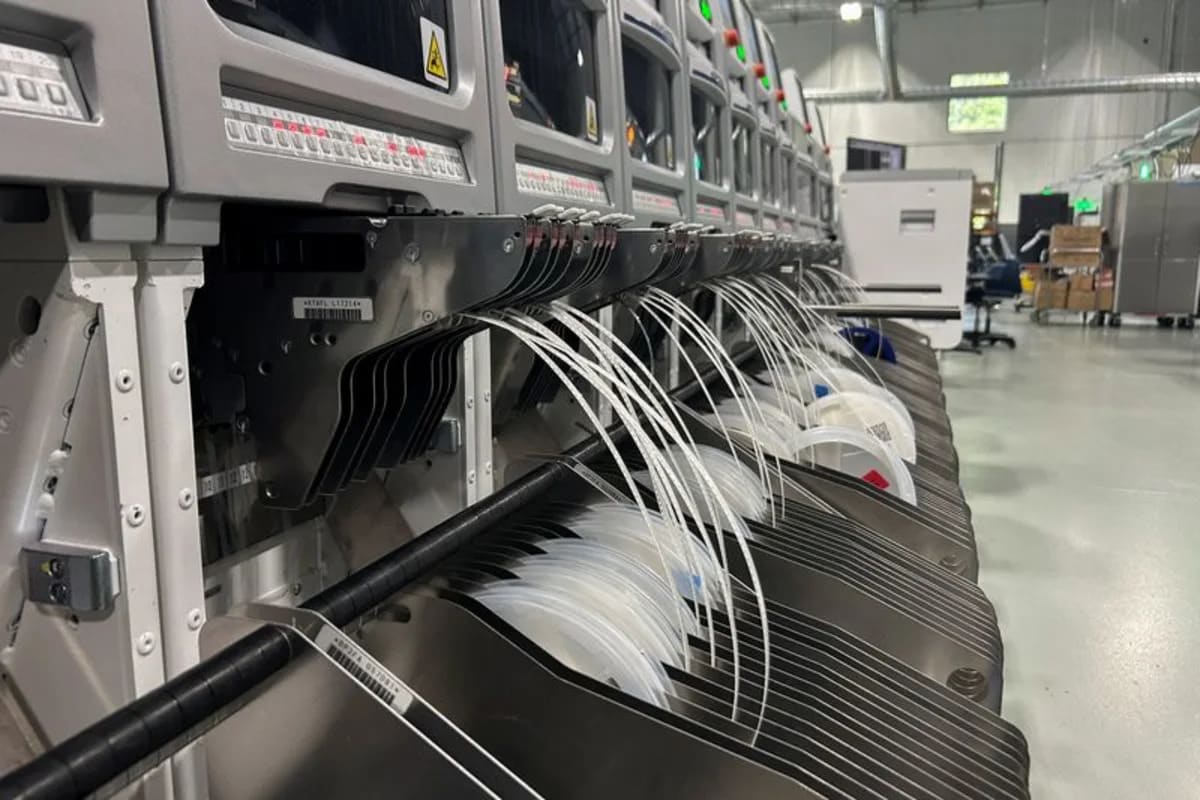
The U.S. auto industry is aggressively pivoting to localize supply chains for connected-car hardware to comply with new federal bans on Chinese technology. Companies like Eagle Wireless are scaling production to fill the void as automakers prepare for upcoming regulatory deadlines.
The Strategic Pivot: Rebuilding U.S. Connected-Car Supply Chains
As the global automotive landscape undergoes a rapid transformation toward electrification and software-defined vehicles, a critical supply-chain shift is underway in the United States. A facility in Solon, Ohio, operated by Eagle Wireless, has emerged as a focal point for this transition. By focusing on the production of vehicle modules, the company is positioning itself as a vital domestic alternative to the Chinese hardware that has long dominated the global market for connected-car components.
Regulatory Drivers and Industrial Response
The impetus for this industrial pivot is a federal mandate aimed at securing the U.S. automotive ecosystem. By the end of the decade, new regulations will prohibit the use of specific Chinese software and hardware within connected vehicles sold in the United States. This policy shift is designed to mitigate national security concerns regarding data privacy and infrastructure integrity, forcing automakers to fundamentally rethink their procurement strategies and move away from long-standing dependencies on Chinese suppliers.
The Rise of Domestic Manufacturing
Eagle Wireless, established in late 2025, serves as a prime example of the private sector aligning with federal national security objectives. President TJ Dembinski has identified a 'massive opportunity' in the wake of these regulations, acknowledging that while the transition away from Chinese-dominated modules is challenging, it is a necessary evolution for the domestic industry. The company’s rapid scaling of circuit board production reflects the broader 'mad dash' currently occurring across the U.S. auto sector to ensure compliance before the regulatory deadlines take effect.
Challenges in Supply Chain Diversification
Moving away from established Chinese supply chains is an immense logistical and technical undertaking. The complexity of modern vehicle connectivity requires high-performance hardware that has historically been cost-effective and readily available from overseas manufacturers. Domestic firms must now prove that they can replicate these manufacturing efficiencies at scale, ensuring that the transition does not compromise vehicle performance, safety, or price points for the end consumer.
Broader Implications for the Auto Industry
This shift represents a significant move toward industrial protectionism and regionalized manufacturing. By fostering domestic production of critical electronic modules, the United States is attempting to insulate its auto industry from geopolitical volatility. However, the success of this strategy hinges on the ability of newcomers and existing suppliers to rapidly increase technical capacity and meet the stringent quality standards required by automotive OEMs.
Future Outlook and Strategic Trends
Looking ahead, the next several years will be defined by a race to replace legacy hardware components. As the 2030 deadline approaches, we can expect to see increased investment in domestic electronics manufacturing and a re-evaluation of global automotive supply networks. The ability of companies like Eagle Wireless to successfully navigate this transition will be a key indicator of whether the U.S. can effectively decouple its critical automotive infrastructure from foreign influence while maintaining competitive market standards.