China Aggressively Patrols Disputed Waters. Now the U.S. Coast Guard Is Moving In.
Source Entity
Latest News: Today's Latest News Headlines from India & World | Hindustan Times | Hindustan Times
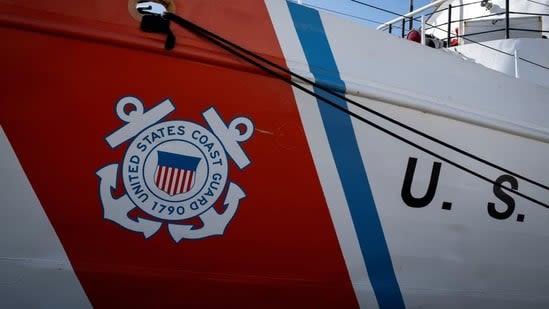
The U.S. Coast Guard is redeploying ships from the Middle East to the Pacific to counter China's aggressive maritime patrols and assertions of power in disputed waters.
Strategic Pivot: U.S. Coast Guard Shifts Focus to the Pacific
The decision to redeploy U.S. Coast Guard (USCG) assets from the Middle East to the Pacific represents a significant shift in American maritime strategy. For decades, U.S. naval and coast guard resources were heavily concentrated in the Middle East to ensure the flow of oil and maintain regional stability. However, the escalating tensions in the Indo-Pacific, specifically regarding China's territorial claims, have necessitated a 'pivot' in resource allocation. By moving ships from a region where stability has reached a relative plateau to one where tensions are actively spiking, the U.S. is signaling that the Pacific is now its primary theater of strategic competition.
The Role of the Coast Guard in 'Gray Zone' Warfare
One of the most critical aspects of this deployment is the choice of the Coast Guard over the U.S. Navy. China frequently employs a strategy known as 'gray zone' warfare—actions that fall below the threshold of open conflict but are designed to achieve strategic gains. Beijing uses its own Coast Guard and a state-backed 'maritime militia' to harass fishing vessels and oil exploration ships from neighboring countries, effectively asserting control over disputed waters without triggering a full-scale military response. By deploying USCG cutters, the United States can challenge these actions using a law enforcement framework rather than a purely military one, reducing the risk of immediate escalation while still providing a visible deterrent.
Countering Beijing's Maritime Assertions
China's aggressive patrolling is largely centered around its expansive and internationally contested claims in the South China Sea, often delineated by the 'Nine-Dash Line.' Beijing has spent years constructing artificial islands and militarizing them to project power far from its mainland. The arrival of more U.S. Coast Guard ships serves to support regional allies, such as the Philippines and Vietnam, who have faced increasing pressure from Chinese vessels. These USCG assets are not merely for patrol; they provide training, joint exercises, and a physical presence that reinforces the principle of 'Freedom of Navigation' (FONOPs), challenging the notion that these international waters belong exclusively to China.
Implications of the Middle East Drawdown
Moving ships out of the Middle East is not without risk. It suggests a calculated bet by U.S. strategists that the security architecture in the Persian Gulf and Red Sea is currently stable enough—or manageable via other means—to allow for this reallocation. This transition reflects a broader geopolitical trend where the U.S. is moving away from the 'Global Policeman' role in the Middle East to focus on 'Great Power Competition' with China. The reallocation of these ships is a tangible manifestation of this policy shift, prioritizing the Indo-Pacific as the most critical region for 21st-century global security and trade.
Future Trends and Potential Escalation
Looking ahead, the Pacific is likely to see an increase in 'cat-and-mouse' encounters between the USCG and the Chinese Coast Guard. As the U.S. increases its presence, Beijing may respond by further expanding its maritime militia or implementing more restrictive zones. We can expect a trend toward increased multilateral maritime cooperation, where the U.S. coordinates more closely with Quad members (Japan, India, and Australia) to create a networked deterrent. The danger remains that a tactical miscalculation during a high-tension encounter between coast guard vessels could spark a larger diplomatic or military crisis.
Summary
In conclusion, the movement of U.S. Coast Guard ships from the Middle East to the Pacific is a strategic adaptation to China's aggressive maritime expansion. By utilizing law enforcement vessels to counter 'gray zone' tactics, the U.S. aims to stabilize disputed waters and support its Pacific allies without immediately escalating to full-scale naval warfare. This move underscores the Indo-Pacific's status as the central arena of modern geopolitical struggle.
Verification Required?