US Court Blocks Trump's Newest Order Limiting Birthright Citizenship
Source Entity
NDTV News Search Records Found 1000
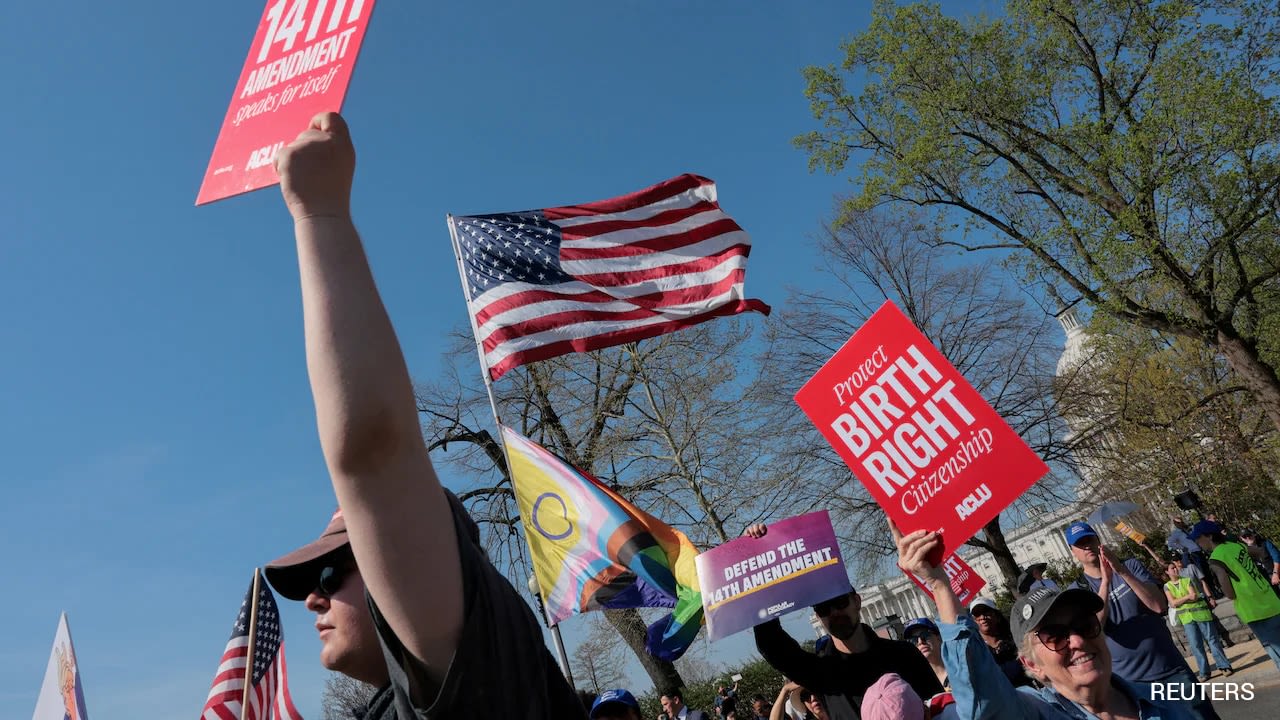
A federal judge has issued an injunction blocking the implementation of an executive order by Donald Trump aimed at restricting birthright citizenship. This ruling follows a prior Supreme Court intervention regarding similar policy attempts, highlighting ongoing legal friction over constitutional interpretations.
Judicial Intervention on Birthright Citizenship
A federal judge has issued a significant ruling halting an executive order signed by Donald Trump that sought to limit birthright citizenship. This decision marks the latest development in a protracted legal struggle over the interpretation of the 14th Amendment, which has historically guaranteed citizenship to anyone born on U.S. soil. The court's move effectively prevents the administration from moving forward with a policy that challenges the fundamental legal framework of American nationality.
Legal Precedents and the 14th Amendment
The core of this dispute lies in the interpretation of the Citizenship Clause of the 14th Amendment. While legal scholars have long held that birthright citizenship is constitutionally protected, recent attempts by the executive branch to alter this through administrative action have faced immediate judicial scrutiny. This specific order follows a previous iteration that was blocked by the U.S. Supreme Court in August, demonstrating a consistent pattern of judicial resistance to executive attempts to unilaterally redefine citizenship criteria.
The Pattern of Executive Action
The fact that this is not the first attempt to restrict birthright citizenship suggests a strategic effort to challenge the status quo through repeated legal friction. By issuing these orders, the administration forces the judiciary to repeatedly weigh in on constitutional limits. This creates a cycle where executive policy is drafted, met with legal challenges from civil rights groups and constitutional experts, and subsequently halted by federal courts, further cementing the role of the judiciary as the final arbiter of constitutional interpretation.
Broader Political Implications
Beyond the courtroom, these actions serve as a focal point for broader debates regarding immigration policy and national identity. The attempt to limit birthright citizenship is often framed by its proponents as a necessary tool for border security and national sovereignty, while critics argue it is an unconstitutional overreach that threatens the rights of individuals born within U.S. borders. The tension between executive authority and established constitutional law remains a defining feature of the current political landscape.
Future Legal Trends
Looking forward, this ruling indicates that the judiciary remains highly skeptical of executive attempts to bypass the legislative process or constitutional amendments to alter citizenship laws. Unless there is a significant shift in legal precedent or legislative action, any further attempts to restrict birthright citizenship are likely to face similar judicial roadblocks. The consistency with which federal courts have blocked these orders suggests a stable judicial consensus regarding the current interpretation of the 14th Amendment.
Conclusion
In summary, the federal judge's decision to block the latest executive order regarding birthright citizenship represents a significant check on executive power. By upholding the current interpretation of the 14th Amendment, the judiciary has maintained the status quo, ensuring that the protections granted to those born on American soil remain intact. This event highlights the ongoing importance of judicial oversight in maintaining the balance of power within the United States government.
Verification Required?