S Jaishankar To Hold Talks With Marco Rubio During India Visit On October 20
Source Entity
NDTV News Search Records Found 1000
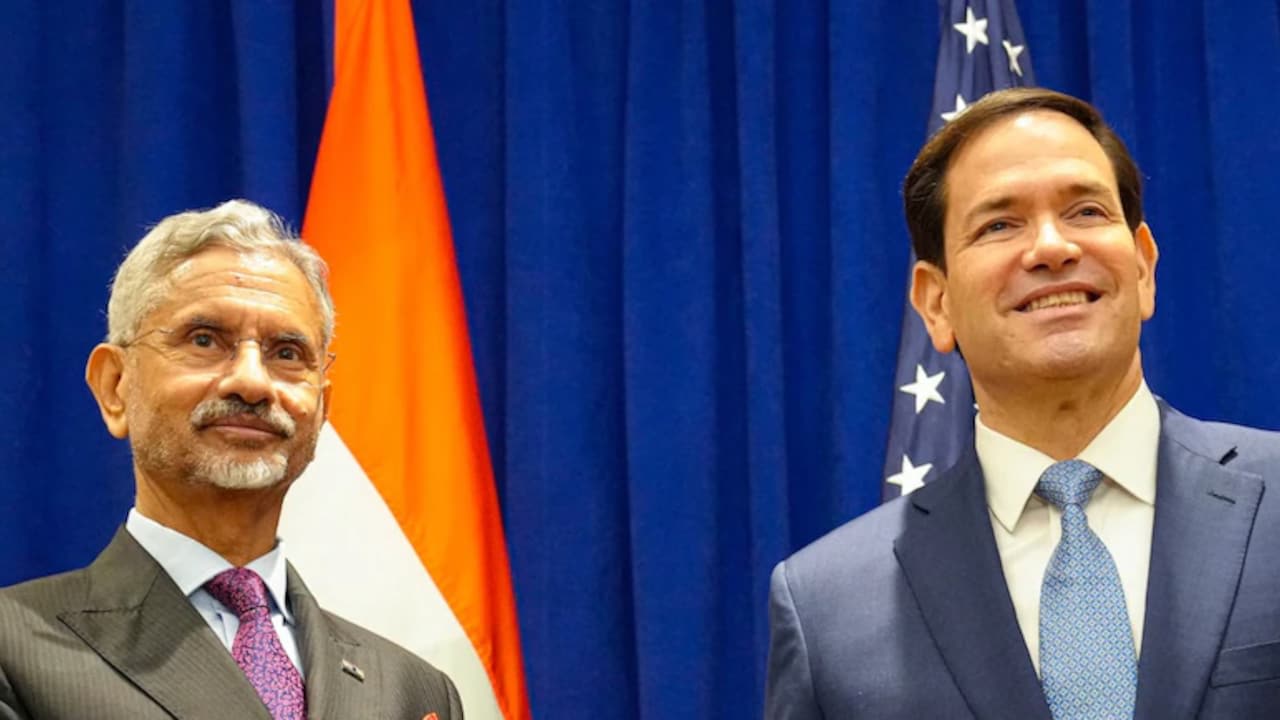
US Ambassador Sergio Gor has signaled an upcoming trade deal and a high-level meeting between Secretary of State Marco Rubio and EAM S. Jaishankar in Mumbai. The Indian National Congress has criticized the government for its perceived silence and lack of clarity regarding the protocol of this meeting.
Diplomatic Turbulence: The Rubio-Jaishankar Meeting Controversy
Recent statements made by U.S. Ambassador to India, Sergio Gor, have ignited a significant political debate in New Delhi. During an interactive session at the Bloomberg New Economy Forum and a subsequent interview with NDTV, Ambassador Gor highlighted an upcoming visit by U.S. Secretary of State Marco Rubio. Central to the discourse is the announcement that Secretary Rubio intends to visit a Reliance facility in Jamnagar, Gujarat, followed by a meeting with Indian government officials in Mumbai, where the Ambassador expects External Affairs Minister (EAM) S. Jaishankar to be present.
The Opposition's Critique of Protocol
The Indian National Congress has seized upon the phrasing used by Ambassador Gor, specifically his expectation that EAM Jaishankar would join the U.S. delegation in Mumbai. Congress General Secretary Jairam Ramesh questioned the Ministry of External Affairs' (MEA) silence on the matter, labeling the U.S. Envoy’s remarks as 'extraordinary.' The party is raising concerns regarding diplomatic protocol and whether the announcement of a cabinet minister's schedule should originate from a foreign envoy rather than the host government.
Rahul Gandhi’s Sharp Intervention
Escalating the political pressure, Congress leader Rahul Gandhi took to social media to confront the government directly. He alleged that MEA officials are 'confused' regarding the nature of the meeting and challenged Prime Minister Narendra Modi to provide transparency. By framing the interaction as the U.S. Secretary of State having 'summoned' an official, the Opposition is attempting to paint the current administration’s foreign policy as subservient, thereby turning a routine diplomatic visit into a domestic political liability.
The Trade Deal Narrative
Beyond the logistical friction of the Mumbai meeting, Ambassador Gor has expressed optimism regarding a potential U.S.-India trade deal, stating it is 'very close' to fruition. This suggests that the administration is prioritizing economic integration and strategic alignment with the United States. However, the political noise surrounding the Rubio visit threatens to overshadow these substantive negotiations, as the Opposition demands accountability regarding how such high-level diplomatic schedules are finalized and communicated.
Broader Geopolitical Implications
This incident underscores the complexities inherent in the India-U.S. strategic partnership. As the two nations navigate deeper cooperation in defense, technology, and trade, the 'optics' of diplomacy remain sensitive. The Reliance Jamnagar visit and the Mumbai meeting serve as reminders that private sector interests and state-level diplomacy are increasingly intertwined in the current geopolitical climate. Future trends suggest that while strategic alignment will likely continue, the government will face increased scrutiny from political rivals regarding the transparency of its diplomatic engagements.
Conclusion
The impasse highlights a growing tension between the government's pursuit of rapid, high-level diplomatic outcomes and the Opposition's demand for procedural decorum. As the scheduled visit approaches, the onus remains on the MEA to clarify the nature of the engagement to quell domestic skepticism. Whether this incident impacts the momentum of the touted trade deal will depend on the government's ability to manage both the diplomatic logistics and the domestic political narrative in the coming days.
Multiple Citing Sources
Verification Required?