Brains without borders: US central bank picks merit over MAGA hysteria
Source Entity
CHIDANAND RAJGHATTA
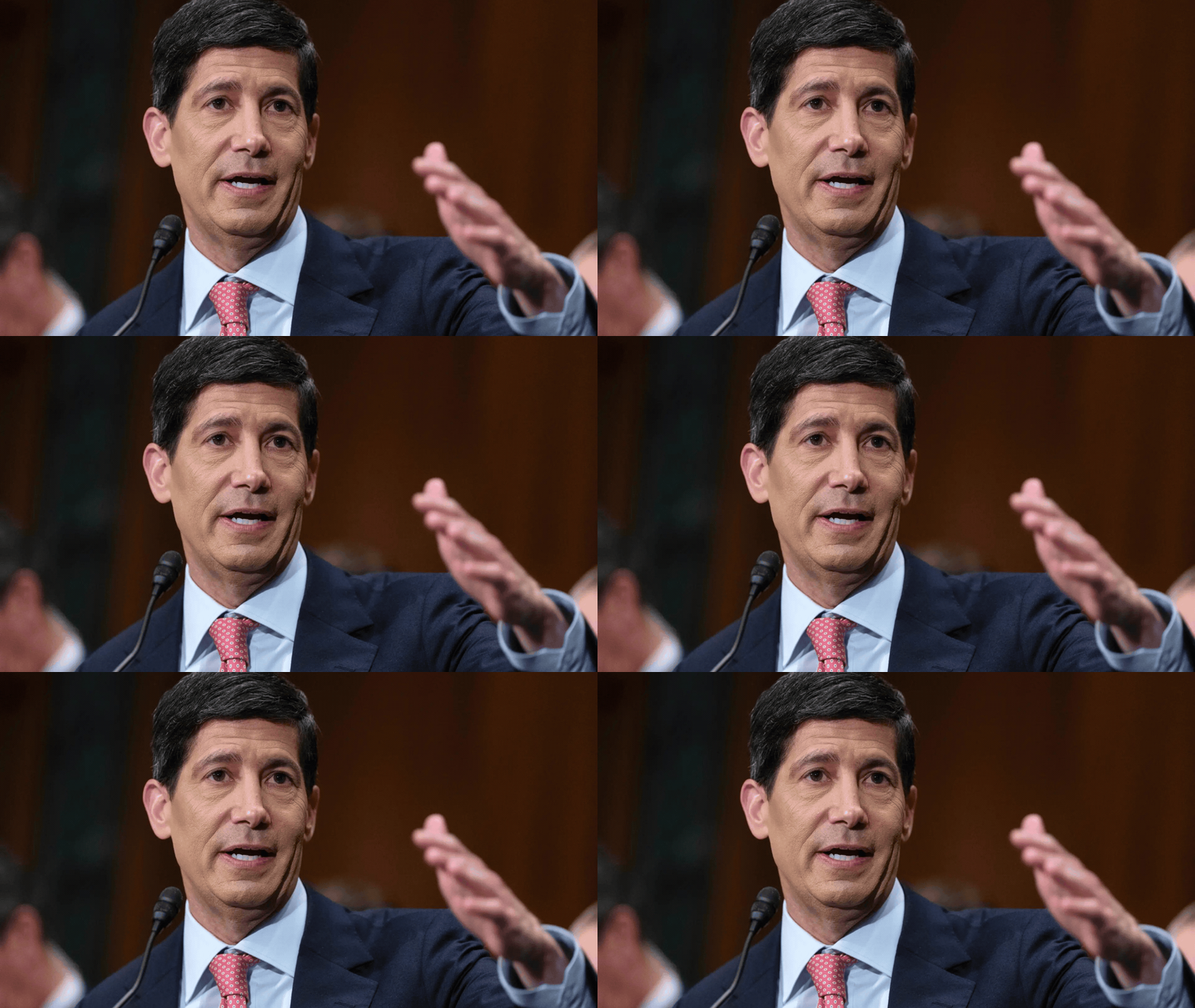
The US Federal Reserve has appointed three international experts to its panels, signaling a commitment to meritocracy and institutional independence in the face of nationalist political pressures.
Institutional Independence and the Meritocracy Mandate
The recent decision by the United States Federal Reserve to appoint three international experts—described as "Brains without borders"—to its advisory panels serves as a significant statement on the central bank's operational philosophy. In an era characterized by rising nationalism and political polarization, the Fed's insistence on prioritizing technical merit over ideological alignment is a critical move to preserve its credibility. The Federal Reserve operates as an independent entity, and its ability to make decisions based on data rather than political whims is fundamental to maintaining the stability of the global financial system.
Navigating the Tension: Merit vs. Nationalism
The framing of these appointments as a victory over "MAGA hysteria" highlights the ongoing tension between globalist economic expertise and "America First" political ideologies. Nationalist narratives often suggest that government and quasi-government institutions should prioritize domestic personnel exclusively. However, the Federal Reserve's mandate requires a sophisticated understanding of global capital flows, international trade, and foreign exchange markets. By appointing experts regardless of their national origin, the Fed is acknowledging that the complexities of the modern economy cannot be solved within a vacuum of isolationism.
The Strategic Importance of Global Expertise
Because the US Dollar serves as the world's primary reserve currency, the Federal Reserve is effectively the world's central bank. The appointment of these three individuals suggests a strategic need for diverse, global perspectives to anticipate systemic risks that may originate outside US borders. Whether these experts specialize in emerging market volatility, digital currency frameworks, or international monetary policy, their inclusion ensures that the Fed's policy panels are not blinded by domestic biases. This approach reinforces the idea that intellectual capital is a global commodity and that the most effective policy is derived from the highest level of expertise available, regardless of geography.
Implications for Central Bank Autonomy
This move is not merely an administrative update but a defensive posture regarding the autonomy of the central bank. Historically, central banks that succumb to political pressure—especially pressure to appoint loyalists over experts—experience higher inflation and increased market volatility. By explicitly choosing merit over political trends, the Fed is signaling to the markets that its internal governance remains insulated from the electoral cycles of the executive branch. This insulation is vital for investor confidence, as it guarantees that interest rate decisions and monetary tightening or easing are based on economic indicators rather than political expediency.
Future Trends in Economic Governance
Looking forward, this event predicts a continuing struggle between technocratic governance and populist political movements. As the global economy becomes more interconnected, the demand for "borderless brains" will likely increase, even as political rhetoric pushes for more closed systems. We can expect the Federal Reserve to face increased scrutiny from political factions, but this latest action suggests a firm resolve to maintain a meritocratic standard. The precedent set here will likely influence other regulatory bodies and international financial institutions in how they balance national identity with professional excellence.
Conclusion
In summary, the appointment of three merit-based experts to Federal Reserve panels is a calculated affirmation of the institution's commitment to excellence and independence. By resisting the pull of nationalist political trends, the Fed has prioritized the long-term health of the economy over short-term political harmony. This decision ensures that the US central bank remains equipped with the best possible intellectual tools to navigate an increasingly volatile global financial landscape.