U.S. and Korean tech stocks are now tightly linked — and that could be a worry for investors
Source Entity
US Top News and Analysis
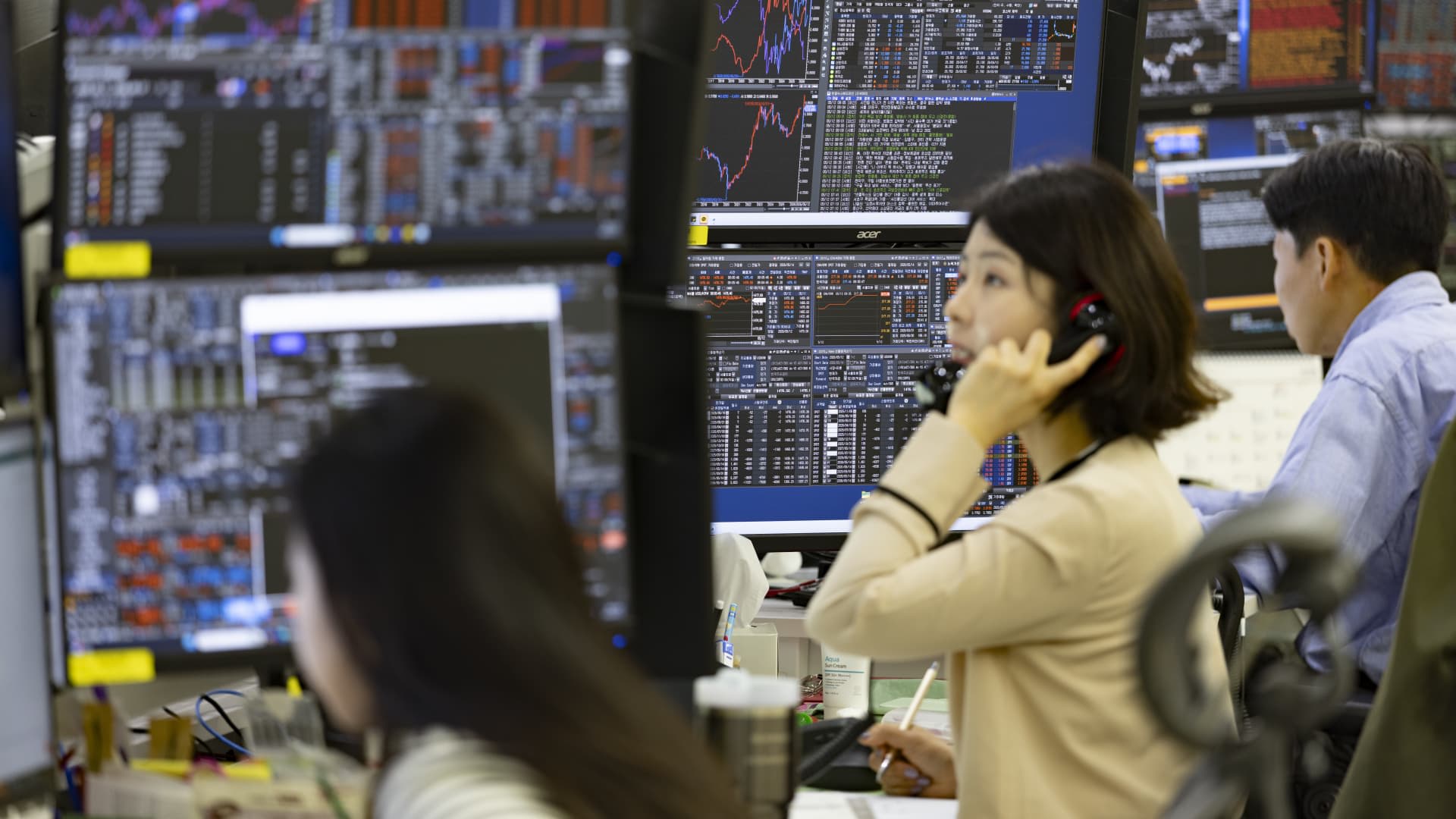
The Kospi and Nasdaq 100 indices have reached a 60-day correlation of 0.50, driven by the intense reliance of U.S. tech giants on Korean memory chipmakers. This deep integration highlights the risks for investors as the global AI hardware supply chain becomes increasingly interconnected.
The Growing Synchronization of Global Tech Markets
Recent financial data has revealed a significant shift in global market dynamics, as the 60-day correlation between South Korea’s Kospi index and the U.S. Nasdaq 100 has climbed to approximately 0.50. This figure marks the highest level of synchronicity between these two major indices since 2021, signaling a profound transformation in how international capital markets perceive the technology sector. As Wall Street and Seoul become increasingly intertwined, the traditional boundaries that once diversified tech-focused portfolios are beginning to blur.
The AI Engine Behind the Correlation
The fundamental driver of this increased correlation is the massive global investment in artificial intelligence. U.S. technology giants are currently engaged in an unprecedented spending spree to build the data centers required to power generative AI models. These data centers are not merely software-driven; they are heavily dependent on high-performance memory chips. This creates a direct pipeline of capital and demand from the U.S. technology sector to the Korean manufacturing heartland, effectively tying the fortunes of American software leaders to the output of Korean hardware firms.
The Dominance of Samsung and SK Hynix
This structural dependency is amplified by the composition of the Kospi index. Samsung Electronics and SK Hynix, two of the world's most critical semiconductor manufacturers, account for more than half of the Kospi’s total market value. Because these two firms sit at the absolute center of the AI hardware supply chain, any volatility in the U.S. tech market is immediately transmitted to the Korean exchange. Investors are no longer looking at these markets as isolated entities, but as two parts of a single, globalized manufacturing and consumption ecosystem.
Risks for Global Investors
For institutional and retail investors alike, this high correlation presents a significant portfolio management challenge. Historically, international diversification was used to mitigate volatility; however, when the world's leading index for innovation (Nasdaq 100) and the primary hub for hardware supply (Kospi) move in lockstep, the protection offered by geographic diversification diminishes. A downturn in U.S. tech sentiment, potentially driven by valuation concerns or regulatory shifts, now carries a much higher probability of triggering a synchronized sell-off in Seoul.
Future Trends and Market Outlook
Looking ahead, this trend is likely to persist as long as the AI boom continues to dictate capital expenditure patterns. As the industry moves toward more advanced memory architectures to support increasingly complex AI models, the synergy between U.S. design and Korean manufacturing will only deepen. Market participants should prepare for a period where 'tech' is treated as a singular global asset class, requiring a more nuanced approach to risk management that accounts for supply chain dependencies rather than just local economic indicators.