US lost 45 Reaper drones in Iran war, representing 25% fleet worth $1.3 bn: Report
Source Entity
TOI DEFENCE DESK
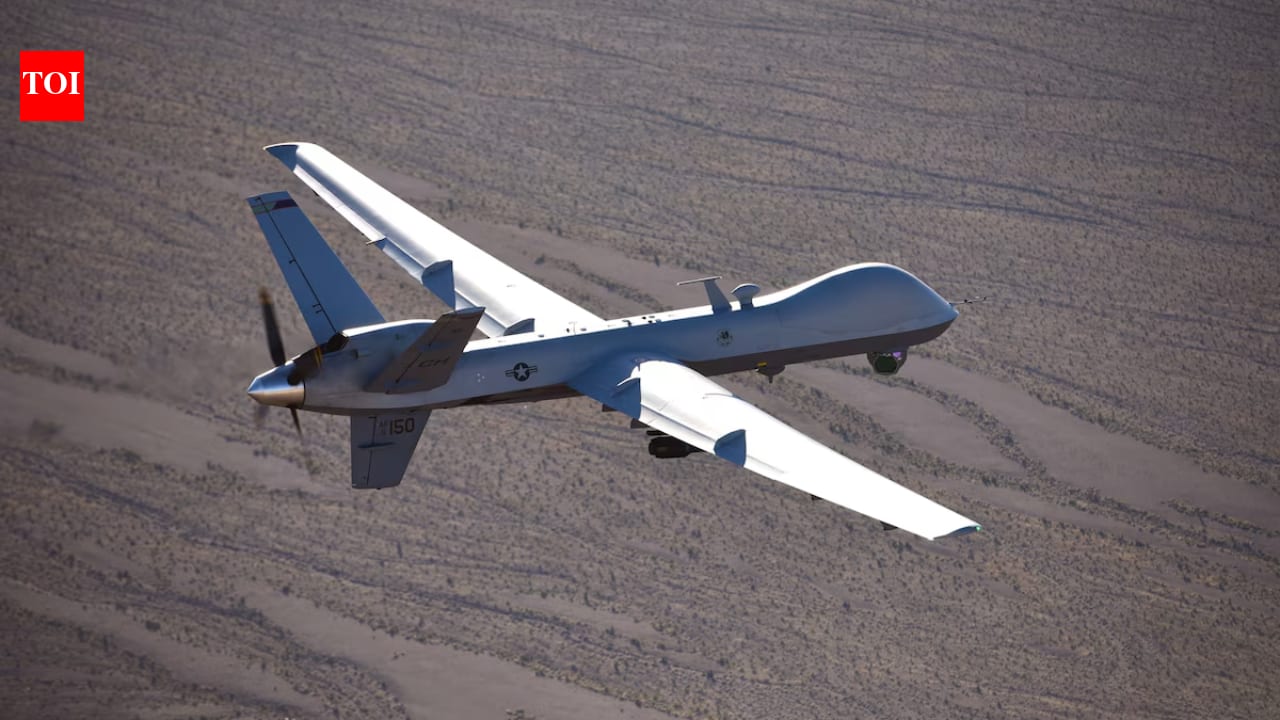
The US military has reportedly lost 45 MQ-9 Reaper drones during tensions with Iran, accounting for 25% of its fleet. These losses represent over $1.3 billion in equipment costs and highlight the vulnerability of surveillance assets in the Strait of Hormuz.
The Strategic Impact of MQ-9 Reaper Losses in the Middle East
Recent reports indicating the loss of 45 MQ-9 Reaper drones during ongoing tensions with Iran mark a significant inflection point in modern aerial warfare. Since their induction into the United States military in 2007, these platforms have served as the backbone for persistent surveillance and precision strike capabilities. The loss of 25% of the total fleet represents not only a massive tactical setback but also a profound shift in how high-value, remotely piloted aircraft function in contested airspace.
Financial and Material Depletion
With each unit costing between $30 million and $50 million depending on specific sensor packages and weaponry, the aggregate financial loss is estimated to exceed $1.3 billion. This figure, corroborated by Pentagon data, underscores the high-stakes nature of operations near the Strait of Hormuz. The sheer scale of this depletion raises questions regarding the sustainability of current air power strategies when faced with sophisticated regional adversaries capable of targeting advanced drone technology.
The Strait of Hormuz as a Flash Point
The Strait of Hormuz remains one of the most critical maritime chokepoints in the world, and it has served as the primary theater for these losses. The Reaper’s role in conducting surveillance and targeted strikes has made it a frequent target in this high-tension zone. Its susceptibility to regional defensive measures highlights the evolving nature of anti-access/area-denial (A2/AD) strategies employed by Iran to challenge US dominance in the region.
Challenges in Fleet Replenishment
Beyond the immediate financial cost, the logistical reality of replacing these specialized assets is daunting. Reports suggest that replenishment—much like the challenges faced with other critical hardware such as THAAD systems—could take years or even decades to fully restore. This bottleneck limits the US military’s ability to maintain a persistent watch over global maritime routes, potentially creating security vacuums in other theaters.
Future Implications for Drone Warfare
These events signal a necessary reassessment of drone reliance in high-threat environments. While the Reaper has been a workhorse for over 15 years, its vulnerability to modern air defense systems suggests that the future of aerial surveillance may need to pivot toward more expendable, autonomous, or stealth-enhanced platforms. The reliance on expensive, large-signature drones in contested territories is becoming increasingly difficult to justify as regional powers improve their electronic warfare and kinetic interception capabilities.
Conclusion
In summary, the loss of 45 MQ-9 Reaper drones serves as a sobering reminder of the costs associated with maintaining a persistent military presence in the Middle East. As the US military grapples with these financial and tactical losses, the lessons learned from the Strait of Hormuz will undoubtedly influence the next generation of procurement and operational doctrine, emphasizing resilience and survivability over sheer platform utility.