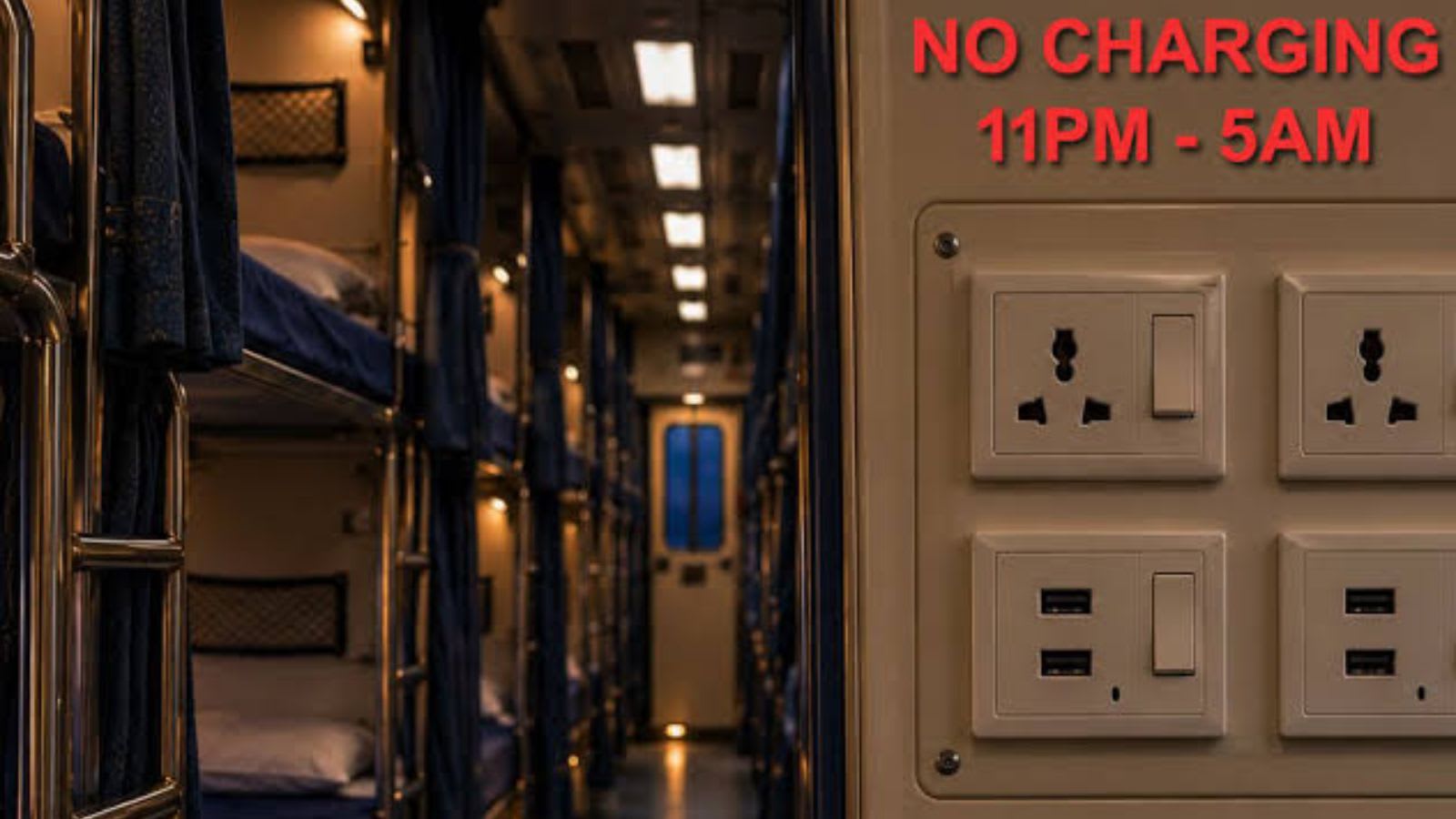
Indian Railways reinforces night-time safety rule; phone charging ports to be disabled from 11 PM to 5 AM
Source Entity
Anish Mondal
Indian Railways has expanded its premium rail network with the launch of the Varanasi-New Delhi Vande Bharat Sleeper and the announcement of a new Bengaluru-Mumbai route. Simultaneously, progress on the Mumbai-Ahmedabad bullet train continues with the unveiling of the first indigenous high-speed trainset.
The Evolution of India’s Rail Infrastructure
India is currently undergoing a transformative phase in its rail infrastructure, characterized by the rapid deployment of the Vande Bharat Sleeper series and significant strides in high-speed rail technology. The commencement of ticket bookings for the Varanasi-New Delhi Vande Bharat Sleeper service marks a pivotal milestone in providing semi-high-speed, comfortable overnight travel options for passengers on one of the country's most critical corridors.
Expanding the Vande Bharat Network
The Varanasi-New Delhi Vande Bharat Sleeper, operated by the Northern Railway zone, is engineered for peak performance. While the train possesses the technical capacity to reach speeds of 180 kmph, operational constraints on the route will see it traverse at speeds between 130 kmph and 160 kmph. With commercial operations beginning on November 2, 2026, this service is designed to cater to the growing demand for premium, efficient transit between the holy city of Varanasi and the national capital.
Strategic Connectivity for the South
Beyond the northern corridor, Railway Minister Ashwini Vaishnaw has emphasized the strategic importance of Karnataka in the national rail roadmap. The announcement of a second Vande Bharat Sleeper train connecting Bengaluru to Mumbai via Hubballi, Pune, and Kalyan underscores a commitment to integrating northern Karnataka into the high-speed network. The existing service on this route, which includes stops at key hubs like Kalaburagi and Solapur, serves as a blueprint for the expansion of regional connectivity.
The Future of High-Speed Rail: Bullet Trains
The vision for Indian rail extends beyond upgraded traditional tracks into the realm of dedicated high-speed corridors. A significant development in this sector is the ongoing production of India’s first bullet trainset at the BEML Aditya plant in Bengaluru. Following a 2024 contract awarded by the Integral Coach Factory, BEML is tasked with the design and manufacturing of these advanced trainsets, with a prototype expected by early 2027.
Operational Milestones and Timelines
The Ministry of Railways has set ambitious targets for the Mumbai-Ahmedabad High-Speed Rail (MAHSR) Corridor. The immediate focus is on the 97-km Surat-Vapi stretch, which is slated for operational launch by August 2027. This pilot section is critical, as it will serve as the testing ground for the integration of indigenous high-speed rakes into the existing railway ecosystem.
Conclusion: A New Era of Mobility
Collectively, these projects represent a multi-pronged strategy to modernize India’s transportation framework. By balancing the rollout of premium Vande Bharat Sleeper trains for immediate passenger relief with the long-term investment in bullet train technology, the government is effectively bridging the gap between current logistical needs and the future requirements of a high-speed, interconnected national economy.
Multiple Citing Sources