Residents block key stretch near Ambur demanding resumption of water supply
Source Entity
India Latest News: Top National Headlines Today & Breaking News | The Hindu
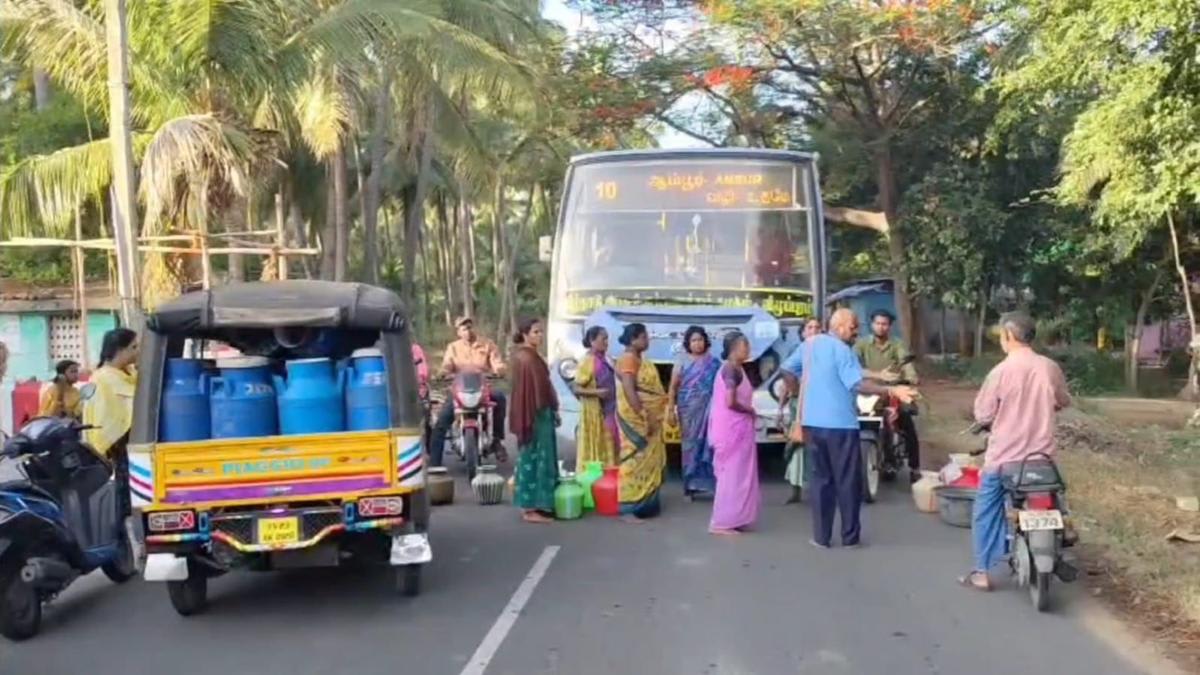
Residents of Veerankuppam village blocked the Ambur-Pernambut road to protest the local panchayat's failure to provide consistent water. The water crisis has forced thousands of families to travel long distances as local groundwater remains non-potable.
The Water Crisis in Veerankuppam: A Community in Distress
On Wednesday, the residents of Veerankuppam village, located near Ambur, took to the streets to block the Ambur-Pernambut Main Road, marking a desperate protest against a severe and prolonged water crisis. The demonstration, led primarily by women, highlights the critical failure of local infrastructure to meet the basic needs of approximately 2,500 families across three hamlets. This blockade serves as a physical manifestation of a growing humanitarian issue, where the absence of reliable municipal water supply has disrupted the daily lives of thousands.
The Failure of Local Infrastructure
The root of the conflict lies in the irregular and ultimately halted water supply from the local panchayat. While residents rely on street corner tanks and household connections for their daily consumption, these sources have been effectively dry for several days. The situation is exacerbated by the region's geography, where local lakes, ponds, and borewells have largely run dry. With the panchayat failing to maintain the supply chain, the community has been left without a sustainable source of potable water, forcing them into a state of extreme vulnerability.
The Burden of Distance and Saltwater
For the residents of Veerankuppam, the water shortage is not merely an inconvenience but a significant physical and economic burden. Because the local groundwater is reported to be salty and unfit for consumption, the village is entirely dependent on the civic body for freshwater. Consequently, residents have been forced to travel 5-10 kilometers to Ambur or Pernambut towns to collect water. This trek, often repeated daily just to secure a few pots of water, places an undue strain on the village’s workforce and particularly on women, who traditionally manage household water collection.
Environmental and Seasonal Pressures
The crisis has been significantly intensified by the recent surge in temperatures. As heatwaves grip the region, the demand for water has spiked, while the supply has dwindled to near-zero levels. This seasonal pressure highlights the fragility of local water management systems that lack the resilience to handle extreme weather conditions. The drying of local water bodies suggests a deeper failure in groundwater recharge and water conservation efforts, which are essential for maintaining supply during hot, dry months.
Broader Implications and Future Outlook
The protest at Veerankuppam is a symptom of a larger, systemic issue regarding rural water security in India. As populations grow and climate patterns become increasingly erratic, the reliance on outdated or poorly maintained panchayat supply systems is proving insufficient. Without urgent intervention—such as the restoration of municipal supply or the implementation of sustainable water distribution strategies—the village faces a long-term public health risk. Future trends suggest that unless local governing bodies invest in better infrastructure and drought-resistant water management, such protests will likely become more frequent as environmental stress continues to rise.
Verification Required?