‘If someone seeks bribe, tell them...’: Vijay's remarks on corruption go viral
Source Entity
Latest News: Today's Latest News Headlines from India & World | Hindustan Times | Hindustan Times
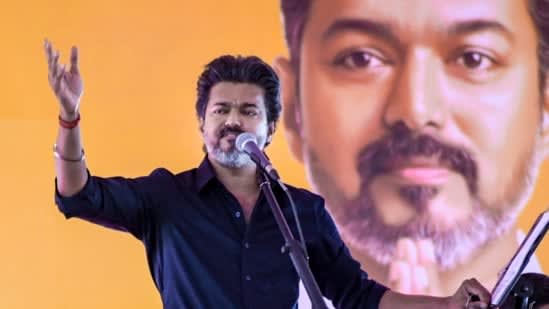
Political leader Vijay has gone viral for urging the general public to resist corruption by firmly refusing to pay bribes, positioning himself as a protector of the people's rights.
Empowering the Citizenry: An Analysis of Vijay's Anti-Corruption Stance
In a recent public address that has quickly gained viral traction, Vijay issued a powerful directive to the public regarding the systemic issue of corruption. By explicitly instructing citizens to firmly say "no" when asked for a bribe, Vijay is not merely offering a suggestion but is attempting to spark a psychological shift in how the common man interacts with the bureaucratic machinery. This rhetoric is designed to transition the public from a state of passive endurance to one of active resistance, signaling a leadership style that prioritizes grassroots empowerment.
The Psychology of Defiance and Public Trust
At the heart of Vijay's remarks is the concept of civic courage. For decades, corruption in administrative offices has often been viewed as an inevitable "tax" on public services. By telling the public that he stands with them, Vijay is providing a perceived safety net, suggesting that the fear of retaliation from officials can be countered by the support of a strong political figure. This approach is a strategic move to build deep-seated trust with the electorate, positioning himself as a shield for the marginalized who are most affected by petty corruption.
Strategic Political Positioning
From a political standpoint, this anti-corruption narrative is a classic but effective tool for leaders seeking to disrupt the established order. By targeting the friction points of governance—where the citizen meets the official—Vijay is highlighting the failures of the current administrative status quo. This focus allows him to carve out a distinct identity as a reformist. By anchoring his public image to the fight against bribery, he is appealing to a demographic of young, frustrated voters who view systemic corruption as the primary barrier to social and economic mobility.
Impact on the Bureaucratic Machinery
Such high-profile declarations often create a ripple effect within government offices. When a popular leader publicly encourages citizens to refuse bribes, it puts immediate psychological pressure on lower-level officials. The threat is no longer just a formal complaint, but a public movement encouraged by a political powerhouse. This can lead to a temporary increase in transparency and a hesitation among corrupt officials to solicit bribes, fearing that the individual they are targeting may now feel emboldened to report the incident under the banner of Vijay's movement.
Historical Context of Anti-Corruption in Tamil Nadu
Corruption has long been a central theme in the political discourse of Tamil Nadu, often used by opposing parties to delegitimize one another. However, the approach of encouraging the public to actively refuse bribes, rather than just promising to "clean up the system" from the top down, represents a more populist, bottom-up strategy. This mirrors historical movements where public awakening served as the precursor to legislative change, suggesting that Vijay is attempting to create a culture of accountability that precedes his actual administrative control.
Future Trends and Implementation Challenges
Looking forward, the success of this rhetoric will depend on the transition from viral statements to systemic implementation. While urging the public to say "no" is a powerful starting point, the long-term challenge will be providing a viable mechanism for those who are retaliated against for refusing bribes. Future trends suggest that if Vijay continues this trajectory, he will likely propose digitalization of services to remove the human intermediary, as that is the only permanent solution to the problem he has highlighted.
Conclusion
Vijay's remarks serve as a potent catalyst for public discourse on integrity and governance. By simplifying the fight against corruption into a direct act of refusal, he has successfully captured the public imagination. While the viral nature of the statement provides immediate political capital, the ultimate legacy of this stance will be measured by whether it leads to a genuine reduction in bureaucratic malpractice or remains a symbolic gesture in a larger political campaign.
Verification Required?