Volvo will use Nvidia’s tech for hands-free, point-to-point driving
Source Entity
Andrew J. Hawkins
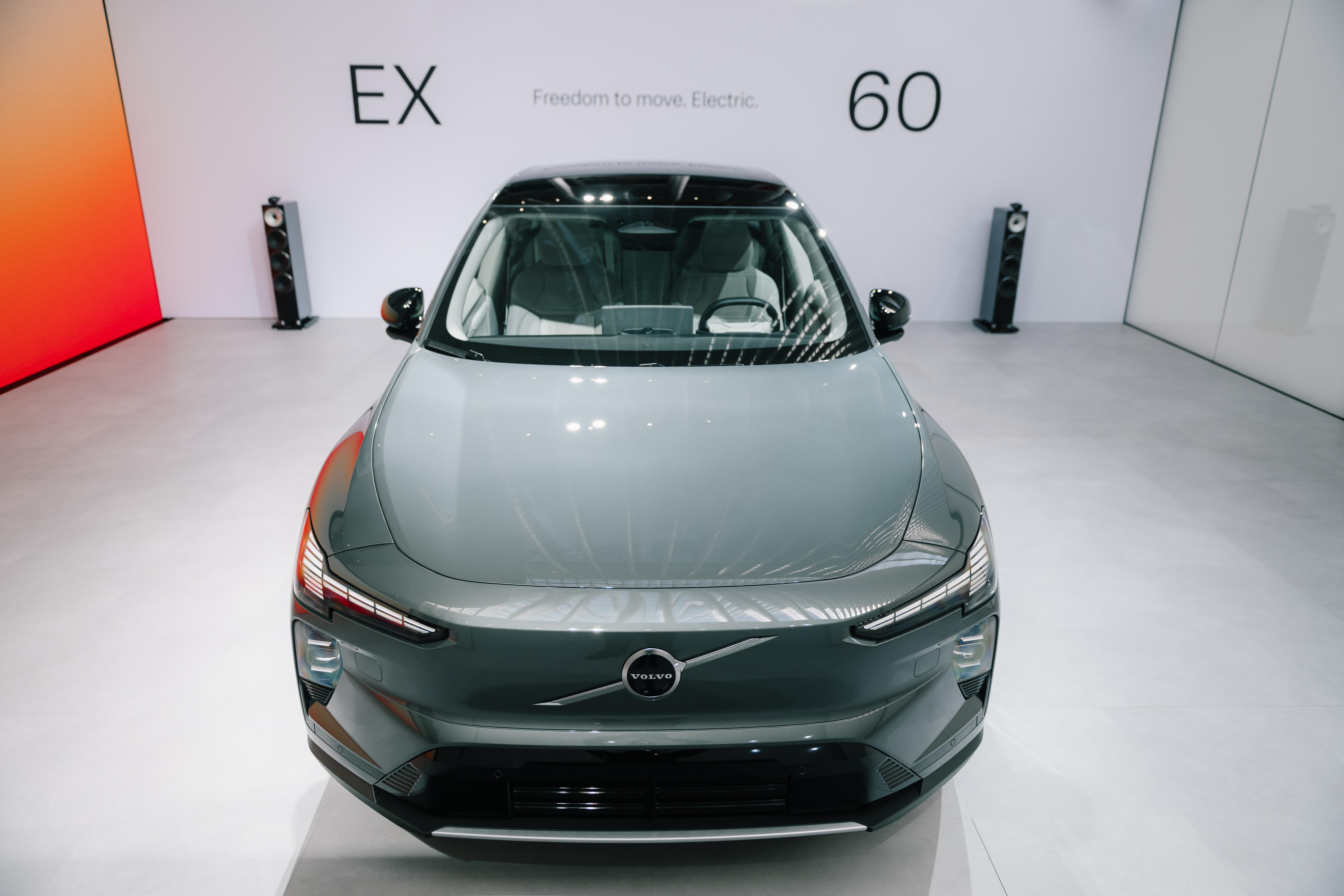
Volvo is expanding its long-term partnership with Nvidia to integrate advanced AI hardware and software into its future vehicle lineup. This collaboration aims to achieve Level 2++ hands-free, point-to-point driving capabilities by 2030.
Volvo and Nvidia: A Strategic Evolution in Autonomous Driving
Volvo’s recent announcement marks a significant escalation in its longstanding partnership with Nvidia, signaling a transition from basic driver assistance to sophisticated, point-to-point autonomous navigation. By integrating Nvidia’s cutting-edge hardware and software across its broader vehicle portfolio, Volvo is positioning itself to compete directly with industry leaders in the race for advanced automated driving systems. This move is not merely an incremental update but a fundamental shift in how the automaker approaches vehicle safety and intelligence.
The Technological Foundation
The collaboration centers on the deployment of Nvidia’s comprehensive automotive ecosystem, specifically the Hyperion sensor and compute architecture, the Alpamayo driving software stack, and the Halos safety evaluation layer. The Alpamayo stack is particularly noteworthy, as it utilizes a redundant and diverse array of AI models, datasets, and simulation tools. By combining these with Volvo’s own rigorous engineering and safety standards, the companies aim to create a system capable of handling complex urban environments, including navigating traffic lights, stop signs, and challenging unprotected left turns.
Defining Level 2++ Performance
Volvo’s stated goal is to achieve 'Level 2++' autonomy by 2030, a designation that implies high-level, hands-free assistance that still requires driver supervision. This capability is comparable to existing systems like Tesla’s Full Self-Driving (Supervised). By utilizing Nvidia’s architecture, Volvo intends to bridge the gap between traditional driver-assist features and fully autonomous operation. This approach prioritizes safety through the Halos evaluation layer, ensuring that the system's decision-making process is subjected to stringent validation before reaching the consumer.
Expanding Beyond Battery Electric Vehicles
Historically, many automotive AI initiatives were siloed within the electric vehicle (EV) segment. However, the expansion of this partnership indicates that Volvo intends to apply these advanced capabilities across a wider range of its future vehicle lineup. By decoupling these software advancements from specific powertrains, Volvo ensures that its technological evolution is scalable and can benefit a broader spectrum of its customer base, regardless of whether they choose battery-electric or hybrid models.
Market Implications and Future Trends
The automotive industry is currently in a state of rapid transformation, where the value of a vehicle is increasingly defined by its software rather than just its mechanical components. Volvo’s deep investment in Nvidia’s platform reflects a broader trend of traditional automakers outsourcing critical AI development to specialized technology firms. This partnership suggests that the future of the automotive sector will be defined by high-performance computing, sophisticated data simulation, and the ability to safely navigate increasingly dense urban traffic scenarios.
Conclusion
As Volvo moves toward its 2030 deadline, the success of this initiative will hinge on the seamless integration of hardware and software. By leveraging Nvidia’s robust AI stack, Volvo is not only enhancing its current vehicle safety systems but is also laying the groundwork for the next generation of personal mobility. This strategic alliance underscores the necessity of inter-industry collaboration in achieving the complex goal of reliable, point-to-point automated driving.
Multiple Citing Sources