Exploiting Volvo/Eicher's fleet platform to gain control over all users/vehicles
Source Entity
Hacker News
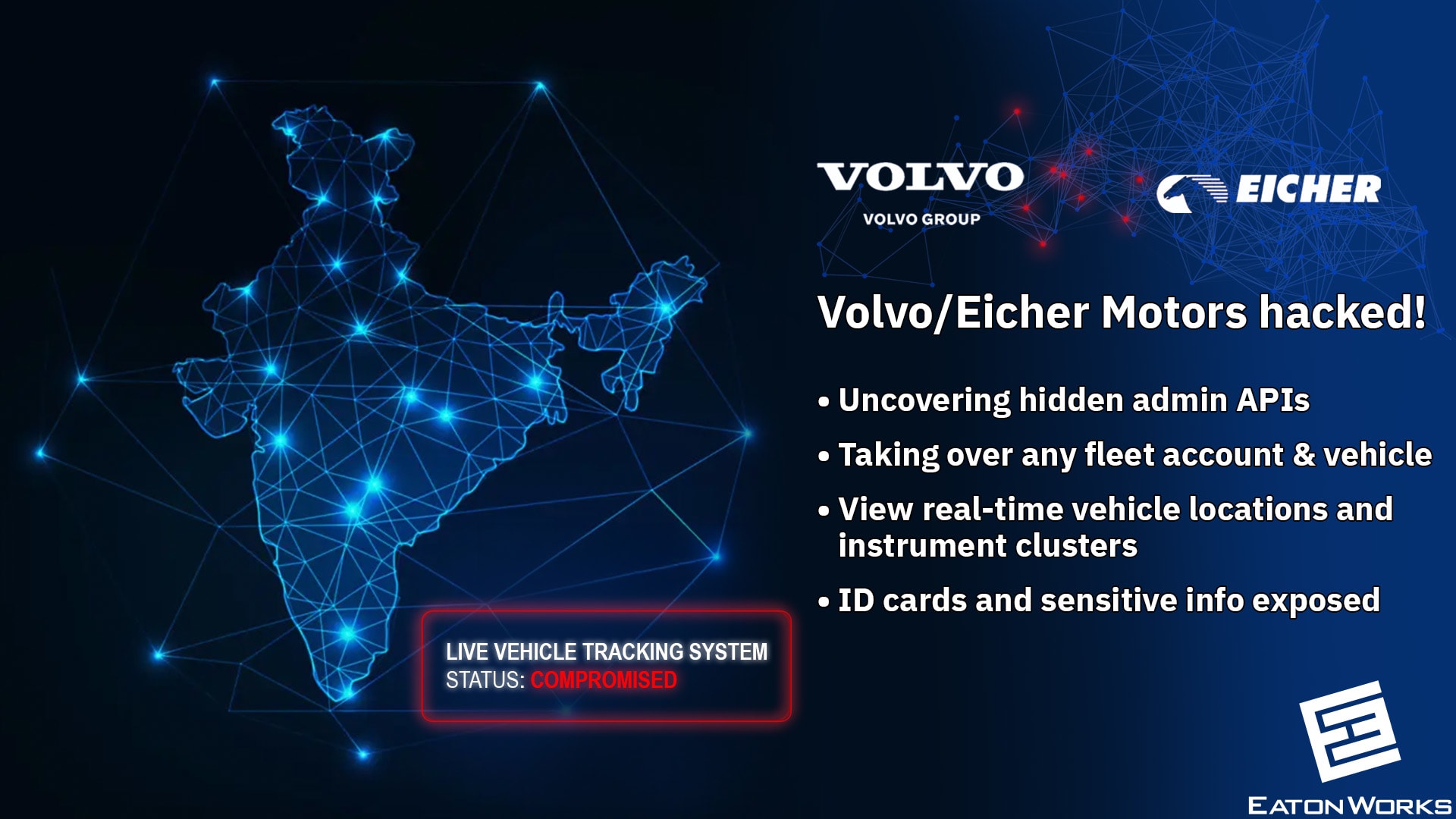
A critical security vulnerability has been identified in the My Eicher fleet management platform, potentially allowing unauthorized access to vehicle and user data. The flaw involves exposed internal APIs that could enable attackers to gain administrative control over commercial vehicle fleets.
Security Vulnerability in My Eicher Fleet Platform
Recent reports have unveiled a significant cybersecurity vulnerability within the 'My Eicher' fleet management platform, a critical digital infrastructure operated by VE Commercial Vehicles, the joint venture between Volvo Group and Eicher Motors. This platform serves as a central hub for Indian commercial vehicle owners, providing essential GPS tracking, telematics, and operational oversight. The discovery of this vulnerability highlights the growing risks associated with the digitalization of industrial logistics and the increasing reliance on cloud-based telematics.
The Nature of the Technical Exposure
The core of the security concern lies in the platform's API architecture. Researchers discovered that specific APIs were configured in a way that permitted the discovery of hidden, unauthenticated internal and administrative endpoints. In the realm of software security, these 'shadow APIs' often act as a backdoor, bypassing the standard authentication layers that protect user data. Because these endpoints were left unauthenticated, they theoretically provided a gateway for unauthorized actors to interact with the backend infrastructure of the fleet management system.
Potential Implications for Fleet Operators
The implications of such a vulnerability are profound for the commercial trucking industry in India. By exploiting these internal APIs, an attacker could potentially gain high-level access to the system. This level of access is not merely limited to viewing GPS coordinates; it extends to the possibility of full account takeover. For a fleet manager, this represents a catastrophic loss of control, as it could allow unauthorized entities to manipulate vehicle data, access sensitive operational logs, and potentially disrupt the logistics chains that rely on My Eicher for real-time monitoring.
The Intersection of Logistics and Cyber Risk
As the commercial transport sector moves toward 'connected' fleets, the attack surface for bad actors expands exponentially. My Eicher was designed to help owners 'take control' of their fleets, but this incident underscores that centralized control systems are high-value targets. When a platform aggregates data from thousands of vehicles, it becomes a single point of failure. The convergence of physical vehicle hardware and digital management software means that a software exploit can have real-world consequences, impacting vehicle security and fleet safety.
Future Trends in Industrial Cybersecurity
This incident serves as a stark reminder for manufacturers and software developers in the automotive space regarding the necessity of rigorous API security audits. Moving forward, companies like VE Commercial Vehicles will likely need to adopt a 'zero-trust' architecture, where even internal APIs require strict authentication and authorization protocols. As the industry continues to integrate IoT and advanced telematics, the security of these platforms will become as critical to a company’s reputation and operational success as the durability of the vehicles themselves.
Conclusion
The vulnerability in the My Eicher platform is a critical warning for the intersection of automotive technology and digital security. While the platform remains a vital tool for fleet efficiency, the identification of these hidden, unauthenticated APIs necessitates immediate remediation to protect users from potential account takeovers and data breaches. Ensuring the integrity of these systems is essential for maintaining trust in the digital transformation of the Indian commercial transport sector.