Google's $100 billion AI bet that made Warren Buffett invest $31 billion
Source Entity
TOI TECH DESK
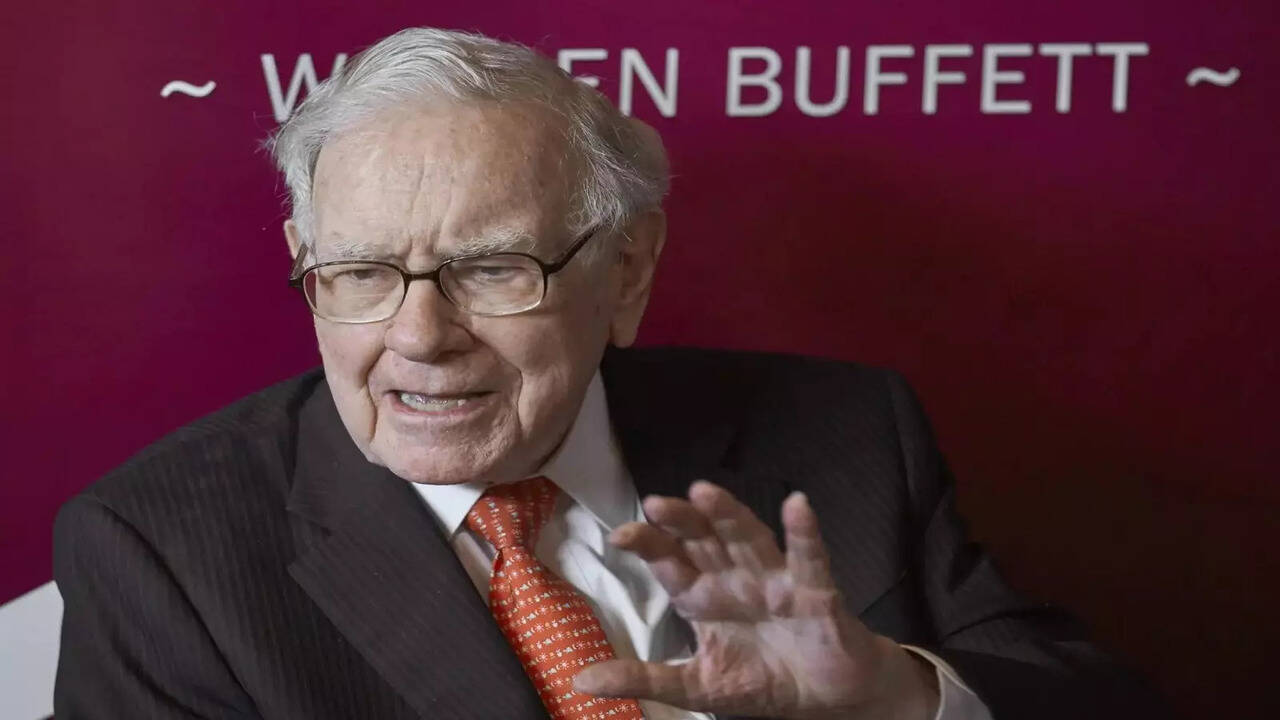
Warren Buffett has made a rare, $31 billion pivot into Google, citing the company's massive capital expenditure on AI infrastructure. He views this spending as analogous to traditional capital-intensive industries like railroads and utilities, signaling a major endorsement of Alphabet's long-term strategy.
The Oracle’s Pivot: Analyzing Berkshire’s $31 Billion Google Bet
Warren Buffett, long known for his skepticism toward the volatile technology sector, has made a landmark shift in his investment strategy. By personally initiating a $31 billion stake in Google, Buffett has signaled a significant evolution in how Berkshire Hathaway evaluates the value of modern tech giants. This move marks a departure from his historical preference for predictable, consumer-facing brands, suggesting that he now views artificial intelligence infrastructure as the modern equivalent of essential industrial utilities.
AI Infrastructure as the New 'Railroad'
The core of Buffett’s investment thesis lies in the sheer scale of Google’s capital expenditure. By spending over $100 billion annually on data centers and advanced chips, Google has moved into a category of capital intensity that Buffett historically favors. He draws a direct parallel between these AI investments and his ownership of railroads and utility companies. In his view, the massive barrier to entry created by these multi-billion dollar expenditures acts as an 'economic moat,' protecting Google from smaller, less-resourced competitors.
The Necessity of the Hyperscaler Race
Alphabet’s aggressive push into AI is not merely a choice but a requirement for survival in the current market landscape. As a 'hyperscaler,' Google must maintain its technological lead to remain relevant in a world increasingly dominated by cloud computing and generative AI. Buffett’s endorsement highlights the belief that these expenditures are not just 'burn' but are essential investments in the future infrastructure of the global economy. This perspective transforms how the market views AI spending, shifting the narrative from 'risky R&D' to 'necessary infrastructure development.'
Competitive Dynamics and Market Positioning
While Buffett acknowledges the intense competition among firms currently pouring hundreds of billions into AI, he remains confident in Google’s specific position. The company's ability to sustain this level of investment is what differentiates it from smaller rivals. By characterizing these expenditures as 'real money' that creates tangible, physical assets like data centers, Buffett provides a validation that few other investors could offer, essentially legitimizing the current AI arms race as a sound capital allocation strategy.
Broader Implications for Berkshire Hathaway
Despite this massive foray into Silicon Valley, Buffett clarifies that his long-standing favorite, Apple, remains a cornerstone of the Berkshire Hathaway portfolio. This suggests a bifurcated strategy: maintaining established tech winners while aggressively betting on the foundational layer of the AI revolution through Google. This dual approach indicates that while Buffett is evolving, he is not abandoning his principles of value investing; he is simply updating his definition of what constitutes a 'valuable asset' in an AI-driven world.
Future Trends and Concluding Summary
Looking ahead, the market is likely to view Buffett’s investment as a bellwether for the tech industry. If the most cautious investor in history sees AI infrastructure as the new utility, other institutional investors may follow suit, potentially driving further consolidation and investment in the sector. In summary, Buffett’s $31 billion bet on Google reflects a fundamental shift in how the world’s most successful investor views technology—no longer as a speculative gamble, but as the essential, capital-intensive backbone of the future global economy.