Warren Buffett says 'humans love to gamble' as he takes digs at a speculative market — so why do investors ignore him?
Source Entity
Yahoo Finance
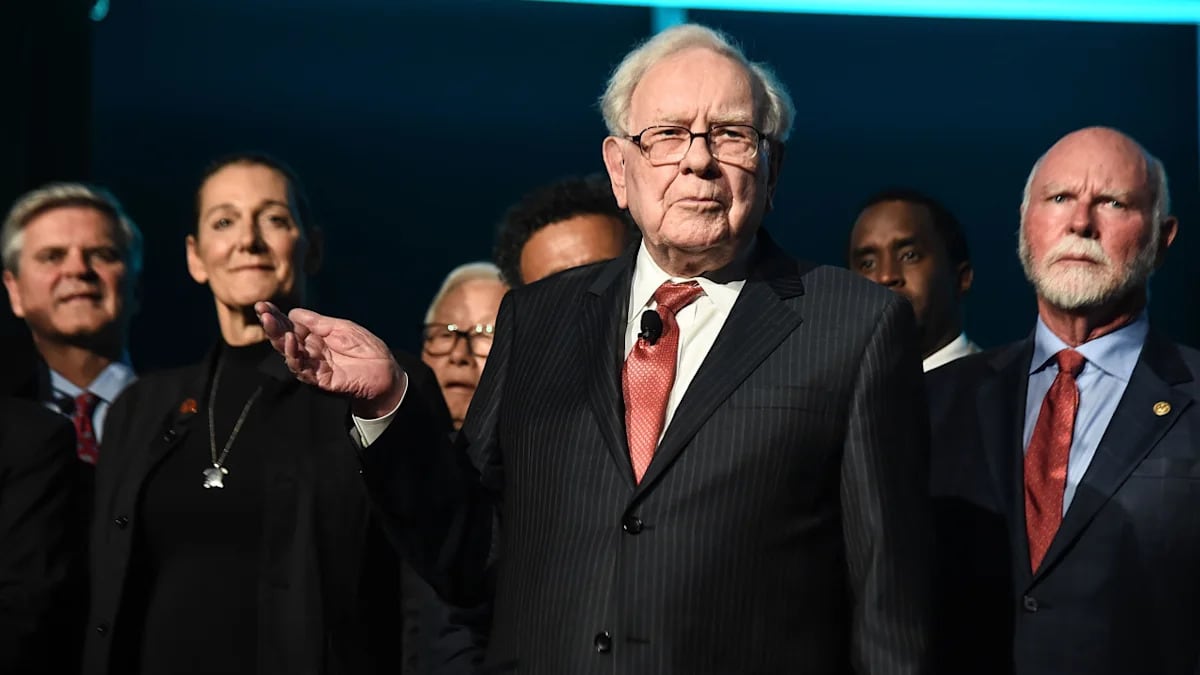
Warren Buffett advocates for disciplined, value-based investing over speculative trends, warning against the 'casino' nature of modern stock markets. His long-term strategy, which avoids industries he does not understand, has successfully propelled Berkshire Hathaway to a $1 trillion valuation.
The Oracle’s Cautionary Tale: Speculation vs. Value
Warren Buffett’s long-standing skepticism toward speculative market bubbles serves as a primary pillar of his investment philosophy. His recent commentary, characterizing the stock market as "a church with a casino attached," underscores a fundamental divide between patient value investing and the volatile, trend-driven behavior of retail investors. By prioritizing long-term stability over the allure of 'hot' stocks, Buffett continues to challenge the modern investor's impulse to chase short-term gains.
Historical Context: The Dot-Com Lessons
The roots of Buffett’s cautious reputation date back to the late 1990s, when the explosive growth of Internet-based firms created a massive tech bubble. During this period, Buffett famously refused to participate in the irrational exuberance of the tech sector, a decision that led many contemporary critics to dismiss his strategies as antiquated. However, history eventually vindicated his restraint, as the subsequent market correction proved that his refusal to follow the herd was a protective measure against systemic risk.
The Psychology of 'The Herd'
Modern market participants frequently fall prey to the psychological trap of "following the herd," a phenomenon where individual investors rush to purchase shares of trending companies like GameStop, Micron, or SpaceX without a deep fundamental understanding of the underlying business. This behavior often leads to significant financial losses when the speculative hype inevitably dissipates. Buffett’s critique highlights the human tendency to gamble, which often overrides rational financial planning in favor of excitement and perceived opportunity.
The $1 Trillion Blueprint
A central tenet of Buffett's success is the "cardinal rule" of only investing in businesses one thoroughly understands. This commitment to deep research and industry expertise is not merely a preference but a core operational strategy that has allowed Berkshire Hathaway to scale into a $1 trillion behemoth. By avoiding complex or speculative sectors where he lacks a competitive advantage or clarity, Buffett has maintained a level of consistency that is rare in the high-stakes world of finance.
Future Trends and Investor Resilience
Looking ahead, the tension between speculative trading and traditional value investing is likely to persist as new technologies and market platforms emerge. Investors who ignore Buffett’s warnings may find themselves vulnerable to the cyclical nature of market corrections. Those who adopt his disciplined approach—focusing on long-term value rather than the flavor of the month—are statistically more likely to preserve capital and achieve sustainable growth in an increasingly volatile global economy.