Waymo’s next robotaxi is a purpose-built Toyota bZ4X
Source Entity
Andrew J. Hawkins
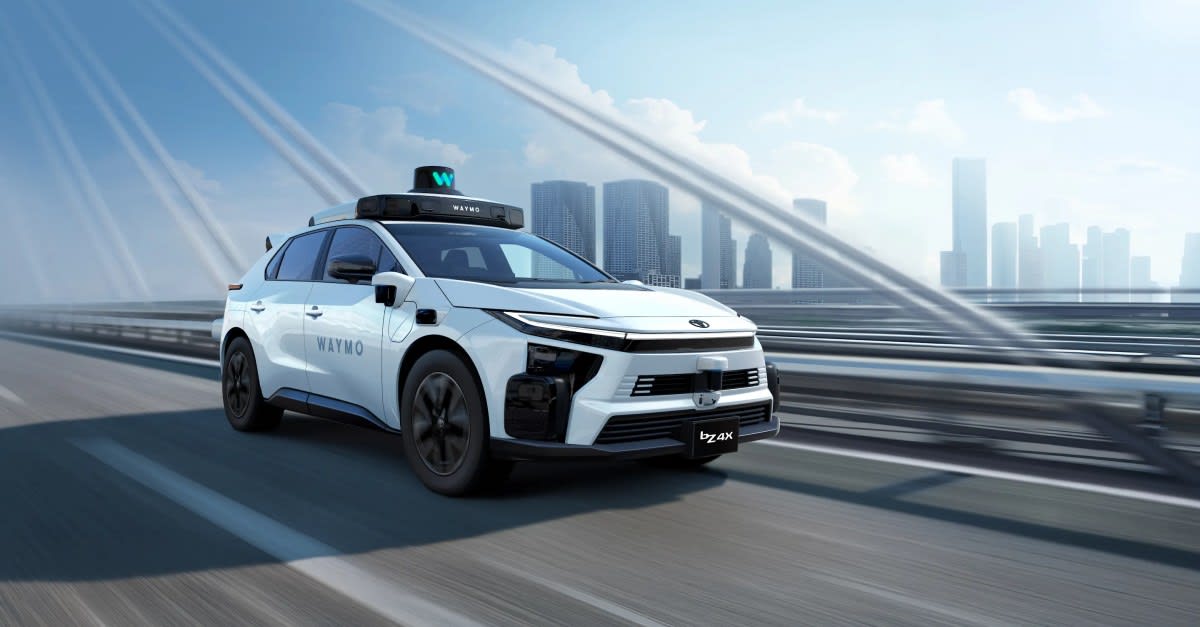
Waymo has partnered with Toyota to integrate its autonomous driving technology directly into the bZ4X electric vehicle. The vehicles will be assembled in Japan for use in robotaxi services in Japan and the U.K. starting in 2027.
A New Era for Autonomous Transit: The Waymo-Toyota Alliance
Waymo, the industry leader in autonomous driving technology, has announced a significant strategic partnership with Toyota, the world’s largest automaker. By integrating Waymo’s self-driving system directly into Toyota’s bZ4X electric vehicles, the companies aim to streamline the production of robotaxis. This collaboration, which builds upon an agreement first established in April 2025, marks a departure from traditional retrofitting methods, as the autonomous hardware and software will be installed directly on the assembly line at Toyota’s Takaoka factory.
Manufacturing Efficiency and Integration
The decision to build these vehicles under one roof at the Takaoka plant in Aichi Prefecture represents a major shift in how robotaxis are brought to market. By embedding sensors and computing systems during the manufacturing process rather than modifying vehicles after they leave the factory floor, Waymo and Toyota are likely to achieve greater reliability, lower production costs, and higher build quality. This level of vertical integration is essential for scaling autonomous fleets capable of operating safely in diverse, dense urban environments.
Strategic Expansion into International Markets
While Waymo has established a strong foothold in the United States, this partnership is explicitly designed to facilitate expansion into international markets. The deployment of the bZ4X is specifically targeted at right-hand driving countries, with Japan serving as the initial testing ground for a planned 2027 launch. Furthermore, the intent to bring these vehicles to the U.K. aligns with Waymo’s ongoing efforts in London, where the company has been testing Jaguar I-Pace vehicles for several months.
Addressing the Right-Hand Drive Challenge
Operating autonomous vehicles in right-hand drive nations presents unique logistical and regulatory challenges. By selecting the bZ4X—a vehicle designed with these markets in mind—Waymo is positioning itself to navigate the complex traffic patterns and infrastructure requirements of the U.K. and Japan. This moves Waymo beyond its current reliance on the Jaguar I-Pace and Zeekr RT models, diversifying its fleet to better suit global geographic needs.
Implications for the Future of Mobility
The collaboration between a tech giant like Waymo and a manufacturing powerhouse like Toyota signals a maturing phase in the autonomous vehicle industry. As the technology moves from experimental testing to standardized, mass-produced fleet deployment, the focus shifts toward scalability and global regulatory compliance. If successful, this model could become the industry standard, proving that dedicated, factory-integrated autonomous platforms are the most viable path to widespread public adoption of robotaxi services.
Conclusion: A Global Milestone
Looking ahead, the 2027 timeline for the Japanese market serves as a critical benchmark for the entire autonomous sector. Should the bZ4X prove successful in navigating the streets of Tokyo and later the U.K., it will likely accelerate the global transition toward autonomous ride-hailing. This partnership not only strengthens Waymo’s competitive edge but also underscores the necessity of deep collaboration between software developers and traditional automotive manufacturers to solve the complex puzzle of future urban mobility.