Wealth Inequality in America drawn to scale
Source Entity
Hacker News
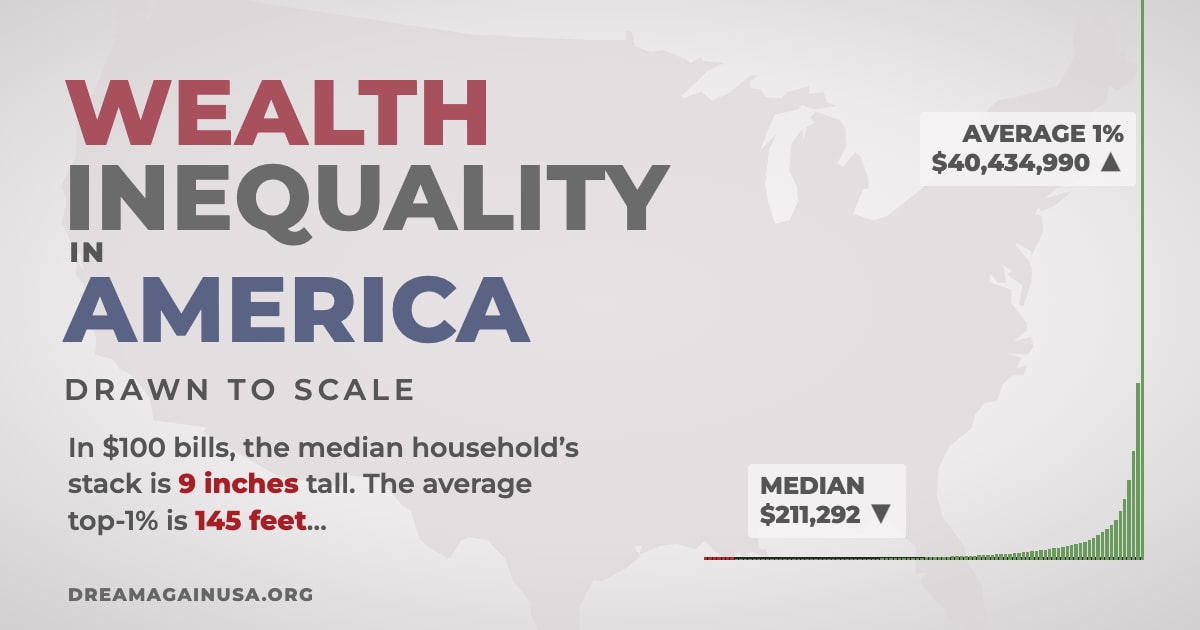
This analysis visualizes the extreme disparity in American wealth using 2023 Survey of Consumer Finances data. It highlights the vast gap between the median household and the top 1% of earners.
Visualizing the American Wealth Divide
The representation of American wealth inequality through the 'Wealth Inequality in America' scale provides a stark, tangible visualization of a complex socioeconomic issue. By comparing household stacks of $100 bills, the data illustrates that while the median household net worth is represented by a modest 9-inch stack, the top 1% of households command a tower reaching 145 feet. This disparity is not merely a theoretical statistic but a visual manifestation of a widening gap that has defined the American economic landscape for decades.
Data Methodology and Context
The analysis utilizes the 2023 Survey of Consumer Finances, adjusted to 2026 dollar values by applying a 1.1 multiplier. By segmenting the population into 1% increments, the model highlights the specific economic reality of the bottom 8%, who are depicted with negative net worth due to debt. This methodology, inspired by the Politizane video series, allows for a granular view of how wealth is distributed across the entire spectrum, rather than relying on broad, often misleading, national averages.
The Concentration of Capital
At the heart of this data is the extreme concentration of wealth at the very top. The Federal Reserve’s Distributional Financial Accounts provide the basis for the top 1% estimates, showing that the growth of these 'towers' is exponential rather than linear. This indicates that as one moves toward the highest percentiles, the accumulation of capital accelerates significantly, leaving the vast majority of households to compete for a shrinking portion of the total economic pie.
Socioeconomic Implications
This wealth gap has profound implications for social mobility and economic stability. When the median household possesses only a fraction of the wealth held by the elite, it limits the ability of the average family to invest in education, homeownership, and retirement, which are the traditional engines of the American Dream. The reliance on debt for the bottom 8% suggests that a significant portion of the population operates in a state of financial precarity, leaving them vulnerable to economic shocks.
Historical Trends and Future Outlook
Historically, the gap between the ultra-wealthy and the middle class has expanded during periods of rapid technological advancement and financial deregulation. As we look toward the future, these trends suggest that without significant policy interventions or shifts in wealth distribution, the disparity will likely continue to grow. The scale model serves as a necessary tool for policymakers and the public alike to grasp the sheer scale of the divide that currently defines the contemporary American financial experience.