John Healey becomes chancellor weeks after shock resignation from defence job
Source Entity
BBC News
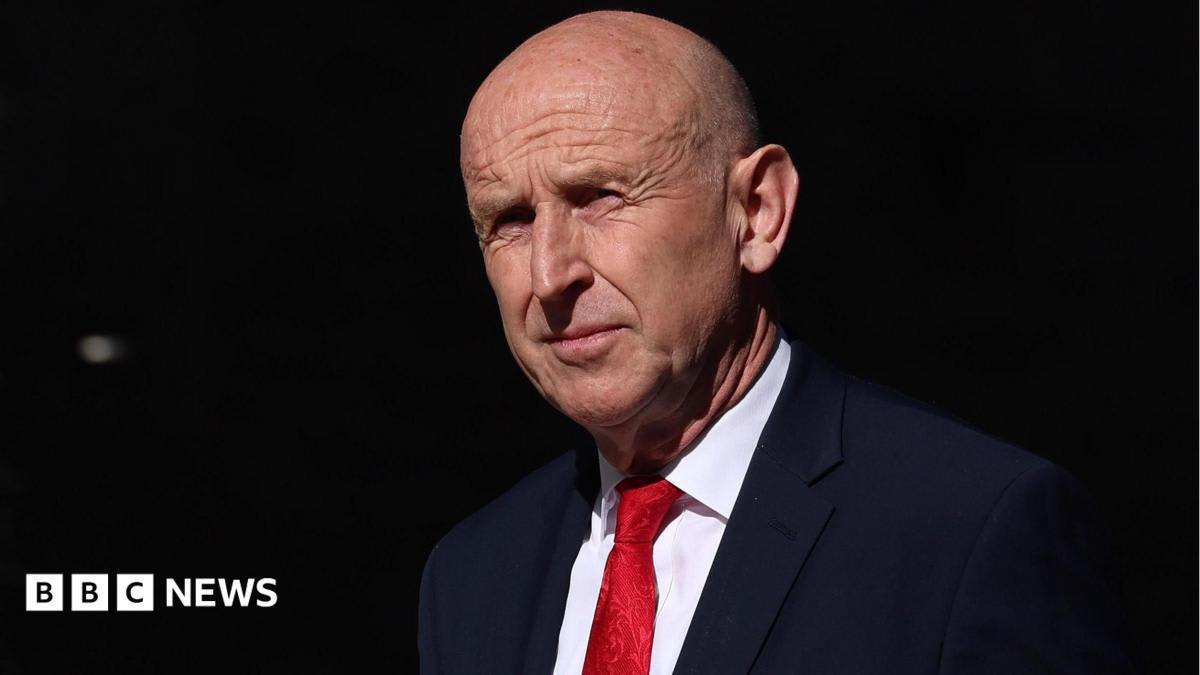
Prime Minister Andy Burnham has appointed Wes Streeting as Defence Secretary, while former Defence Secretary John Healey takes over as Chancellor. The move follows Healey's recent resignation over disputes regarding military funding and the UK's commitment to defense spending targets.
A Major Cabinet Reshuffle in the Burnham Administration
In a significant political maneuver, UK Prime Minister Andy Burnham has finalized a high-profile cabinet reshuffle. The appointment of former health minister Wes Streeting as the new Defence Secretary stands as a pivotal change, occurring late Monday. This transition follows a period of intense instability within the government, marked by the recent, high-profile resignation of John Healey from the defence portfolio.
The Rise of John Healey to the Treasury
Perhaps the most surprising element of this reshuffle is the return of John Healey to a senior cabinet role, this time as Chancellor of the Exchequer. Healey, who had resigned his post as defence secretary just weeks prior, is now tasked with overseeing the nation's finances. His previous resignation, which occurred just before Prime Minister Burnham’s critical by-election in Makerfield, had signaled deep fissures within the government’s internal cohesion. His appointment as Chancellor is being viewed by many as a move to install a 'safe pair of hands' in the Treasury, despite the shockwaves his initial departure caused.
The Conflict Over Defence Spending
The root cause of the previous administration's internal volatility remains the primary challenge for the new cabinet. Healey’s resignation was a matter of principle, stemming from a direct clash with his predecessor, Rachel Reeves, over the Treasury’s refusal to commit sufficient resources to national security. Healey had explicitly criticized the Treasury for failing to address the rising global threats, arguing that the offered budget increase of £13.5bn—which he and his supporters labeled as 'Treasury trickery' worth only £10bn—was inadequate to maintain national safety.
Navigating the 3% GDP Target
A central point of contention for the incoming Chancellor will be the UK’s commitment to increasing defence spending to 3% of GDP by 2030. Healey had long argued that this timeline was essential to ensure the UK remained aligned with NATO’s readiness requirements for potential future conflicts. Under the previous administration of Sir Keir, this target remained vague, lacking the concrete commitment Healey demanded. As Chancellor, Healey now holds the levers of the national budget, putting him in a unique position to reconcile his own past demands for higher defence spending with the fiscal realities of the UK economy.
Future Implications for UK Security
With Wes Streeting now at the helm of the Ministry of Defence and John Healey managing the national purse strings, the dynamic between these two departments will be closely watched. Streeting inherits a department that has been at the center of a spending row, while Healey must balance his past advocacy for increased military funding with his new responsibilities as Chancellor. The success of the Burnham government will likely depend on whether these two figures can resolve the fundamental disagreements regarding 'Treasury trickery' and the 2030 defence spending pledge that previously destabilized the cabinet.
Conclusion
The appointment of Streeting and the elevation of Healey represent a high-stakes gamble for Prime Minister Burnham. By placing a proponent of increased military spending in the role of Chancellor, Burnham has effectively brought the conflict over national security funding into the heart of the Treasury. Whether this results in a more robust defence budget or further friction within the cabinet remains the defining question for the new administration's longevity and its ability to address the geopolitical threats facing the nation.
Multiple Citing Sources