Windows 11 Is Collecting Data on Which Coding Agents and Developer Tools You Use
Source Entity
Hacker News
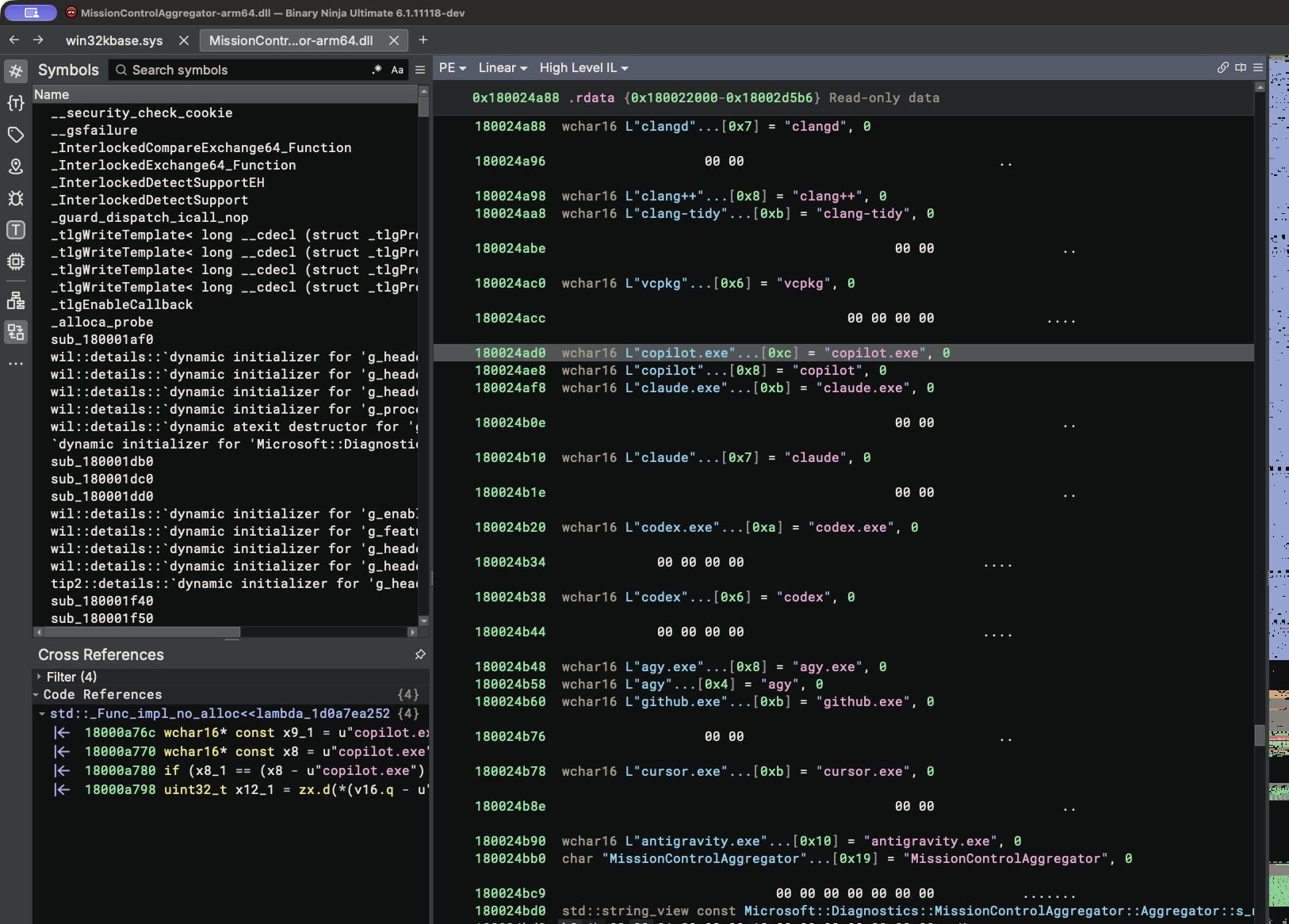
Recent analysis of Windows 11 binaries reveals that the MissionControlAggregator component is tracking the usage of specific coding agents and developer tools. This discovery raises significant privacy and telemetry concerns regarding how Microsoft monitors professional development environments.
The Privacy Implications of Windows Telemetry
Recent investigations into the internal architecture of Windows 11 have uncovered a noteworthy telemetry mechanism embedded within the MissionControlAggregator.dll. By reverse-engineering system binaries, researchers identified that the operating system is actively cataloging the execution of specific software, ranging from advanced coding agents like codex.exe, claude.exe, copilot.exe, and cursor.exe to foundational developer utilities such as python.exe, dotnet.exe, and gcc.exe.
Understanding MissionControlAggregator
The presence of these specific identifiers within a system-level DLL suggests that Microsoft is tracking the usage patterns of developers at a granular level. The MissionControlAggregator component appears to be responsible for aggregating diagnostic Event Tracing for Windows (ETW) reports, which effectively creates a detailed log of a user's professional toolset. For the developer community, this raises immediate questions regarding the scope of telemetry and whether such data collection is intended for product improvement or user profiling.
The Shift Toward AI-Integrated Workflows
As the industry shifts toward AI-assisted software development, the inclusion of agents like copilot.exe and cursor.exe in these logs highlights a strategic focus on monitoring the adoption of generative AI tools. By tracking which coding agents are running on a Windows environment, Microsoft may be gathering intelligence on the competitive landscape of developer tools. This data could theoretically inform future integrations within the Windows ecosystem or influence how Microsoft prioritizes its own developer-focused software suite.
Transparency and Diagnostic Data
Historically, Microsoft has maintained that diagnostic data is essential for maintaining the stability and security of the Windows ecosystem. However, the specific targeting of developer-centric tools suggests a departure from general system performance monitoring. When an operating system begins to identify and log the specific compilers, interpreters, and AI agents being used, it blurs the line between functional diagnostic reporting and the surveillance of user productivity habits.
Broader Industry Consequences
This finding will likely spark a broader debate regarding the privacy of developer environments. Many professional software engineers rely on privacy-centric workflows, and the discovery that the underlying OS is monitoring their choice of IDEs and AI assistants may lead to increased scrutiny of Windows telemetry settings. Users may feel compelled to utilize third-party tools to disable or obfuscate these specific ETW reports to maintain confidentiality regarding their proprietary codebases and development processes.
Future Trends in OS Telemetry
Looking forward, this event underscores a growing trend where operating systems act as active observers of the software running on top of them. As AI continues to integrate into the operating system level, users should expect more sophisticated telemetry focused on how these AI tools interact with local hardware. Moving forward, it is critical for organizations like Microsoft to provide greater transparency into the specific strings and binary references being logged, ensuring that developer productivity does not come at the cost of inadvertent data exposure.