China's Xi Says AI Should Not Be Dominated By One Nation
Source Entity
NDTV News Search Records Found 1000
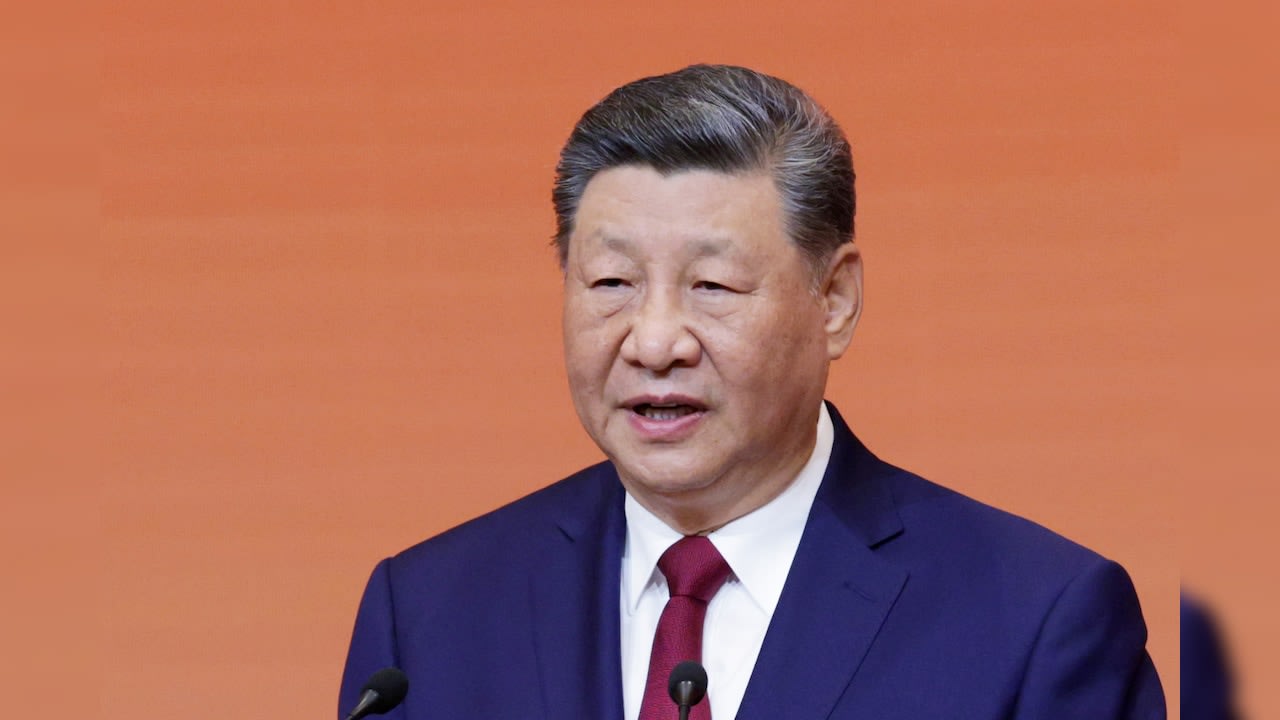
President Xi Jinping has positioned China as a key partner for the Global South in AI development, offering training opportunities while criticizing U.S. export restrictions. The move highlights an intensifying geopolitical rivalry over AI standards, semiconductors, and international influence.
China’s Global AI Strategy: Bridging the Divide or Expanding Influence?
At the recent World AI Conference in Shanghai, Chinese President Xi Jinping unveiled a strategic initiative aimed at positioning China as the primary partner for the Global South in the artificial intelligence sector. By offering 5,000 training opportunities and fostering cooperation with major blocs such as the African Union, the League of Arab States, and the Association of Southeast Asian Nations, China is actively seeking to export its AI development model. This outreach is not merely philanthropic; it is a calculated effort to build a coalition of nations that align with China’s technological standards and infrastructure.
Challenging the Status Quo
The core of Xi’s message was a pointed critique of Western, specifically American, technological policies. By advocating for open-source AI models and warning against the "overstretching" of national security concepts, Xi is attempting to frame U.S. export controls—such as the 2019 inclusion of Huawei on the Entity List and the 2022 restrictions on advanced semiconductors—as exclusionary and harmful to global innovation. This rhetoric is designed to resonate with developing nations that may fear being left behind in a bifurcated global digital economy.
The Semiconductor Cold War
To understand the gravity of these statements, one must look at the historical context of the U.S.-China tech rivalry. The Biden administration’s 2022 export controls were specifically designed to throttle China's ability to manufacture and procure the advanced computing chips necessary for training high-end AI models. By positioning China as a champion of "openness," Xi is attempting to bypass these hardware bottlenecks by fostering a software and model-based ecosystem that relies on Chinese-led standards rather than U.S.-proprietary hardware.
The Battle for Global Standards
AI is not just about raw computing power; it is about setting the rules of the road for the future of global technology. With 29 countries having recently joined a China-led body to promote AI cooperation, the competition for setting global standards has moved from the laboratory to the diplomatic arena. Both the U.S. and China are vying to ensure their respective AI models—such as those underlying chatbots—become the global standard, which would grant the dominant nation significant long-term leverage over international commerce and digital infrastructure.
Future Implications and Trends
Looking ahead, the divide between the U.S. and Chinese AI ecosystems is likely to widen. As China invests heavily in training programs for the Global South, we can expect a growing number of nations to adopt Chinese-compatible AI infrastructure. This suggests a future where the global AI landscape is split, with nations forced to navigate between the U.S.-led ecosystem—defined by strict security controls and proprietary models—and the Chinese-led ecosystem, characterized by open-source initiatives and state-backed international cooperation.
Conclusion
President Xi's address at the World AI Conference marks a significant escalation in the diplomatic dimension of the AI arms race. By casting China as an inclusive partner, Beijing is effectively using technological assistance as a tool of soft power to counter U.S. containment strategies. As this geopolitical struggle continues to evolve, the ability of nations to remain neutral in the face of these competing visions for the future of AI will become increasingly difficult.
Multiple Citing Sources
Verification Required?