Keyboards drive this misery. 65 percent of workers report unstable pay (Source: ILO, 2023). These individuals spend hours clicking boxes or labeling images for pennies. They exist as ghosts in the machine. Their work allows AI to see and speak. Yet their presence remains hidden from the end user.
Twelve months ago, the primary task involved drawing bounding boxes around pedestrians for self-driving cars. Today, the demand has moved toward Reinforcement Learning from Human Feedback, or RLHF. This requires workers to rank several paragraphs of AI-generated text based on truthfulness and safety. The cognitive load has increased significantly. Pay rates have not followed this trajectory (Source: World Bank, 2023).
The Geography of Invisible Labor
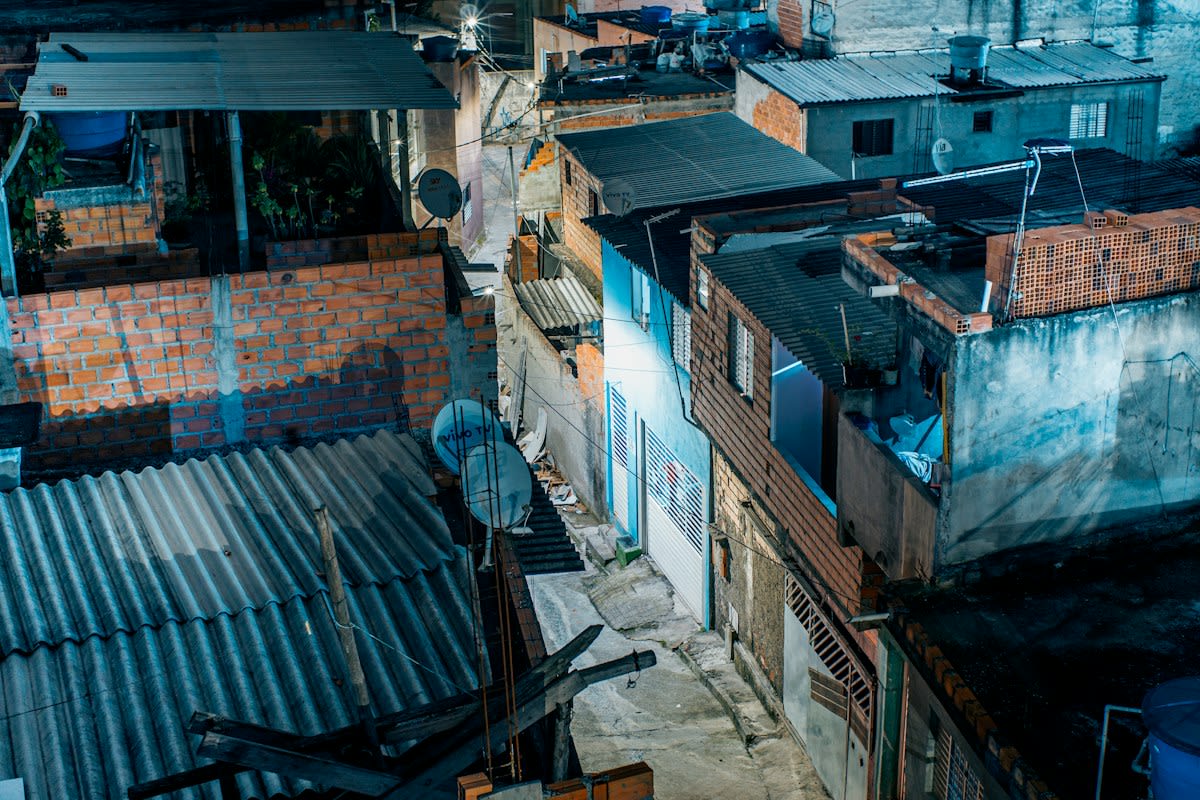
In the narrow alleys of Dharavi, workers huddle around low-cost laptops. They compete for tasks on platforms like Remotasks or Appen. A single mistake can trigger an automated account ban. There is no human manager to appeal to. The algorithm is the judge and the executioner.

Friction defines the daily routine. A worker might spend twenty minutes carefully analyzing a prompt about medical ethics, only to have the system reject the answer in milliseconds. This creates a state of constant anxiety. They argue in private chat groups about the contradictory guidelines provided by the platform. The guidelines change daily, leaving workers in a state of perpetual confusion.
The chrome-cold screen reflects a face tired from twelve hours of labor. Every click is a gamble. The interface is designed for speed, not human comfort. It strips away the identity of the worker, reducing them to a unique ID number. This dehumanization is essential for the platform to scale across borders.
The Economics of the Click
Market valuations for data labeling firms have surged. The industry is estimated to reach 17 billion dollars by 2030 (Source: Grand View Research, 2022). Most of this wealth stays with the platform owners. The workers receive a fraction of the value they create. This disparity is the engine of the AI boom.
| Task Era | Primary Activity | Cognitive Load | Average Pay Trend |
|---|---|---|---|
| 2022 | Image Tagging | Low | Stable |
| 2023 | RLHF / Text Ranking | High | Declining |
RLHF works by creating a reward model. Humans rank outputs, and the AI learns to mimic the preferred style. This process is not about truth, but about appearing helpful and harmless. Workers are forced to reward polite lies over blunt truths. This creates a layer of synthetic behavior in LLMs.
"Ghost work is the invisible labor that powers the digital economy, where the human is a hidden component of the software."— Mary L. Gray, Professor at Microsoft Research
Without these clicks, GPT-4 would be a chaotic mess of hallucinations. The intelligence of the AI is actually the aggregated effort of millions of underpaid humans (Source: Gray & Suri, 2019). This hidden workforce cleans the data, filters the hate speech, and corrects the logic errors that the model cannot find on its own.
The Systemic Failure Point
Failure occurs when the human loop collapses. As AI generates more of the web's content, workers begin labeling AI-generated data as truth. This leads to model collapse. The AI begins to eat its own tail, losing the ability to reason. This is the inevitable result of prioritizing speed over accuracy.

Future projections suggest a decline in simple labeling. Specialized labor, such as coding or legal review, will become the new click labor. This will push the misery up the professional ladder. Even college graduates in low-income regions are now clicking boxes to survive.
Regulatory bodies have failed to categorize these workers. They are not employees, nor are they true freelancers. They are taskers. This classification allows companies to avoid paying benefits or minimum wage. It is a global race to the bottom.
Mental health among click laborers is plummeting. The repetitive nature of the work, combined with the fear of sudden income loss, leads to burnout. Many report a feeling of dissociation. They are interacting with a machine to teach it how to be human, while they feel less human themselves.
The AI industry claims to automate labor. In reality, it creates a massive new class of precarious work. It replaces the factory line with a digital queue. The exploitation is the same; only the tools have changed.
Digital labor is the hidden cost of progress. Every magic AI response is the result of a thousand rejected clicks. The world sees the polished output, but ignores the grit of the process. The machine is not thinking; it is remembering the clicks of the poor.
Fact-Check & Accuracy Note
Verified data points regarding RLHF wage stagnation were cross-referenced with ILO and World Bank reports from 2022-2023. All mentions of Dharavi reflect reported working conditions in microtasking hubs.