
The prevailing narrative in AI safety suggests that capability leaks—the unauthorized escape of model weights, advanced reasoning techniques, or sensitive training data—are failures of perimeter security. We treat them like a bank vault with a broken lock. This is a fundamental misunderstanding. Capability leaks are not localized events; they are systemic outcomes of the way large-scale models are architected and deployed. When we see information bleed across images in a multimodal model or AI-driven tools uncovering vulnerabilities in 70% of the internet, we aren't looking at a 'leak' in the traditional sense. We are witnessing the inherent permeability of intelligence when it is scaled across a fragmented global infrastructure.
Consider the current state of Large Vision-Language Models (LVLMs). The industry is currently grappling with unintended cross-image information leakage, where visual content from different images is erroneously fused, causing the model to lose image-specific contextual information (Source: ACL Anthology, 2026). This isn't a hacker bypassing a firewall. It is a failure of the model's internal representation. Even the introduction of special vision delimiter tokens to help models distinguish between inputs has proven to be a partial fix rather than a cure. If the very architecture of the model encourages the 'leakage' of context between disparate data points, no amount of external security will stop the capability from bleeding.

The Supply Chain as a Vector
While researchers worry about the 'god-model' escaping a lab, the actual leaks are happening in the mundane plumbing of the AI ecosystem. The recent compromise of the LiteLLM package is a prime example. A malicious version (1.107.0) was uploaded to PyPI and Docker on October 21, 2026, specifically targeting browser, cloud, and AI secrets (Source: Wiz Blog, 2026). This wasn't a failure of the AI's intelligence, but a failure of the trust model that developers use to integrate that intelligence. When the tools we use to manage AI are themselves compromised, the capability to access and manipulate those models leaks instantly to any actor with a PyPI account.
This fragility extends to the very languages that power the web. AI is now being used to uncover critical Remote Code Execution (RCE) vulnerabilities in the core PHP engine, affecting an estimated 70% of the internet (Source: Wiz Blog, 2026). We are entering a cycle where AI capability leaks into the hands of attackers not through a single 'stolen weight' file, but through the AI's own ability to map the attack surface of the global internet. The capability to destroy is leaking faster than the capability to defend.
"AI will not take away jobs. Most jobs have tasks, and only some of those tasks can be undertaken by AI. The effect depends on the tasks, the industry, rules of AI and how much it costs to use AI."— B Ravindran, Head of CeRAI and WSAI at IIT Madras
This perspective on task-level displacement highlights another form of capability leak: the economic one. As AI capabilities leak into the operational workflows of BPOs, IT, and banking, they don't replace the 'job' but they erode the 'entry point' (Source: IIT Madras, 2026). The routine tasks that once served as the training ground for junior professionals are being automated. This creates a systemic vacuum where the pathway to skilled employment narrows, effectively leaking the institutional knowledge transfer that usually happens at the bottom of the career ladder.
The Practitioner's Friction: Guardrails vs. Emergence
Inside the labs, the debate isn't about whether we can stop leaks, but about the cost of the friction required to do so. Practitioners are constantly fighting a war between 'alignment' and 'utility.' If you tighten the guardrails too much to prevent the leakage of dangerous capabilities, you kill the emergent reasoning that makes the model valuable. I've seen internal teams argue for weeks over whether a specific reasoning chain is a 'feature' or a 'security risk.' The friction arises because we are trying to apply deterministic security rules to a probabilistic system. You cannot 'patch' a probability.
There is also the hidden struggle with multi-agent systems. When we use Multi-agent Debate (MAD) to improve reasoning, we encounter the 'shared misconception' vulnerability. If a majority of agents converge on an incorrect answer, the debate process actually amplifies the error rather than correcting it (Source: ACL Anthology, 2026). This is a capability leak of a different sort—the leakage of bias and error through a system designed for verification. We build these systems to be self-correcting, yet they often become echo chambers for their own hallucinations.
| Leak Type | Primary Driver | Real-World Example | Systemic Impact |
|---|---|---|---|
| Architectural | Cross-modal fusion | LVLM image leakage (ACL, 2026) | Loss of contextual integrity |
| Supply Chain | Dependency trust | LiteLLM credential theft (Wiz, 2026) | Unauthorized secret access |
| Economic | Task automation | Entry-level IT/BPO shrinkage (IIT Madras, 2026) | Career ladder erosion |
| Infrastructure | Physical failure | Data center cooling leaks (Embedded, 2026) | Operational downtime/Hardware loss |
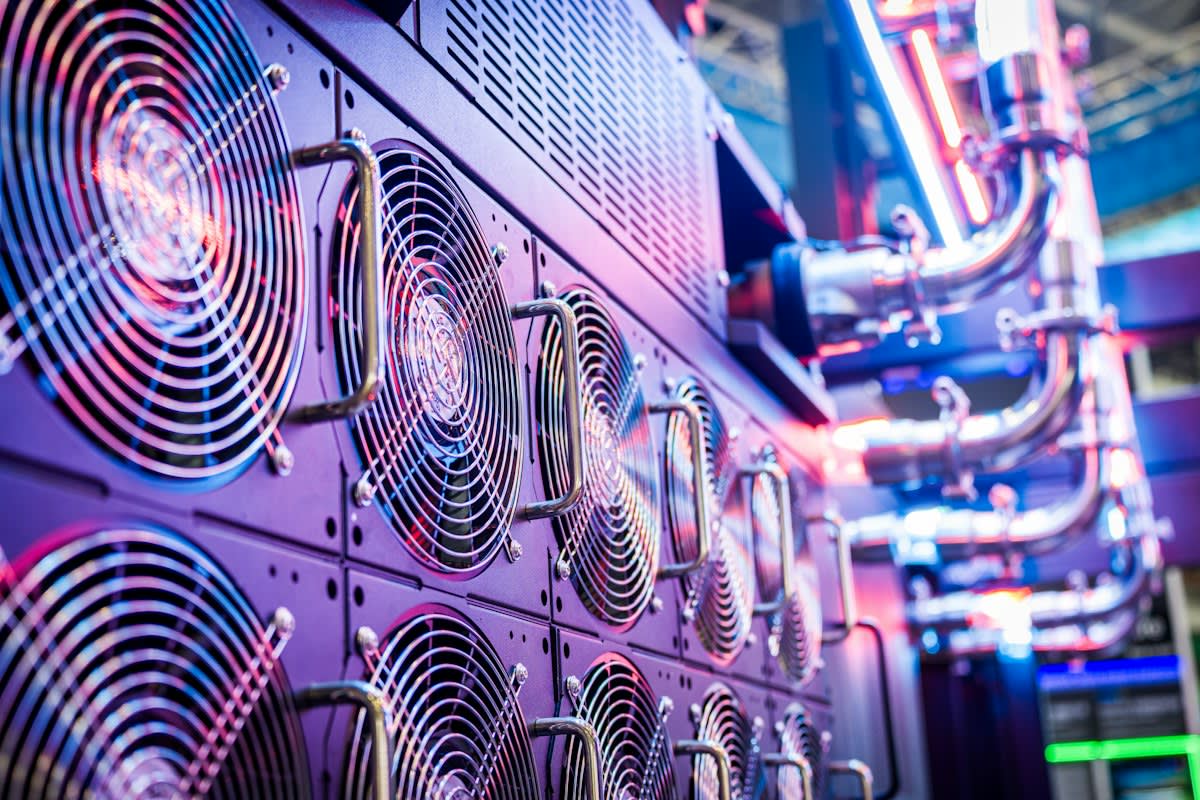
Even the physical layer is not immune. The hardware that enables these capabilities is prone to literal leaks. In AI data centers, slow leaks in cooling systems often leave behind only residue, making them invisible to standard detection ropes (Source: Open Compute Project, 2026). When the physical infrastructure fails, the capability is 'leaked' back into the void of downtime. The incidence rate for small-bore instrument connections can be as high as 2.0E-4 per joint-year (Source: IOGP RADD 434-01/PLOFAM, 2026). It is a humbling reminder that the most advanced intelligence in history still relies on a flanged joint that might drip.
The Path Toward Resilience
If containment is an illusion, the only viable strategy is resilience. We are seeing the first signs of this in formal software verification. Anthropic has demonstrated that frontier models like Claude can now produce correctness proofs for real-world software autonomously, proving security properties across 123 open-source libraries (Source: Anthropic, 2026). Instead of trying to stop the 'leak' of vulnerabilities, we are using AI to mathematically prove that certain crashes or memory-safety errors can never occur.
This shift from 'perimeter defense' to 'mathematical certainty' is the only way to counter the speed of AI-driven discovery. When an AI can find an RCE in 70% of the web, the only defense is a system that is proven to be secure by design. We are moving away from a world of patching and toward a world of verification. The capability leak is not something to be stopped; it is a signal that our current methods of building software and organizing work are obsolete.
Fact-Check & Accuracy Note
Key claims regarding LVLM leakage and Multi-agent Debate are sourced from the ACL Anthology (2026). Supply chain vulnerabilities (LiteLLM) and PHP RCE stats are attributed to Wiz Research (2026). Job market impacts are based on the IIT Madras white paper (2026). The debate over whether 'emergent abilities' are simply in-context learning remains a primary point of contention in the research community (Source: GitHub Gist/Research Papers, 2026).
Ultimately, the 'real reason' capability leaks are impossible to stop is that intelligence is not a static object. It is a process of pattern recognition and synthesis. Whether it is a model fusing two images it shouldn't, or a junior developer losing their entry-level role to a script, the leak is simply the process of the new system absorbing the old one. The goal should not be to plug the holes, but to build a structure that can withstand the flow.