Meet 10-yr-old Hsu Ting-wei, winner of Silicon Valley invention award
Source Entity
TOI TECH DESK
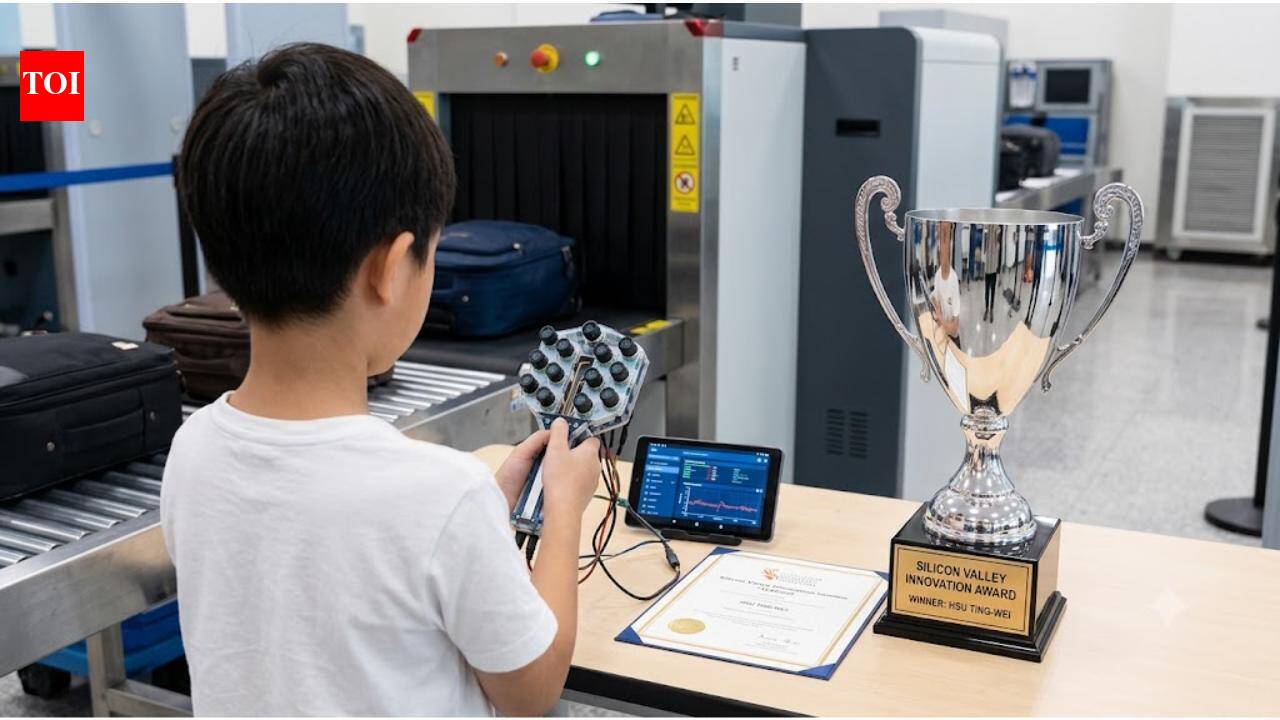
Ten-year-old Taiwanese student Hsu Ting-wei won top honors at the Silicon Valley International Festival for his AI-powered electronic nose. His success contributed to a massive haul of 24 gold medals for the Taiwanese delegation, showcasing the nation's growing prowess in practical AI innovation.
A Prodigy in the Silicon Valley Spotlight
At the recent Silicon Valley International Festival (SVIIF) in California, the global innovation community witnessed a remarkable display of talent from Taiwanese inventors. Among the standout participants was ten-year-old Hsu Ting-wei, a student from Kang Chiao International School, whose technical ingenuity captured the attention of international judges. His creation, an AI-powered "electronic nose," earned him both a gold medal and the prestigious International Federation of Inventors' Associations' best invention award, marking a significant milestone for a young creator on a world stage.
The Mechanics of the Electronic Nose
The "Novel Artificial Electronic Nose" developed by Hsu is designed to identify airborne chemical threats and potential health risks in real-time. By leveraging artificial intelligence to detect volatile organic compounds and hazardous particles, the device offers a practical application for environment monitoring. This innovation underscores a growing trend in the tech industry: the integration of sophisticated machine learning models into compact, consumer-ready hardware to solve immediate public safety and health challenges.
Taiwan’s Dominance in Innovation
Hsu’s individual success was part of a broader, record-breaking performance by the Taiwanese delegation at the SVIIF. The group collectively secured twenty-four gold medals, reflecting a robust ecosystem of research and development within the region. This consistent high-level performance suggests that Taiwan’s educational and technical frameworks are effectively fostering a culture of practical problem-solving, encouraging young minds to bridge the gap between theoretical science and applied technology.
Broader Implications for AI Development
The success of the Taiwanese team highlights the shift toward "accessible AI," where technology is no longer confined to massive data centers but is increasingly being used in portable, life-saving devices. The recognition of Hsu’s work by the International Federation of Inventors' Associations signals a global appetite for inventions that prioritize human health and environmental security. Such events serve as a barometer for future industry trends, suggesting that the next generation of engineers will focus heavily on responsive, sensor-based AI systems.
Future Trends and Educational Impact
The trajectory of young inventors like Hsu Ting-wei suggests that early exposure to STEM education and AI programming is yielding tangible results. As these tools become more intuitive, we can expect a surge in youth-led innovation that addresses local environmental and safety concerns. The SVIIF serves not only as a competition but as a vital platform for mentorship and industry exposure, ensuring that these young prodigies have the necessary support to scale their prototypes into viable, real-world solutions.
Conclusion
The recent achievements at the Silicon Valley International Festival confirm Taiwan’s position as a powerhouse of technological creativity. Through the efforts of individuals like Hsu Ting-wei and the collective success of his peers, the event has spotlighted the potential of AI to enhance daily life. As these innovations move from the festival floor to practical implementation, the world will likely continue to look toward these young pioneers for the next wave of life-improving, AI-driven technologies.