Significance of the 12th BRICS Parliamentary Forum in India
Source Entity
Latest News: Todays Latest News Headlines from India & World | Hindustan Times | Hindustan Times
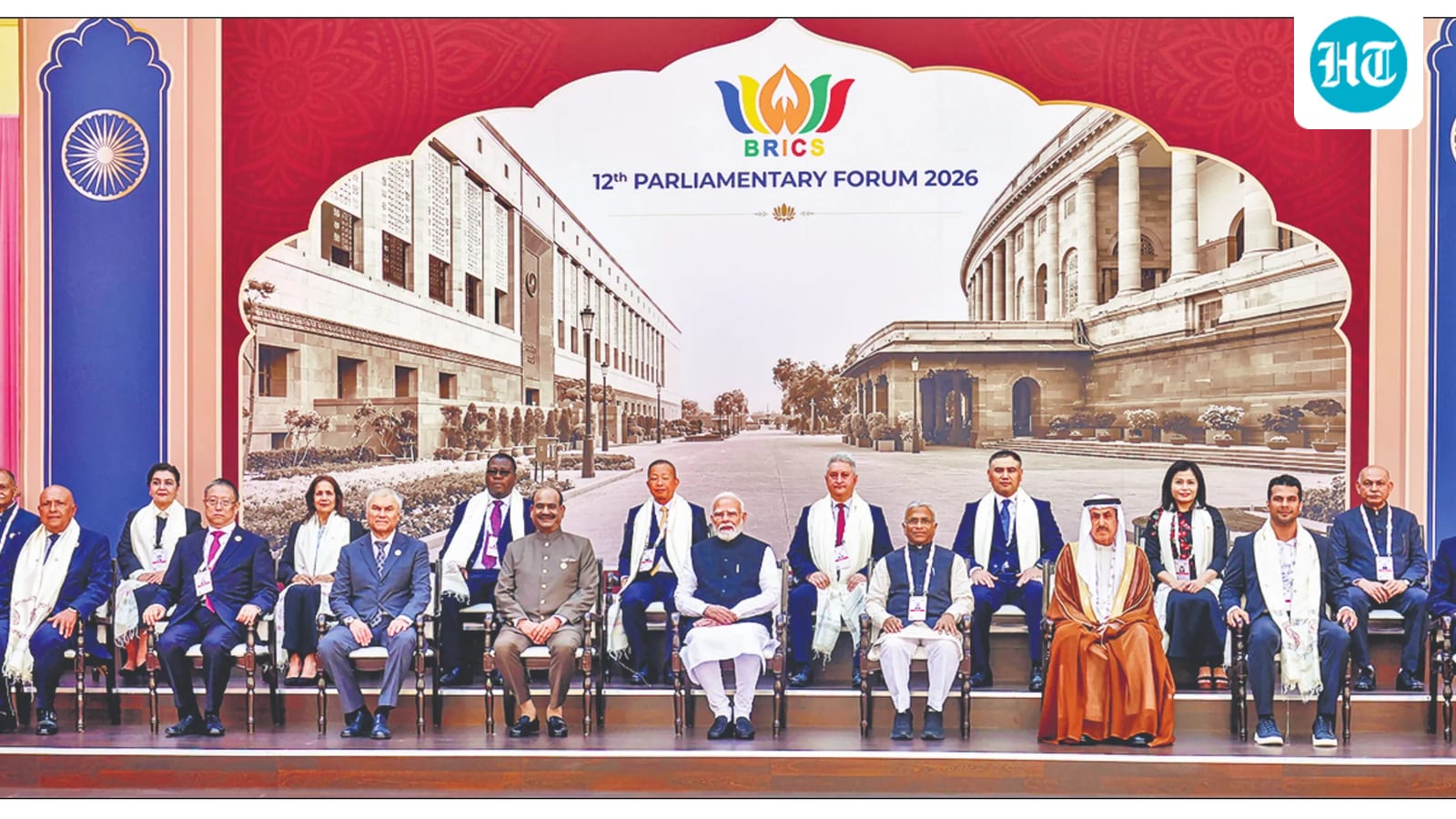
The 12th BRICS Parliamentary Forum in New Delhi marked a significant evolution in legislative diplomacy for the Global South. By integrating parliamentary dialogue into the BRICS framework, the forum strengthened democratic representation within this influential geopolitical bloc.
The Evolution of Legislative Diplomacy: The 12th BRICS Parliamentary Forum
The global geopolitical landscape is currently navigating a period of profound structural transformation, defined by the erosion of unipolarity and the rapid ascent of a multipolar international order. Central to this shift is the increasing assertiveness of the Global South, a coalition of nations seeking to redefine the rules of global governance. Within this context, BRICS has emerged as a cornerstone of this transition, representing a formidable economic and demographic bloc that accounts for nearly 42% of the world’s population and 23% of global GDP.
Expanding the Scope of Multilateralism
Historically, international diplomacy within groupings like BRICS has been dominated by executive-level summits, where heads of state and government forge high-level policy. However, the institutionalization of the 12th BRICS Parliamentary Forum, hosted by the Parliament of India in New Delhi on October 26–27, 2026, marks a departure from this tradition. By incorporating parliamentary dialogue, the forum has added a vital democratic layer to multilateralism, ensuring that the bloc's agenda is not merely the product of executive decree but is rooted in legislative consensus.
The Role of New Delhi as a Diplomatic Hub
Hosting this landmark event at Samvidhan Sadan in New Delhi underscores India’s commitment to fostering a more inclusive and representative global order. The presence of Prime Minister Narendra Modi at the meeting with various parliamentary delegations highlights the importance of legislative engagement in modern statecraft. This meeting served as a watershed moment for legislative diplomacy, signaling that the BRICS framework is maturing into a multi-dimensional institution capable of coordinating policy across different branches of government.
Strengthening the Global South
As the Global South seeks greater parity in international financial and political institutions, the BRICS Parliamentary Forum provides a platform for lawmakers to synchronize their legislative priorities. This coordination is essential for addressing shared challenges, such as sustainable development, trade imbalances, and the reform of global governance institutions. By aligning their legislative agendas, member nations can more effectively push for structural changes that better reflect the realities of the 21st century.
Future Trends in BRICS Cooperation
Looking ahead, the success of the 12th BRICS Parliamentary Forum suggests a trend toward deeper institutional integration. Future forums are likely to focus on the harmonization of legal frameworks regarding digital economies, climate policy, and cross-border security. As the group continues to expand its influence, the role of parliaments in ratifying and overseeing these multilateral agreements will become increasingly critical to the long-term stability and legitimacy of the BRICS project.
Conclusion
In summary, the 12th BRICS Parliamentary Forum represents a significant step forward in the institutionalization of the bloc. By bringing together the legislative representatives of some of the world's most influential nations, the forum has successfully bridged the gap between executive policy and democratic oversight. As global dynamics continue to shift, the legislative diplomacy fostered in New Delhi will undoubtedly play a pivotal role in shaping the future trajectory of the Global South.
Verification Required?