16-yr-old Canadian student built AI robot turtle that hunts plastic invisible to eye
Source Entity
TOI TECH DESK
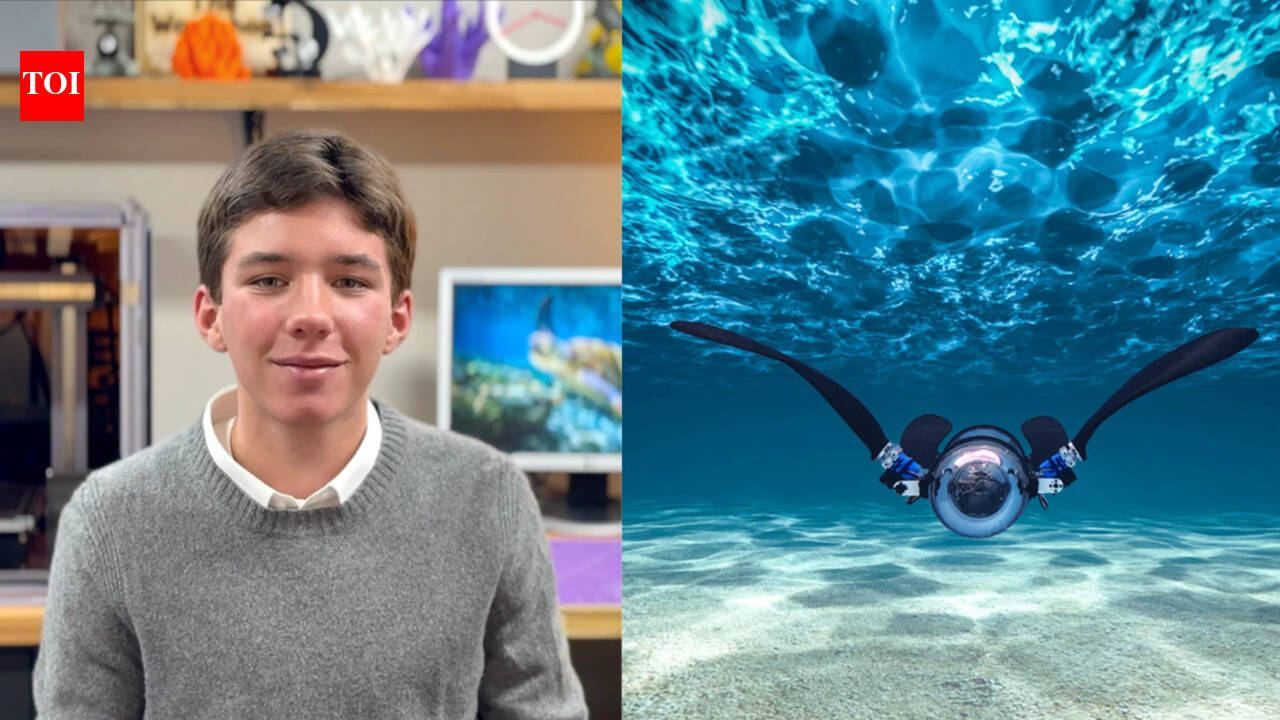
16-year-old Canadian student Evan Budz developed an AI-powered robotic turtle capable of detecting microplastics in water with 94% accuracy. His innovative use of holographic camera technology won him a $50,000 scholarship at the 2026 Regeneron ISEF.
Innovation in Conservation: The Robotic Turtle Breakthrough
In a remarkable display of youthful ingenuity, 16-year-old Canadian student Evan Budz has developed an autonomous bionic sea turtle designed to combat the growing crisis of microplastic pollution. Inspired by a personal encounter with a snapping turtle during a camping trip in Ontario, Budz dedicated approximately 4,000 hours to engineering a solution that bridges the gap between biological mimicry and advanced environmental monitoring. His project, which earned him a prestigious $50,000 scholarship at the 2026 Regeneron International Science and Engineering Fair (ISEF), represents a significant leap forward in autonomous aquatic research.
The Mechanics of Micro-Detection
At the core of Budz’s invention is a sophisticated integration of artificial intelligence and an underwater holographic camera system. Unlike traditional, cumbersome sampling methods, this robotic turtle is capable of identifying microplastics as small as 10 microns with a remarkable 94% accuracy rate. By utilizing holographic imaging, the robot can capture three-dimensional data of suspended particles in real-time, allowing for immediate analysis rather than relying on delayed laboratory processing. This technological leap addresses a critical bottleneck in environmental science, where the detection of invisible pollutants has historically been a slow and cost-prohibitive endeavor.
Disrupting Traditional Environmental Testing
Currently, the standard protocol for microplastic analysis involves collecting water samples and transporting them to specialized laboratories, a process that is both time-consuming and expensive. Budz’s invention aims to decentralize this process by enabling on-the-spot detection in remote and hard-to-reach water bodies. By deploying an autonomous agent that can swim, dive to specific depths, and process data locally, the robot provides researchers with a scalable tool for mapping plastic distribution in lakes and oceans, potentially changing how we monitor global water quality.
The Impact of AI in Bionics
The choice of a sea turtle form factor is not merely aesthetic; the bionic design allows the device to navigate natural environments with minimal disruption to local aquatic life. By mimicking the movement of a snapping turtle, the robot can operate as an unobtrusive observer. The integration of AI allows the device to navigate autonomously, making it a viable candidate for long-term deployment in complex ecosystems. This marriage of bionics and machine learning highlights a growing trend in environmental engineering where nature-inspired design leads to more efficient and sustainable technological solutions.
Future Trends and Global Implications
As microplastics continue to permeate global food chains and water supplies, the need for rapid, accurate, and low-cost detection tools becomes increasingly urgent. Evan Budz's achievement at the Regeneron ISEF—securing the Gordon E. Moore Award for Positive Outcomes—serves as a catalyst for future research into autonomous environmental monitoring. Moving forward, such innovations suggest a future where fleets of low-cost, AI-driven drones could provide continuous, high-resolution data on pollution levels, enabling more effective policy interventions and cleanup efforts on a global scale.