40 years ago August 6, 1986: Tougher sanctions
Source Entity
The Indian Express
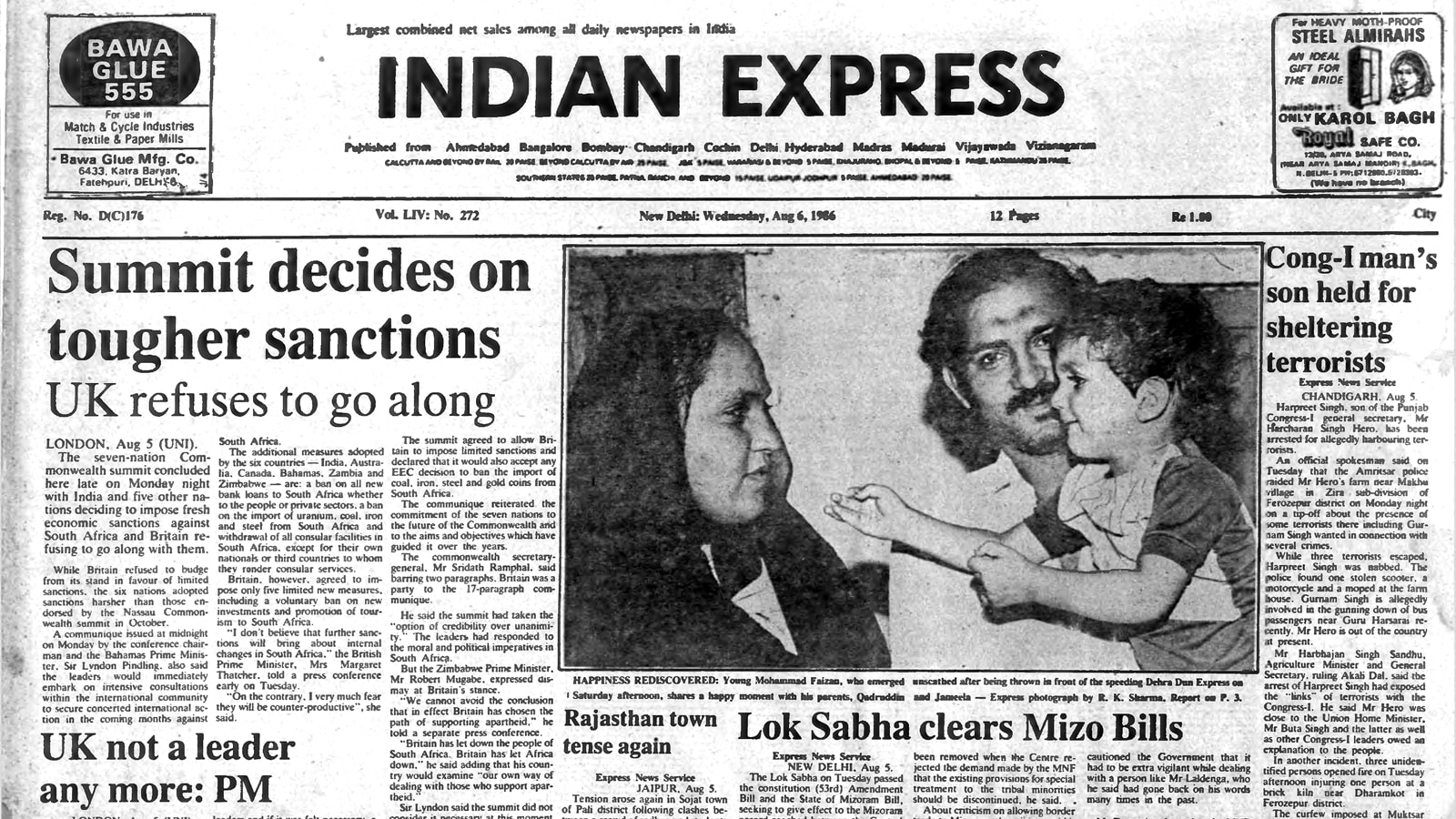
In August 1986, India and five other Commonwealth nations imposed significant economic sanctions on South Africa to combat apartheid. Britain notably refused to join the effort, leading to a public diplomatic rift and criticism from the Indian leadership.
The 1986 Commonwealth Standoff: A Turning Point in Anti-Apartheid Diplomacy
On August 6, 1986, the landscape of international relations regarding the apartheid regime in South Africa underwent a significant shift. Following a late-concluding seven-nation Commonwealth summit, a coalition led by India and five other member nations resolved to enact rigorous economic sanctions against the Pretoria government. This decision marked a deliberate escalation in the global effort to dismantle institutionalized racial segregation, signaling that the participating nations were no longer willing to rely solely on diplomatic discourse to influence South African policy.
The Fracture within the Commonwealth
The summit highlighted a profound ideological divide within the Commonwealth. While the six nations championed a robust and punitive economic strategy, Britain—a founding and central member of the organization—firmly refused to align with these measures. This refusal created a diplomatic impasse, pitting the moral urgency felt by the majority of the summit participants against the more conservative, trade-focused stance maintained by the British government at the time. The divergence was not merely procedural; it represented a fundamental disagreement on how to pressure a regime that was increasingly viewed as a pariah by the international community.
Escalation Beyond Nassau
The measures agreed upon by the six nations were notably more severe than those previously endorsed during the October 1985 Nassau Commonwealth summit. By adopting these 'harsher' sanctions, the coalition demonstrated a growing impatience with the slow pace of reform within South Africa. The decision to bypass British consensus suggests that these nations sought to bypass the traditional power dynamics of the Commonwealth to exert more direct, tangible pressure on the South African economy, aiming to accelerate the collapse of apartheid through financial isolation.
The Erosion of British Influence
Following the summit, the Indian leadership notably expressed a critical sentiment, declaring that the United Kingdom was no longer a leader in the global political arena. This public rebuke reflected a broader shift in the post-colonial era, where Commonwealth nations were increasingly asserting their own foreign policy agendas independently of London. The refusal of Britain to join the sanctions was interpreted by many as an abdication of moral leadership, fundamentally altering the perception of the UK's role within the organization.
Historical Legacy and Long-term Implications
The events of August 1986 serve as a critical case study in the power of international coalitions to act independently of major Western powers. By choosing to impose sanctions despite British opposition, India and its partners helped redefine the internal power structure of the Commonwealth. This period of intense diplomatic pressure eventually contributed to the cumulative international exhaustion of the apartheid regime, paving the way for the democratic transitions that would follow in the early 1990s. The 1986 summit stands as a testament to the effectiveness of collective economic action in the face of deep-seated ideological resistance.