AAP, BJP trade barbs as Delhi women celebrate another Chhath amid Yamuna froth
Source Entity
Sophiya Mathew
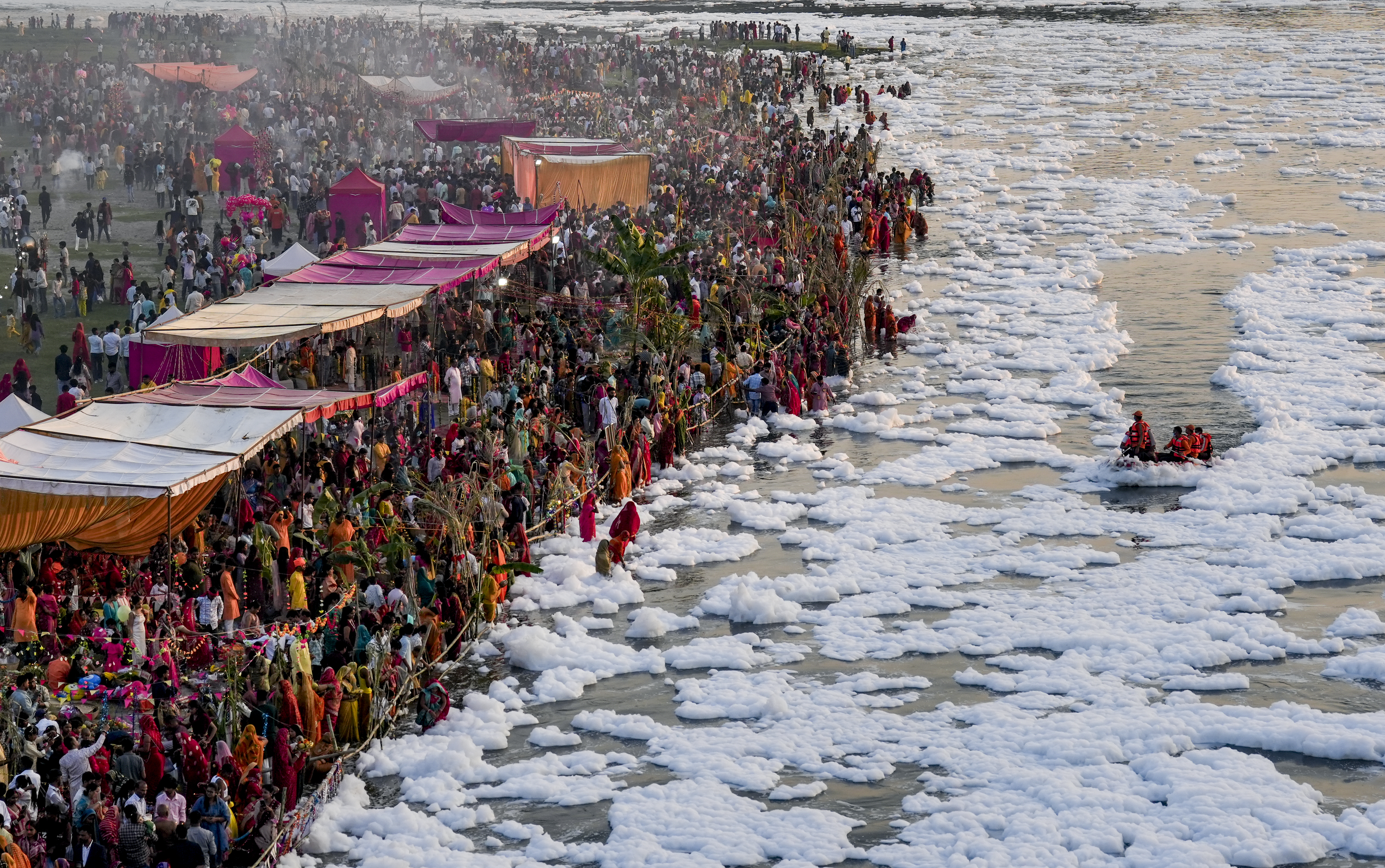
Delhi's Chhath Puja celebrations have sparked a heated political blame game between the AAP and BJP over the persistent toxic foam in the Yamuna. Both parties are trading accusations regarding river pollution, governance failures, and the effectiveness of ongoing cleaning initiatives.
The Yamuna Crisis: Political Standoff During Chhath Puja
As thousands of devotees gathered at the banks of the Yamuna River to celebrate Chhath Puja, the holy rituals were overshadowed by the presence of thick, toxic white foam covering the water's surface. This recurring environmental crisis has once again transformed a sacred religious occasion into a flashpoint for intense political confrontation between the Aam Aadmi Party (AAP) and the Bharatiya Janata Party (BJP).
The War of Narratives
The political discourse surrounding the river's condition has become increasingly polarized. The AAP has utilized social media to highlight the visible pollution, sharing viral imagery of women praying amidst the froth while explicitly asserting that these visuals are genuine and not AI-generated. AAP Delhi unit chief Saurabh Bharadwaj has leveled severe allegations against the government, claiming that significant public funds have been squandered on false propaganda while the river remains hazardous, citing reports of mass fish mortality as evidence of the environmental degradation.
BJP’s Defense and Development Claims
In direct opposition to the AAP’s narrative, the BJP has defended the current state of the river by emphasizing the scale of the logistical support provided for the festival. The party pointed to the successful management of 1,400 ghats across the city, allowing a large number of devotees to perform their rituals. Furthermore, the BJP has countered criticism by asserting that more than half of the river has been successfully cleaned over the past two years, framing the pollution as a historical issue that is currently being addressed through their governance efforts.
The Data vs. The Reality
The debate highlights a critical discrepancy between official data and the physical reality experienced by citizens. While authorities often cite statistics claiming the river is cleaner at entry points compared to exit points, the presence of toxic foam at major locations like Kalindi Kunj serves as a stark visual reminder of the persistent challenges in river management. This gap between reported progress and the visible state of the river remains the core of the public's frustration.
Implications for Urban Governance
This incident underscores the broader challenges of urban governance in Delhi, where infrastructure projects often intersect with religious and cultural sentiments. The politicization of the Yamuna's health suggests that environmental policy has become inseparable from electoral strategy. As both parties continue to trade barbs, the underlying issue of sustainable industrial waste management and sewage treatment remains at the forefront of the debate.
Future Trends and Outlook
Looking ahead, it is clear that the condition of the Yamuna will continue to be a primary metric by which Delhi's electorate judges the effectiveness of its political leaders. Unless there is a tangible, long-term improvement in the river’s water quality that transcends political cycles, the imagery of devotees praying amidst foam will likely persist as a powerful symbol of administrative failure, forcing both the AAP and BJP to reconcile their conflicting claims with the harsh reality on the ground.