Advancing Private AI Compute with secure, server-side memory
Source Entity
Google DeepMind News
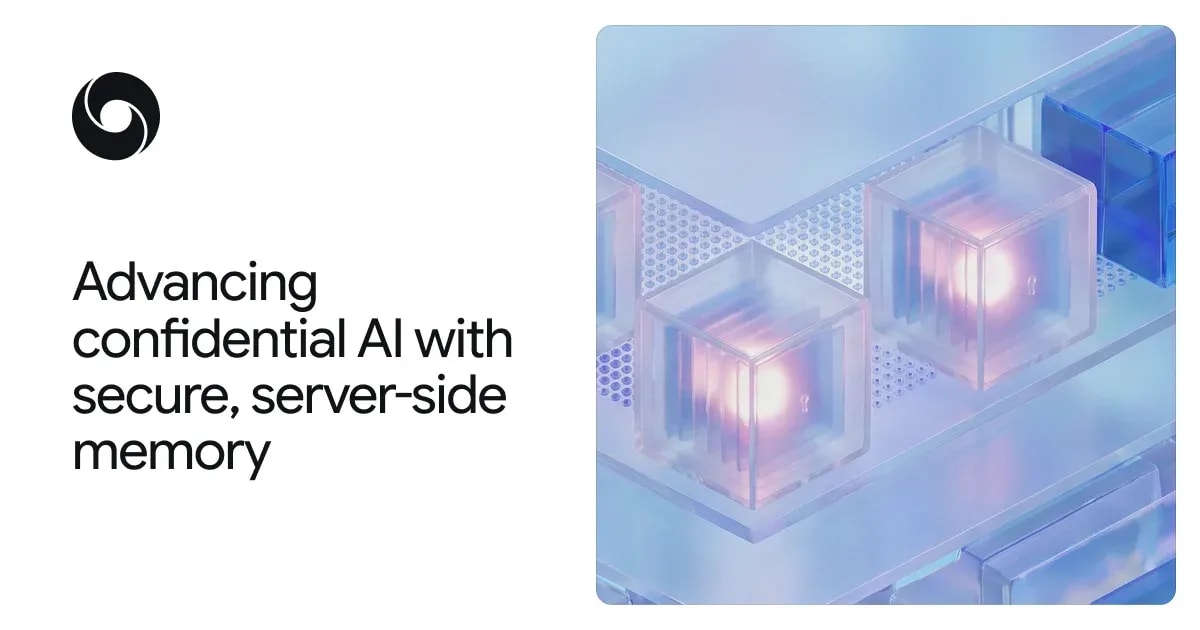
The new Private AI Compute update introduces server-side memory that maintains persistent, cross-device AI context while upholding strict on-device privacy standards. This breakthrough allows personal AI assistants to provide continuous assistance without compromising user data security.
Bridging the Gap: The Evolution of Private AI Compute
The landscape of artificial intelligence is currently undergoing a pivotal shift, moving from reactive, session-based interactions to proactive, context-aware assistance. The recent announcement regarding the integration of private, server-side memory into the Private AI Compute architecture marks a significant milestone in this transition. By addressing the fundamental challenge of maintaining long-term continuity across devices, this update promises to transform how users interact with their personal AI assistants, shifting the paradigm from 'one-off' queries to a seamless, evolving intelligence.
Resolving the Privacy-Utility Dilemma
For years, the industry has faced a binary choice: either sacrifice privacy by offloading data to the cloud for personalization or limit AI capability by restricting processing to local, on-device hardware. The introduction of private, server-side memory serves as a technical bridge that reconciles these two extremes. By extending the architecture of Private AI Compute, the system can now store persistent information in a secure, server-side environment while maintaining the rigorous privacy protections previously reserved for local processing. This ensures that the 'memory' of the AI is both useful and strictly protected.
The Mechanics of Secure Continuity
At the heart of this development is the need for cross-device synchronization. Modern users rarely interact with AI from a single terminal; they utilize laptops, smartphones, and wearables in tandem. This update ensures that the AI's understanding of user preferences and historical context follows the user across these platforms. By leveraging secure server-side infrastructure, the AI maintains a coherent 'world view' of the user's needs, enabling more intuitive and anticipatory behavior without the data ever being exposed to unauthorized entities or third-party exploitation.
Trust as a Foundational Pillar
As AI systems become more intuitive and capable of acting at a user's direction, the necessity for robust trust mechanisms becomes paramount. The design philosophy behind this update emphasizes that privacy is not an afterthought but a core feature of the system architecture. By standardizing privacy protocols across both local and server-side components, the platform ensures that users do not have to choose between advanced functionality and the confidentiality of their personal information. This is a critical step in fostering long-term user adoption of increasingly autonomous AI agents.
Future Trends in Personal AI
The implications of this technological advancement extend far beyond simple convenience. As AI systems become more adept at remembering 'what matters' and understanding the nuances of a user’s environment, we can expect a new generation of proactive agents that assist with complex workflows across multiple devices. This move toward a persistent, private memory layer sets the stage for a future where AI becomes a truly integrated, reliable partner in daily life, capable of handling sensitive tasks with the assurance that user data remains private, protected, and under the user's absolute control.