The AI cost of JavaScript frameworks
Source Entity
Hacker News
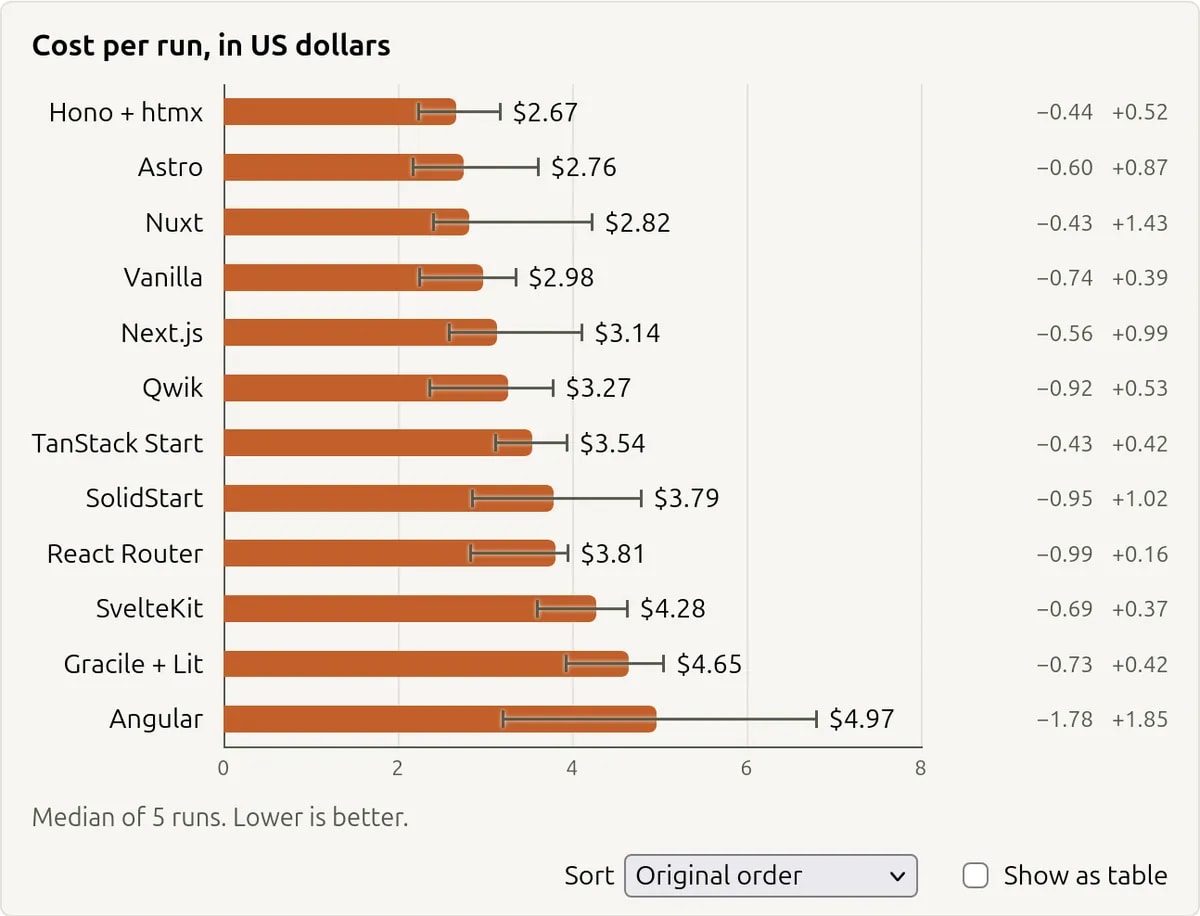
The web development industry is increasingly criticized for prioritizing developer experience and marketing trends over performance metrics. Experts argue that modern frameworks often lack empirical evidence for their performance claims, leading to bloated, inefficient web applications.
The Crisis of Evidence in Modern Web Development
The contemporary web development landscape is currently grappling with a significant disconnect between marketing narratives and technical reality. As frameworks promise to be "blazing fast" or "supercharge" productivity, critics argue that these claims are rarely backed by empirical data. This "vibes-based" decision-making process has led to a culture where the aesthetic appeal of a tool—often referred to as Developer Experience (DX)—is prioritized over the actual performance experienced by the end-user.
The 'Lost Decade' and the Culture of Hype
Industry observers like Alex Russell have characterized the recent era of frontend development as a "lost decade," suggesting that the obsession with complex abstractions has hindered rather than helped the web. When programming is treated as a pop culture phenomenon, as noted by Baldur Bjarnason, the focus shifts toward the latest trends and framework popularity rather than the long-term sustainability and performance of the codebase. This cycle creates a feedback loop where developers adopt tools based on social consensus rather than objective benchmarks.
The Trade-off Between DX and UX
There is a persistent, often false, dichotomy between Developer Experience (DX) and User Experience (UX). For years, the community has operated under the assumption that the right abstractions serve both parties equally. However, the reliance on heavy frameworks to simplify the coding process often results in massive JavaScript bundles that degrade performance on the client side. The virtual DOM, once touted as the pinnacle of performance, is now frequently scrutinized as an unnecessary layer that contributes to bloat without providing tangible benefits for every use case.
Challenging the Status Quo
Countering this trend requires a shift toward evidence-based engineering. By utilizing rigorous benchmarks and performance testing, developers can strip away the "breathless boasting" that characterizes much of the current technical discourse. The allergy to evidence within the development community has created a environment where performance is often an afterthought, sacrificed at the altar of developer convenience.
Future Implications and Conclusion
As the web continues to evolve, the cost of these heavy frameworks will become increasingly apparent, particularly as accessibility and performance standards become more stringent. Moving forward, the industry must prioritize transparency and data-driven tool selection. By moving away from "vibes-based" development, the community can reclaim the efficiency that once defined the web, ensuring that tools serve the user first and the developer second.