Watch: NASA’s pencil-thin X-59 supersonic jet spotted flying across US skies
Source Entity
SUBHADRA SRIVASTAVA
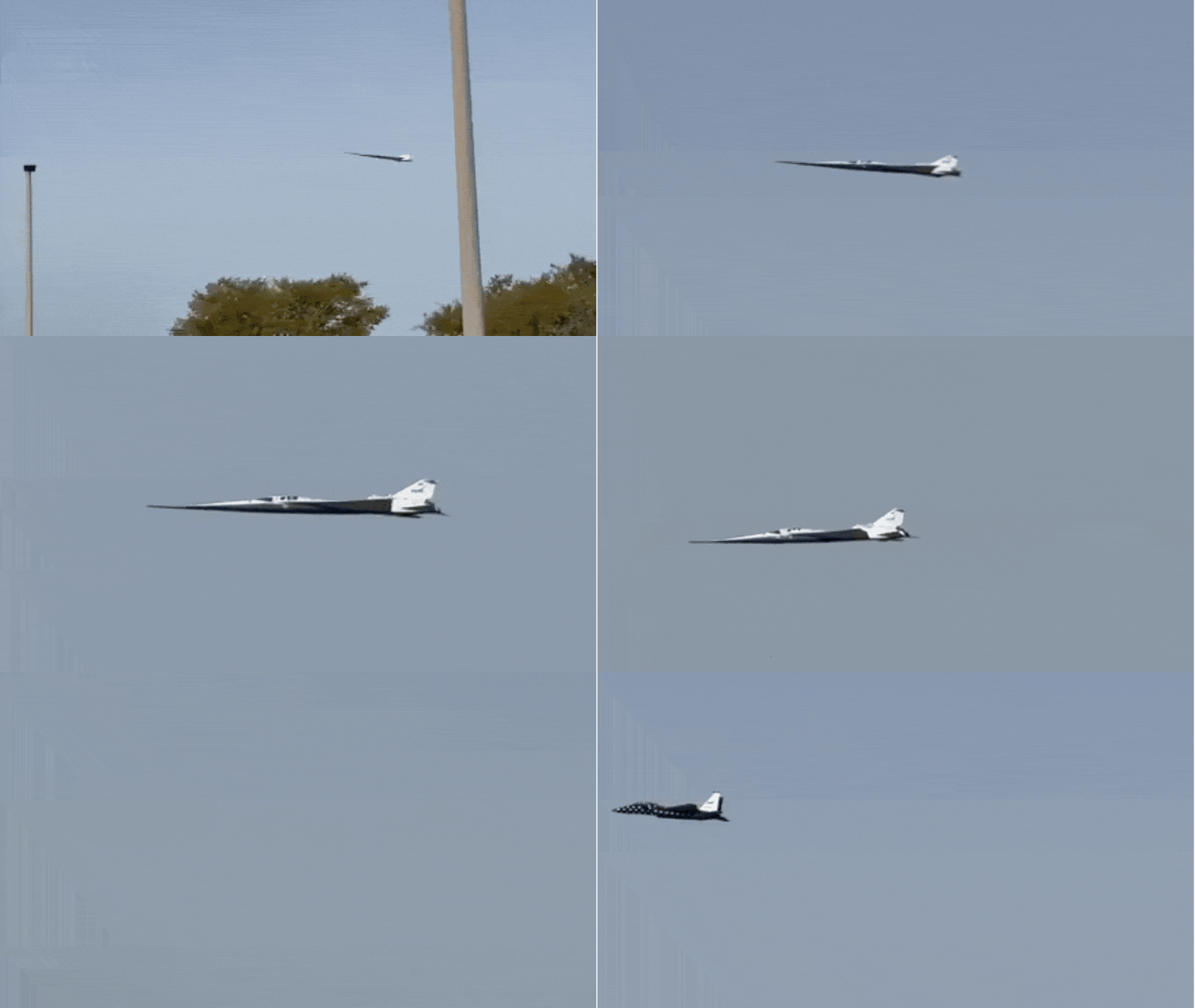
NASA's experimental X-59 supersonic jet was spotted flying across the U.S. during a transfer from California to Florida. The aircraft is notable for its unique pencil-thin design aimed at reducing sonic boom noise.
The X-59: A New Era in Supersonic Flight
NASA’s experimental X-59 supersonic jet recently captured public attention as it was spotted flying across the United States. This transit, which saw the aircraft moving from California to the Kennedy Space Center in Florida, marks a significant milestone exactly one year after the jet's maiden flight. The visual of the aircraft, characterized by its remarkably pencil-thin fuselage, has sparked widespread interest on social media platforms, highlighting the public's enduring fascination with aerospace innovation.
Engineering the Future of Quiet Supersonic Travel
The X-59 is not merely a prototype; it is the centerpiece of NASA's QueSST (Quiet SuperSonic Technology) mission. Unlike legacy supersonic aircraft such as the Concorde, which were infamous for their disruptive sonic booms that restricted them to over-water flight paths, the X-59 is engineered to minimize this acoustic impact. By manipulating shockwaves through its elongated, needle-like nose and airframe geometry, NASA aims to transform the sonic boom into a barely audible 'sonic thump.'
The Cross-Country Journey
The transit from California to Florida serves as more than just a logistical relocation. As NASA Administrator Jared Isaacman noted on social media, the arrival of the X-59 at the Kennedy Space Center represents a crucial phase in the aircraft's testing lifecycle. Moving the jet between major facilities allows for specialized ground testing and potential integration into broader flight research programs that require the unique infrastructure available at the Florida site.
Technological Implications and Regulatory Hurdles
The success of the X-59 could fundamentally reshape aviation regulations. Currently, supersonic flight over land is largely prohibited in many nations due to noise pollution concerns. If the X-59 proves that low-boom supersonic flight is viable, it could provide the empirical data necessary for aviation authorities to reconsider these long-standing bans. This shift would be a catalyst for a new generation of commercial supersonic travel, significantly reducing transcontinental flight times.
Future Outlook for Aerospace Research
As the X-59 continues its journey through the testing phase, the aviation industry is watching closely. The data gathered from its flight profiles will inform future designs for both military and civilian supersonic transports. By bridging the gap between theoretical aerodynamics and practical, quiet flight, NASA is effectively laying the groundwork for the next century of high-speed air travel, potentially turning the dream of rapid global connectivity into a reality.
Conclusion
The public sighting of the X-59 serves as a reminder of the ongoing advancements in aeronautical engineering. As the aircraft settles into its new home at the Kennedy Space Center, the focus will shift to rigorous testing to validate its noise-reduction capabilities. Should these tests prove successful, the X-59 will be remembered not just as an experimental jet, but as the technology that finally quieted the sonic boom.