Quad calls out export curbs, Strait of Hormuz closure
Source Entity
Latest News: Todays Latest News Headlines from India & World | Hindustan Times
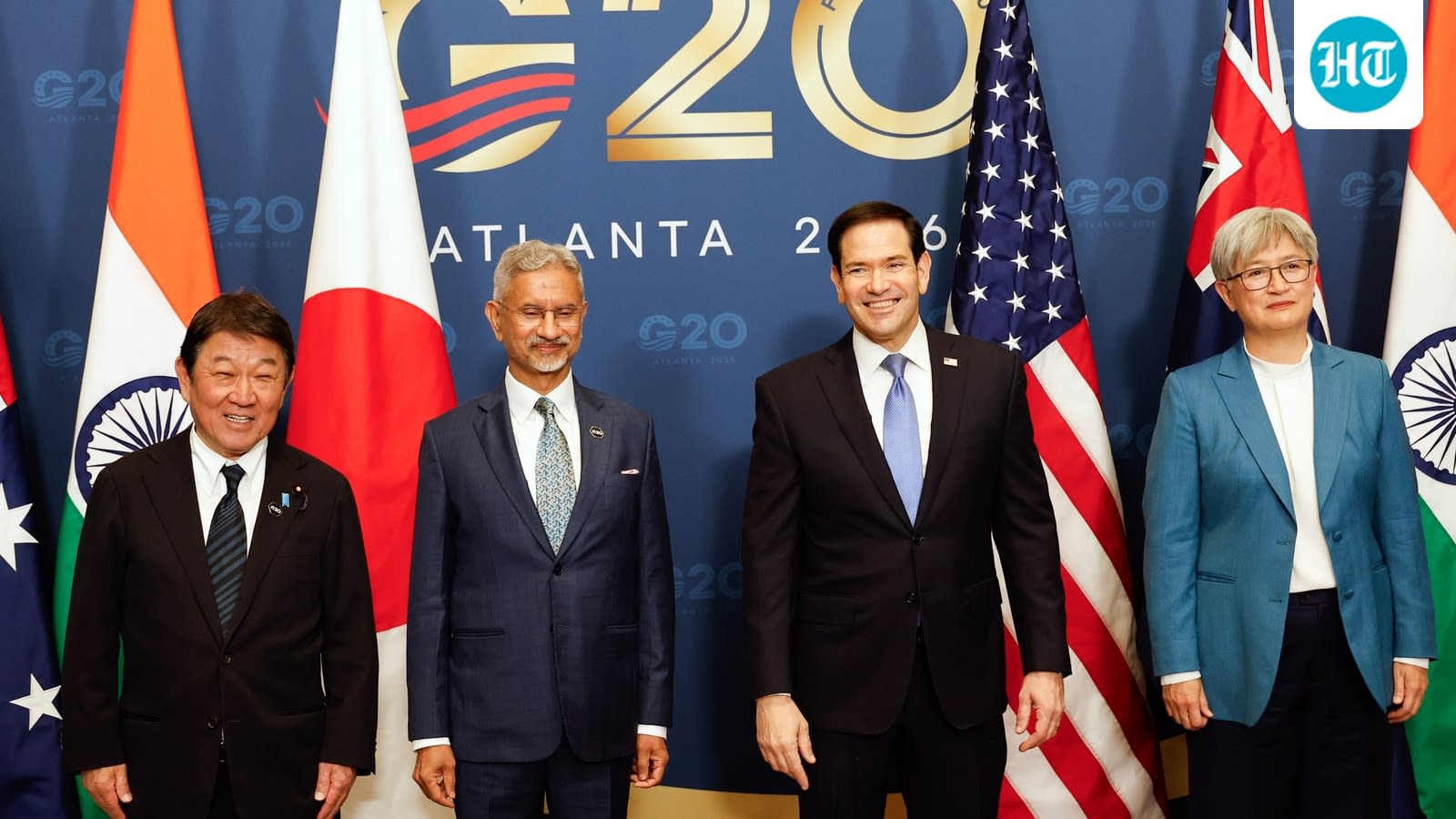
The Quad foreign ministers have issued a joint statement demanding the protection of key maritime transit routes and condemning arbitrary export restrictions. This move highlights growing concerns over economic coercion and supply chain security that directly impact India's energy and resource imports.
Quad Ministerial Summit: Addressing Maritime Security and Economic Coercion
Following the third meeting of the year in Atlanta, the foreign ministers of India, the United States, Australia, and Japan—collectively known as the Quad—have issued a significant joint statement. The meeting, which took place shortly before the G20 foreign ministers’ gathering, signals a coordinated effort by these four nations to address emerging threats to global trade and geopolitical stability.
Protecting Strategic Maritime Chokepoints
A primary focus of the ministerial discussions was the security of critical maritime transit routes, specifically the Strait of Hormuz, the Red Sea, and the Bab el-Mandeb Strait. The Quad members emphasized that protecting navigational rights in these areas is an "absolute necessity." By asserting that ships and crews must pass through these vital arteries without the imposition of tolls or blockades, the group is effectively pushing back against localized attempts to weaponize maritime geography. For India, this is of paramount importance, as a substantial portion of its energy and fertilizer imports relies on seamless access through these Gulf-adjacent channels.
Confronting Economic Coercion
The joint statement also voiced "grave concerns" regarding the practice of economic coercion through arbitrary export restrictions. While the document did not explicitly name any specific nation, the context of the discussion points toward the challenges posed by concentrated supply chains. India’s reliance on China for critical minerals makes it particularly vulnerable to such tactics. By addressing this issue collectively, the Quad is attempting to establish a normative framework against the use of trade as a tool of political leverage.
Strategic Implications for India
For India, the Quad’s stance is a strategic alignment with its own national interests. As the nation seeks to bolster its domestic manufacturing and secure its energy future, the stability of the Gulf region and the diversification of its mineral supply chains are non-negotiable. The collaborative pressure exerted by the Quad serves as a diplomatic shield, helping to ensure that global trade routes remain open and that export policies remain predictable rather than arbitrary.
Future Trends and Geopolitical Outlook
Looking ahead, the Quad’s focus on maritime security and supply chain resilience is likely to intensify. As global powers increasingly view economic policy through the lens of national security, the Quad will likely continue to formalize its stance against coercive economic practices. The success of this initiative will depend on the members' ability to translate these diplomatic statements into actionable policies that protect smaller nations and global commerce from the volatility of unilateral trade interventions.
Verification Required?