'I feel like I dug my own grave': The workers caught in the AI transition
Source Entity
BBC News
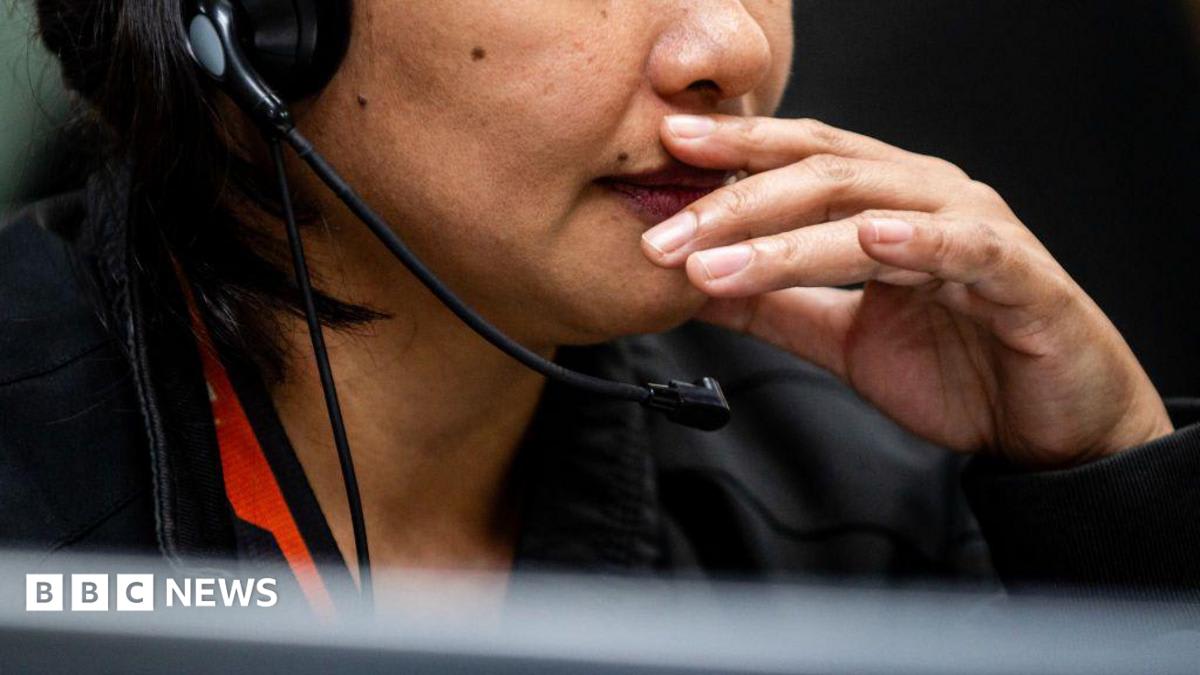
The Philippines' massive outsourcing industry is facing a significant labor crisis as AI integration leads to job displacement. Workers like Lisa, a veteran writer, report being forced to train the very systems that eventually rendered their roles redundant.
The Silent Crisis in the Philippine Outsourcing Sector
The Philippine business process outsourcing (BPO) industry, a cornerstone of the nation’s economy, is currently undergoing a traumatic structural shift. For decades, the country has positioned itself as the global hub for content writing, customer service, and administrative support. However, the rise of generative AI has created a paradox: the very workforce that built this industry is now being tasked with training the algorithms destined to replace them, leading to profound job insecurity for thousands of skilled professionals.
The Human Cost of Algorithmic Efficiency
At the center of this transition are workers like Lisa, who spent 15 years honing her craft as a content writer. Her experience—transitioning from freelancing to a stable role within a multinational corporation—is typical of the career trajectory in the Philippine BPO sector. The narrative of her redundancy, occurring just one month before achieving permanent status, highlights the vulnerability of contract-based workers in an era of rapid technological adoption. The psychological toll of realizing that one's professional experience was used to optimize a system that facilitates their own termination is a growing source of labor unrest.
The Role of AI in Content Production
Technological integration in the BPO sector has shifted from assisting human workers to replacing them. The requirement for employees to edit AI-generated material serves as a transitional phase where human nuance is exploited to refine machine learning models. Once these models reach a threshold of 'good enough' for cost-conscious corporations, the human element becomes a liability. This process is not merely an efficiency update; it represents a fundamental revaluation of human labor in the creative and administrative sectors.
Broader Economic Implications
For the Philippines, the outsourcing industry represents a significant portion of GDP and employs over a million people. A large-scale displacement of these workers could have cascading effects on the national economy, impacting domestic consumption and the stability of the middle class. While proponents argue that AI will lead to higher-value roles, the transition period is proving to be chaotic, leaving veteran workers with specialized skills struggling to find a place in an automated market.
Historical Context and Future Trends
Historically, the BPO industry in the Philippines survived by offering low-cost, high-quality English-language labor. The current disruption is unprecedented because it targets the cognitive labor that was previously thought to be 'AI-proof.' Moving forward, we can expect a bifurcation of the workforce: a small segment will manage AI systems, while a vast majority may face long-term unemployment or downward mobility. Education systems and government policy will need to pivot rapidly to retrain this workforce, or risk a protracted period of economic stagnation as the digital divide widens.
Conclusion
The story of workers like Lisa is a microcosm of a global trend. As corporations prioritize the speed and low cost of AI over human expertise, the social contract of the modern workplace is being rewritten. Without institutional safeguards and a strategic focus on human-centric AI integration, the Philippine BPO industry risks losing its most valuable asset—its people—to the very tools they were forced to build.