It's so hard to finish an idea that is not yours (and suggested by AI)
Source Entity
Hacker News
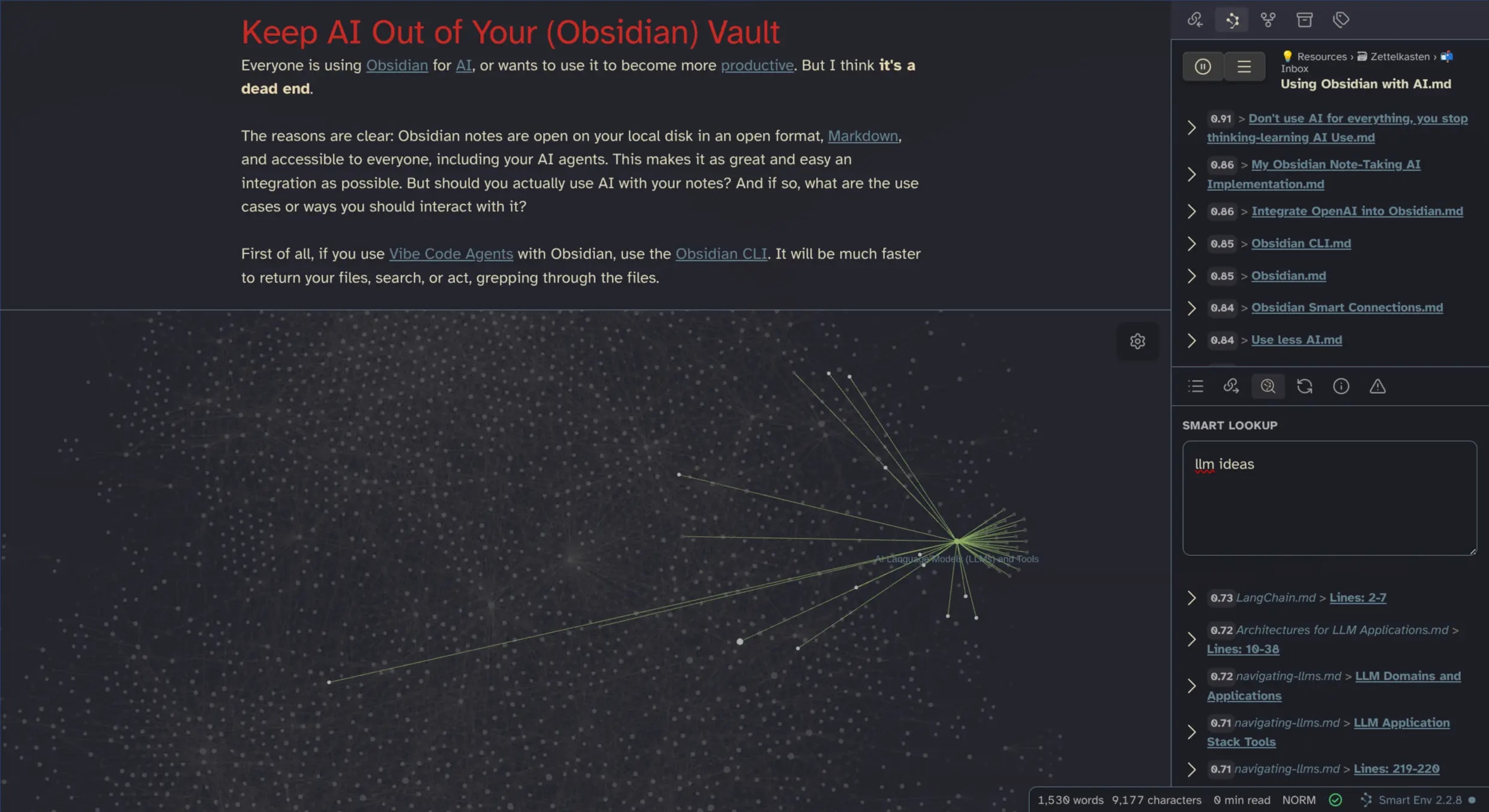
Simon Späti explores the psychological and practical friction of developing ideas suggested by AI within personal knowledge management systems like Obsidian. He argues that the disconnect between AI-generated prompts and personal ownership creates a significant barrier to project completion.
The Friction of AI-Assisted Ideation
In his recent analysis, Simon Späti addresses a growing phenomenon in the productivity community: the struggle to finalize projects that originate from AI-generated suggestions. While tools like Obsidian have become the gold standard for personal knowledge management due to their local-first, Markdown-based architecture, Späti posits that the very accessibility that makes these tools powerful also highlights a fundamental disconnect in the creative process.
The Obsidian Paradigm and AI Integration
Obsidian’s core strength lies in its local storage and open format, which theoretically makes it an ideal sandbox for AI agents to index and synthesize information. By keeping notes in plain text on a local disk, users ensure that their data remains sovereign and portable. However, Späti suggests that this technical superiority does not necessarily translate into better creative output, especially when the initial spark of an idea is outsourced to a machine.
Psychological Barriers to Ownership
At the heart of the critique is the concept of intellectual ownership. When an AI agent suggests a direction or a framework for a note, the user often experiences a subtle form of cognitive dissonance. The friction arises not from a lack of information, but from the difficulty of internalizing an idea that one did not intuitively conceive. This lack of organic development makes the act of 'finishing' a project feel like a chore rather than a natural extension of one's own thought process.
The "Dead End" of AI-Driven Productivity
Späti characterizes the current obsession with using Obsidian for AI-driven productivity as a potential "dead end." This perspective challenges the prevailing trend of automating the note-taking process to optimize for volume. By prioritizing the accumulation of AI-suggested content, users may inadvertently sacrifice the depth and personal resonance required to actually bring a complex idea to fruition.
Long-term Implications for Creative Work
Looking forward, this tension suggests a shift in how we might use AI as a collaborator. Rather than relying on AI to seed ideas, effective creative workflows may need to prioritize human-centric conceptualization, using AI only for refinement or structural support. The historical trend of note-taking has always been about the synthesis of personal experience; if AI disrupts this synthesis by introducing alien concepts too early, the result is often an unfinished, disorganized digital archive.
Conclusion: Reclaiming the Creative Process
The argument presented by Späti serves as a necessary cautionary tale for the knowledge management community. As we continue to integrate AI into our digital workspaces, we must be mindful of the psychological cost of outsourcing the creative spark. True productivity is not measured by the number of notes in an Obsidian vault, but by the ability to see a project through to completion—a task that remains, for now, distinctly human.