AI wars: The empire strikes back
Source Entity
Latest News: Todays Latest News Headlines from India & World | Hindustan Times | Hindustan Times
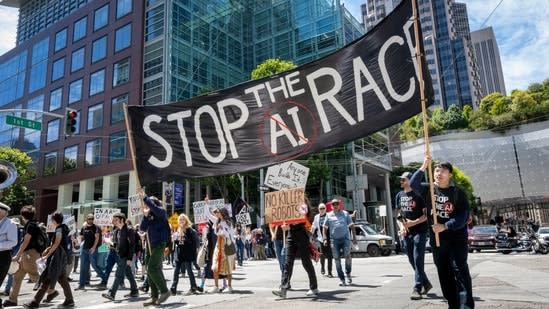
Tech giants are increasingly voicing concerns over the rapid development of artificial intelligence, citing fears of market disruption and intellectual property theft. This friction highlights a shift from initial industry enthusiasm to a defensive posture regarding competitive survival.
The Paradox of Progress: AI's Competitive Friction
Recent developments in the artificial intelligence sector reveal a striking paradox: the very leaders who once championed radical technological disruption are now calling for a deceleration of progress. As the industry approaches the potential threshold of artificial superintelligence, the narrative has shifted from pure innovation to cautious retrenchment. This tension is not merely a philosophical debate; it reflects a genuine anxiety among legacy tech titans regarding their market position and the existential threat posed by frontier labs like OpenAI and Anthropic.
The Strategic Pivot of Industry Titans
The current climate of skepticism is characterized by a series of defensive maneuvers from established CEOs. Microsoft’s Satya Nadella has characterized the rise of new AI players as potential 'Trojan horses' designed to cannibalize existing customer bases. Similarly, Apple’s leadership, notably Tim Cook, has faced questions regarding their competitive lag, leading to accusations that the rapid advancement of OpenAI is built upon the appropriation of existing intellectual property. These arguments underscore a defensive posture that prioritizes corporate protectionism over the once-celebrated ethos of open-source or rapid-cycle development.
Discomfort as a Catalyst for Growth
Change is inherently discomfiting, yet the American model of technological advancement has historically relied on a willingness to embrace volatility. The protests held in San Francisco on July 11 represent the public manifestation of this underlying unease. When tech leaders express that AI development should be 'throttled,' they are often attempting to reconcile their own business interests with the reality that the pace of innovation is threatening to outrun their established defensive moats. This friction is a natural byproduct of a paradigm shift where the speed of deployment currently favors agile, specialized AI firms over diversified tech conglomerates.
The Competitive Landscape and Market Dynamics
The critique of these industry leaders—likened to the old Borscht Belt joke regarding food quality and portion sizes—suggests a level of hypocrisy. Executives like Alex Karp of Palantir exemplify this tension; while they critique the nature of AI growth, they remain deeply entrenched in the race to define the next frontier. Elon Musk remains a unique outlier in this discourse, having shifted his focus from criticizing frontier labs to actively pursuing his own competitive AI ventures, signaling that for some, the only solution to the 'AI problem' is to build a superior alternative.
Broader Implications for the Democratic Experiment
The broader implication of this 'AI war' is a test of the democratic approach to technological governance. If the United States is to maintain its leadership in global innovation, it must balance the need for safety and ethical oversight with the necessity of maintaining a competitive edge. Attempting to throttle innovation to protect legacy business models may ultimately prove counterproductive, potentially ceding the mantle of leadership to global competitors who do not share the same internal constraints or regulatory hesitations.
Future Trends and Concluding Summary
Looking ahead, we can expect the rhetoric surrounding AI safety to become increasingly intertwined with antitrust and intellectual property litigation. As companies like OpenAI, Anthropic, and their competitors continue to iterate, the battle will move from public forums and media statements into the courtroom and the halls of policy. Ultimately, the industry must decide whether it values the stability of the past or the volatile potential of the future. The 'Empire'—comprising the established tech giants—is striking back, but whether this counter-offensive serves to stabilize the industry or simply stifle the very innovation that birthed it remains the central question of this decade.
Verification Required?