AI-written stories fool readers just fine. It is knowing that ruins it, study finds
Source Entity
Aishwarya Khosla
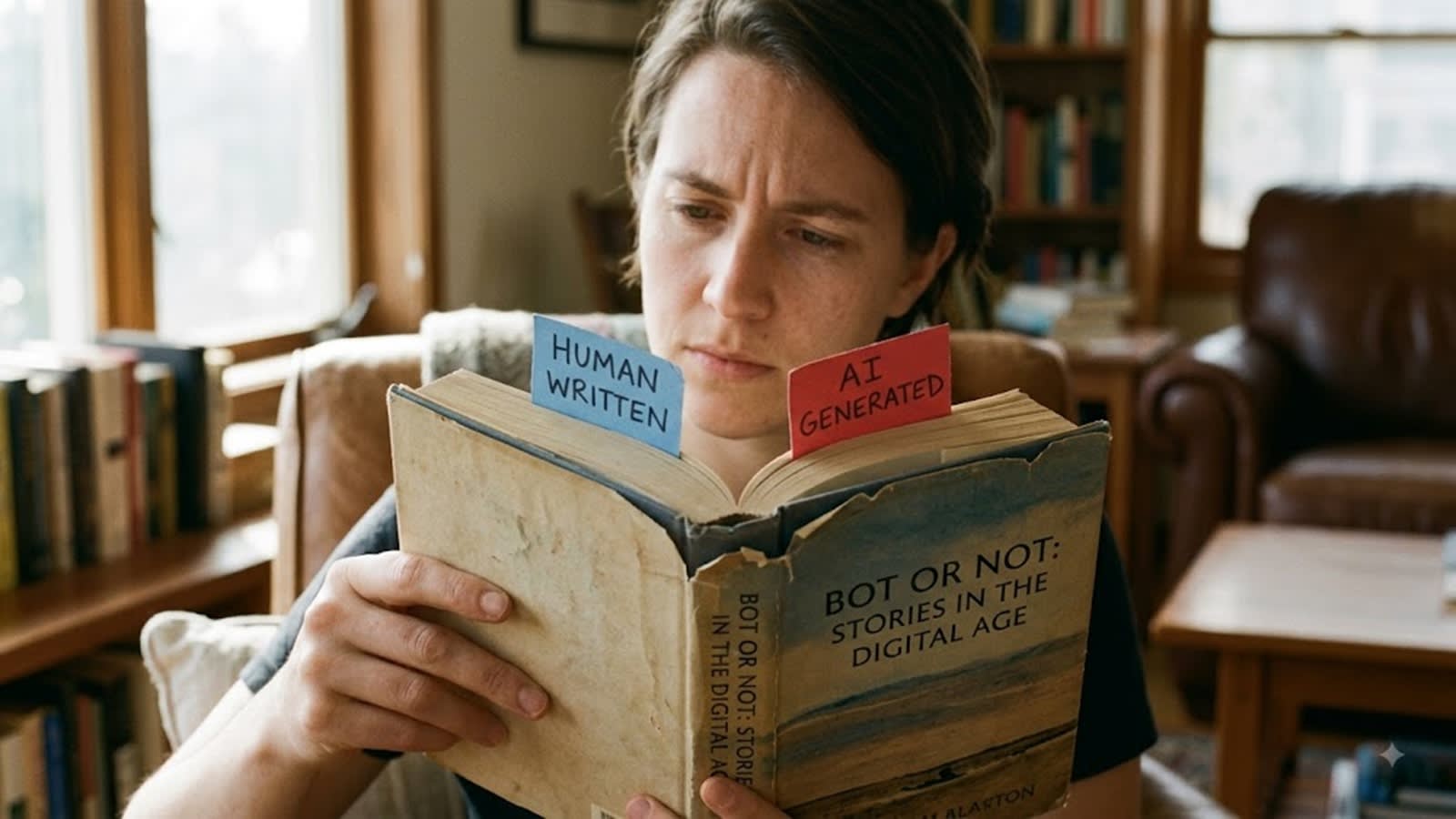
A new study reveals that readers often prefer AI-generated stories over human-written ones, but their appreciation drops significantly once they are informed of the text's machine origin. This finding highlights a growing psychological divide in the literary world as the publishing industry grapples with AI integration.
The Paradox of Artificial Creativity
Recent findings published in the journal Judgment and Decision Making have challenged the conventional wisdom surrounding machine-generated literature. While the publishing industry has been rocked by an 18-month period of turmoil—characterized by withdrawn books, ethical misconduct allegations, and high-profile controversies like the Commonwealth Short Story Prize incident—the actual efficacy of AI as a storyteller has remained a subject of intense debate. This study suggests that the perceived 'inferiority' of AI writing is not rooted in the quality of the prose itself, but rather in the psychological bias of the reader.
The Quality vs. Knowledge Divide
The core revelation of the Cambridge University Press study is the discrepancy between preference and perception. When blinded to the authorship, readers frequently demonstrate a statistical preference for machine-generated narratives over those penned by humans. This indicates that modern Large Language Models (LLMs) have achieved a level of syntactical and structural proficiency that satisfies the average reader's aesthetic requirements. However, this preference is fragile; once readers are explicitly informed that a text is machine-generated, their appreciation often diminishes, suggesting that the value of literature is deeply tied to the human experience behind the pen.
Industry Anxiety and the Quest for Authenticity
This research arrives at a critical juncture for the publishing sector. The industry is currently contending with a surge of synthetic content that has forced stakeholders to implement defensive measures. In the UK, authors have actively lobbied for mandatory labeling of human-written works to preserve market transparency. Simultaneously, platforms like Substack have deployed AI-detection tools, empowering readers to verify the provenance of content. These measures are a direct response to the 'literary scandals' mentioned, which have fostered a climate of deep skepticism among consumers.
The Illusion of Detection
One of the most fascinating aspects of the study is its subversion of the 'AI-savvy' reader. Many readers pride themselves on their ability to identify synthetic text after a single read, yet the study suggests that this self-assurance may be misplaced. If readers consistently prefer AI work when they believe it is human, the perceived ability to 'detect' AI is likely based on confirmation bias—identifying what they assume to be AI rather than recognizing actual machine patterns. This psychological phenomenon complicates the debate over whether AI should be treated as a creative tool or a deceptive shortcut.
Future Implications for Publishing
As AI continues to integrate into the creative process, the industry faces an existential crisis regarding the definition of 'authorship.' If readers find AI stories genuinely compelling until they learn the origin, publishers may soon face a dilemma: prioritize the 'human' label to satisfy ethical demands, or lean into the quality of AI-generated content to meet consumer preferences. Ultimately, the study suggests that while technology can replicate the mechanics of storytelling, the 'human' element remains a powerful, if sometimes invisible, driver of literary value.