800 km an hour in 5 seconds: China's bullet train breaks its own world record
Source Entity
Latest News: Todays Latest News Headlines from India & World | Hindustan Times | Hindustan Times
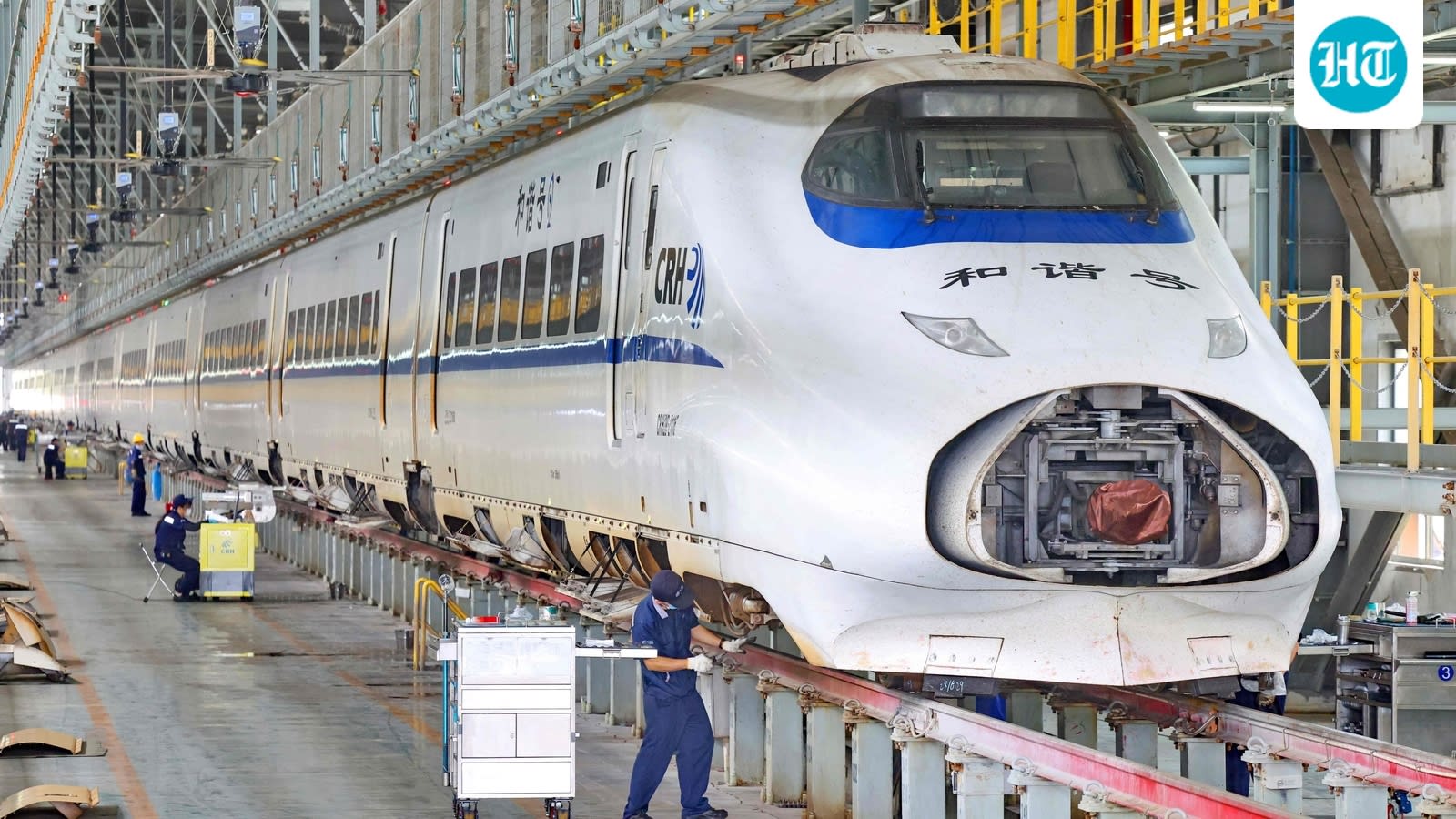
China's Donghu Laboratory has set a new world record with an experimental maglev vehicle reaching 800 kmph in 5.3 seconds. While not intended for passenger travel, this high-acceleration technology holds significant potential for future applications in rocketry, military, and industrial sectors.
China's Breakthrough in Extreme Maglev Acceleration
China has officially pushed the boundaries of magnetic levitation (maglev) technology, with researchers at the Donghu Laboratory in Hubei province reporting that an experimental 1,110-kg vehicle reached an astonishing speed of 800 kmph in just 5.3 seconds. This milestone, achieved on a 1-km test track, marks the third time the team has broken their own world record within a span of just six months, signaling a rapid acceleration in the development of high-speed electromagnetic propulsion.
Contextualizing the Speed Milestone
To understand the magnitude of this achievement, one must look at current rail standards. Conventional high-speed rail systems, such as those operating in China and Japan, typically maintain cruising speeds of roughly 320 kmph, with China’s fastest commercial services capping out at 350 kmph. By achieving 800 kmph, the Donghu Laboratory test vehicle is operating in a realm that far exceeds traditional transit infrastructure, demonstrating a mastery of frictionless movement that could revolutionize how we perceive heavy-object acceleration.
The Evolution of the Test Program
This recent feat is the culmination of a series of iterative tests that began in earnest in June 2025. At that inception point, the vehicle managed 650 kmph in seven seconds. By December 2025, the team had pushed the limits further, reaching 700 kmph in a mere two seconds. The progression from 798 kmph to the current 800 kmph record underscores a relentless refinement of the propulsion systems involved, proving that the technology is not merely a one-time success but a consistently evolving platform.
Beyond Passenger Transport
It is critical to clarify that this technology is not intended for the transport of human beings. The G-forces associated with accelerating from zero to 800 kmph in 5.3 seconds are far beyond the tolerance of the human body. Instead, the primary utility of such extreme acceleration lies in specialized industrial and defense sectors. Researchers are currently evaluating how these electromagnetic launching capabilities might be applied to rocketry, military aircraft, and high-speed drone deployment.
Future Implications and Industrial Trends
Looking ahead, the potential for this technology extends into the realm of logistics and specialized infrastructure. Beyond military and aerospace applications, the ability to rapidly accelerate heavy payloads could transform specialized elevator systems or industrial transport pipelines. As China continues to invest heavily in cutting-edge infrastructure, this maglev breakthrough serves as a clear indicator that the nation is pivoting toward high-velocity electromagnetic solutions to solve complex logistical and launch-related challenges.
Conclusion
In summary, the Donghu Laboratory’s success represents a significant leap in electromagnetic propulsion. By moving beyond the constraints of commercial rail travel, this research opens doors to a future where maglev technology serves as a foundation for next-generation aerospace and industrial transport, fundamentally altering the speed at which we can move mass through space.
Multiple Citing Sources
Verification Required?