Akhilesh redraws ‘PDA’ to woo upper castes; rhetoric may not be enough, say political analysts
Source Entity
India Latest News: Top National Headlines Today & Breaking News | The Hindu
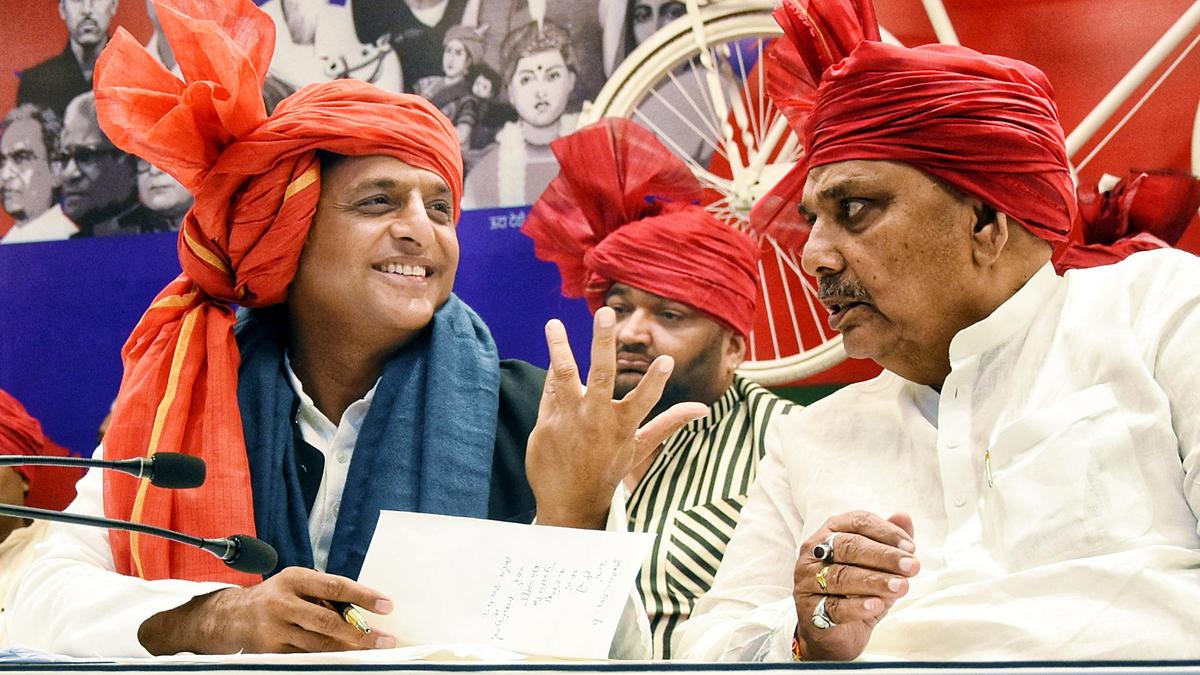
Samajwadi Party leader Akhilesh Yadav is expanding his 'PDA' coalition to include upper castes like Brahmins and Baniyas to challenge the BJP. Analysts remain skeptical, suggesting that electoral success requires a concrete policy vision rather than just shifting political rhetoric.
The Strategic Pivot: Akhilesh Yadav’s PDA Expansion
Samajwadi Party (SP) president Akhilesh Yadav is currently spearheading a significant recalibration of his party’s political identity. Historically anchored in the 'PDA' framework—representing Pichhda (Backward classes), Dalit, and Alpsankhyak (Minorities)—the party is now actively attempting to integrate upper-caste groups, specifically Brahmins and Baniyas. This shift represents a departure from the traditional social engineering that has defined Uttar Pradesh politics for decades, signaling an intent to broaden the party's appeal beyond its foundational vote bank.
Fracturing the BJP’s Core Base
Political analysts view this outreach as a calculated maneuver to fracture the Bharatiya Janata Party’s (BJP) core electoral base. By targeting segments of the population that have traditionally leaned toward the BJP, Yadav is attempting to create a 'Big Tent' coalition. This strategy aims to disrupt the BJP's dominance in the state by diluting its monolithic appeal among upper-caste voters who have been pivotal in the party’s recent legislative victories.
Lessons from the Legislative Council Polls
The impetus for this strategic shift may be linked to recent trends in the Legislative Council polls. In these elections, the Samajwadi Party secured five of the 11 contested seats, while the BJP took the rest. While this performance indicates a degree of organizational resilience, experts caution that these results are not necessarily indicative of a wider trend. Council polls often function under different dynamics than general assembly elections, making them an unreliable metric for projecting future statewide success.
The Challenge of Rhetoric vs. Policy
Despite the tactical expansion of the PDA slogan, seasoned political observers emphasize that rhetoric alone is unlikely to be sufficient. The primary obstacle for the SP lies in transitioning from symbolic inclusion to substantive policy engagement. Without a concrete policy road map that addresses the specific economic and social concerns of Brahmins and Baniyas—groups with distinct priorities compared to the traditional PDA demographic—the coalition may struggle to achieve long-term electoral cohesion.
Future Implications for Uttar Pradesh Politics
As the state moves toward the next Assembly election, the success of this strategy will depend on whether Yadav can reconcile the competing interests of his diverse base. If the SP fails to present a unified economic agenda that resonates across these caste lines, the outreach may be perceived as merely superficial. Conversely, if the party manages to marry its social coalition-building with a robust governance agenda, it could fundamentally alter the competitive landscape of Uttar Pradesh politics.
Conclusion: The Road Ahead
Ultimately, while the expansion of the 'PDA' plank is a bold attempt to broaden the Samajwadi Party’s reach, its efficacy remains speculative. The party’s ability to move beyond caste-based rhetoric and provide a clear, actionable vision for the state’s future will be the deciding factor in whether this strategy yields significant electoral dividends or remains a mere tactical experiment.
Verification Required?