Wearing a headscarf has not been established as an ‘essential religious practice’ for women in Islam: Allahabad HC
Source Entity
India Latest News: Top National Headlines Today & Breaking News | The Hindu
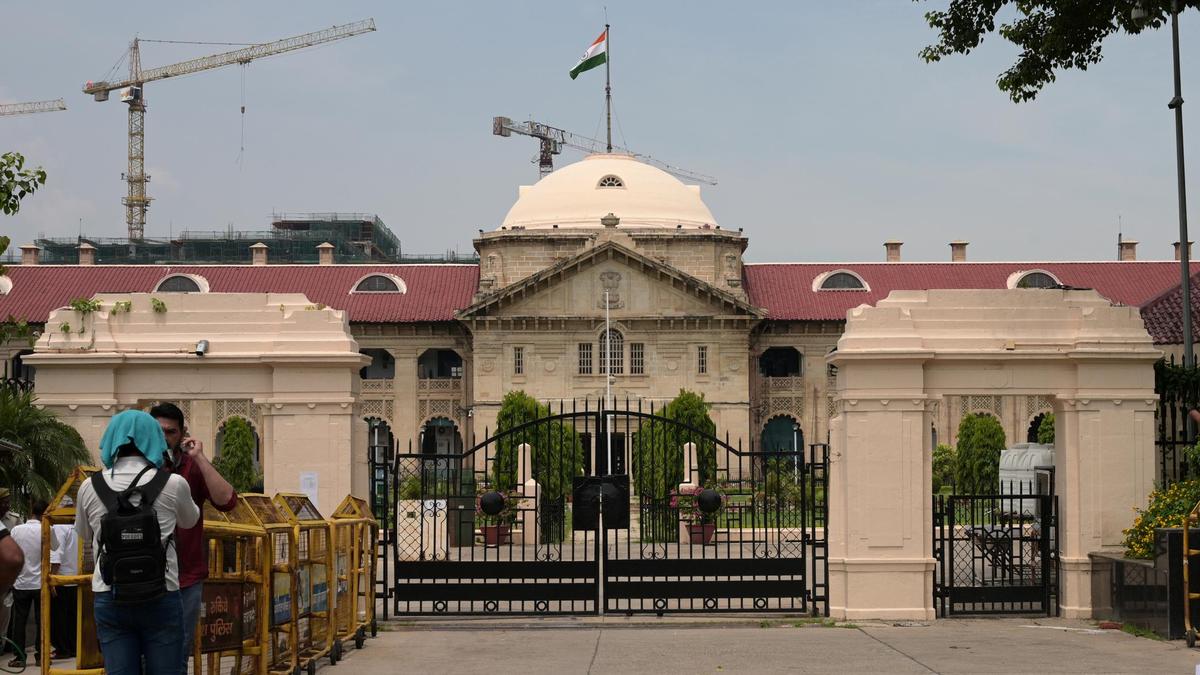
The Allahabad High Court has ruled that wearing a headscarf is not an 'essential religious practice' in Islam. The court dismissed a student's plea to wear a hijab with her school uniform, citing a lack of evidence and the importance of maintaining a uniform code.
Allahabad High Court Rules on Hijab in Schools
The Legal Verdict
In a significant judicial development, the Allahabad High Court recently dismissed a petition filed by a Class 11 student of Tagore Public School, Prayagraj, who sought permission to wear a headscarf (hijab) alongside her prescribed school uniform. The Division Bench, comprising Justices J.J. Munir and Indrajeet Shukla, ruled that the petitioner failed to establish that the headscarf constitutes an 'essential religious practice' within the Islamic faith. The court emphasized that the student did not provide sufficient factual or legal material to support the claim that the absence of a headscarf would lead to an exclusion from the faith.
The 'Essential Religious Practice' Doctrine
The core of the court’s reasoning rests on the 'essential religious practice' test, a legal doctrine frequently applied in Indian jurisprudence to determine whether a religious activity is integral to a faith. The court observed that for a practice to be protected under constitutional religious freedom, it must be so fundamental that its omission would fundamentally alter the character of the religion. In this instance, the bench noted that no evidence was presented to suggest that the wearing of a headscarf meets this high threshold, noting that other Muslim students at the same institution did not wear headscarves.
Institutional Autonomy and Uniformity
Beyond the theological inquiry, the court underscored the validity of school dress codes. The bench noted that private, CBSE-affiliated institutions have the authority to enforce uniform dress codes to maintain discipline, equality, and a sense of institutional identity. By requiring a standard uniform, schools aim to create a 'religion-neutral atmosphere' where students can focus on education without the social distinctions that might otherwise be highlighted by varied attire. This reinforces the principle that institutional rules regarding secular uniformity can supersede individual preferences for religious expression in a classroom setting.
Constitutional Implications
The petitioner had argued that the denial of the headscarf violated her fundamental rights under Articles 14 and 19(1)(a) of the Constitution, which guarantee equality and freedom of expression. However, the court’s decision suggests that these rights are not absolute when balanced against the operational requirements of an educational institution. By holding that the school's dress code policy is a reasonable measure to foster a cohesive learning environment, the court has signaled a preference for institutional secularism over individual religious requirements in the context of school uniforms.
Broader Context and Precedents
This ruling aligns with a growing body of judicial opinion across various Indian High Courts, which have consistently held that headscarves are not strictly integral to Islam. The lack of a factual foundation in this specific case served as a critical factor for the bench. By focusing on the absence of evidence—such as the observation that no other female students from the same community wore headscarves—the court limited its scope to the specific facts presented, thereby avoiding a sweeping theological mandate while reinforcing the legal precedent that schools may prioritize uniform compliance.
Conclusion
The Allahabad High Court's decision serves as a definitive reminder of the limitations placed on religious expression within the confines of private institutional mandates. While the debate over religious identity in public and private spheres continues, this judgment reinforces the authority of educational institutions to maintain a standardized environment. For now, the ruling stands as a clear legal interpretation of how 'essential religious practice' is defined and applied within the Indian judicial framework.
Multiple Citing Sources
Verification Required?