Wire It, Run It, Deploy It: AI Workflows in Gradio
Source Entity
Hugging Face - Blog
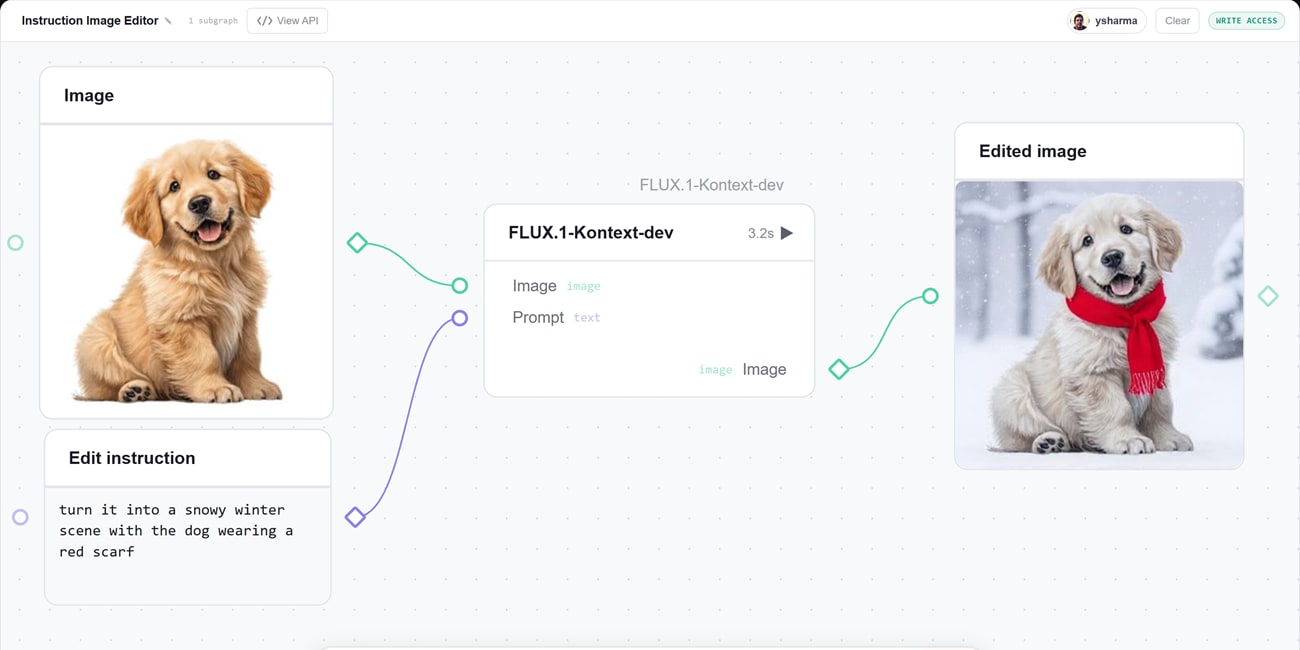
Gradio has introduced 'gr.Workflow', a new feature that simplifies AI pipeline development by creating interactive, drag-and-drop canvases. This tool allows developers to visualize, debug, and deploy complex AI workflows as REST APIs or Hugging Face Spaces with minimal friction.
Rethinking AI Development: The Rise of Visual Pipelines
Modern artificial intelligence applications are rarely singular, isolated tasks. Instead, they function as complex, multi-stage pipelines where data flows through various transformations—such as generating an image and subsequently processing it through background removal or style transfer. Historically, developers have managed these intricate sequences by wiring them together in Python scripts. However, this traditional approach often leads to arduous debugging cycles, where "print-debugging" becomes the primary method for identifying failures in a chain of opaque operations.
The Shift to Visualized Workflows
The introduction of gr.Workflow within the Gradio ecosystem represents a fundamental shift in how developers interact with these pipelines. By elevating the pipeline from a background script to the primary interface, Gradio allows developers to visualize their logic as a graph of typed nodes. This transformation is significant because it makes intermediate results visible at every stage of the process, effectively eliminating the "black box" nature of chained AI models.
Debugging and Interactivity
One of the most profound benefits of this new workflow model is the ability to interact with individual nodes on a drag-and-drop canvas. Because every node is independently runnable, developers can isolate specific sections of a workflow to troubleshoot odd values or performance bottlenecks in real-time. This tactile, visual approach to development significantly reduces the cognitive load required to maintain complex AI systems, as the architecture of the app is mapped directly to the UI.
Seamless Deployment and Scalability
Beyond development and debugging, gr.Workflow addresses the critical challenge of deployment. The platform automatically treats the constructed graph as a REST API, bridging the gap between prototyping and production. Furthermore, the ability to deploy these complex workflows to Hugging Face Spaces with a single command streamlines the transition from local experimentation to accessible, public-facing applications.
Broader Implications for AI Engineering
As AI applications continue to grow in complexity, the industry is moving toward tools that prioritize developer experience and modularity. By integrating orchestration directly into the interface, Gradio is empowering creators to build more sophisticated tools without needing to reinvent the infrastructure for each new project. This trend suggests a future where high-level AI development becomes more accessible, allowing engineers to focus on the logic of their pipelines rather than the boilerplate code required to connect them.
Conclusion
The emergence of gr.Workflow signifies a maturation in the AI developer toolchain. By combining visualization, interactive debugging, and simplified deployment into a single cohesive package, Gradio is effectively lowering the barrier to entry for building robust, pipeline-based AI applications. This evolution not only enhances productivity but also sets a new standard for how we conceptualize and construct the next generation of intelligent software.