India’s Airbound bags $37M to take on trucks with rocket-like drones
Source Entity
Jagmeet Singh
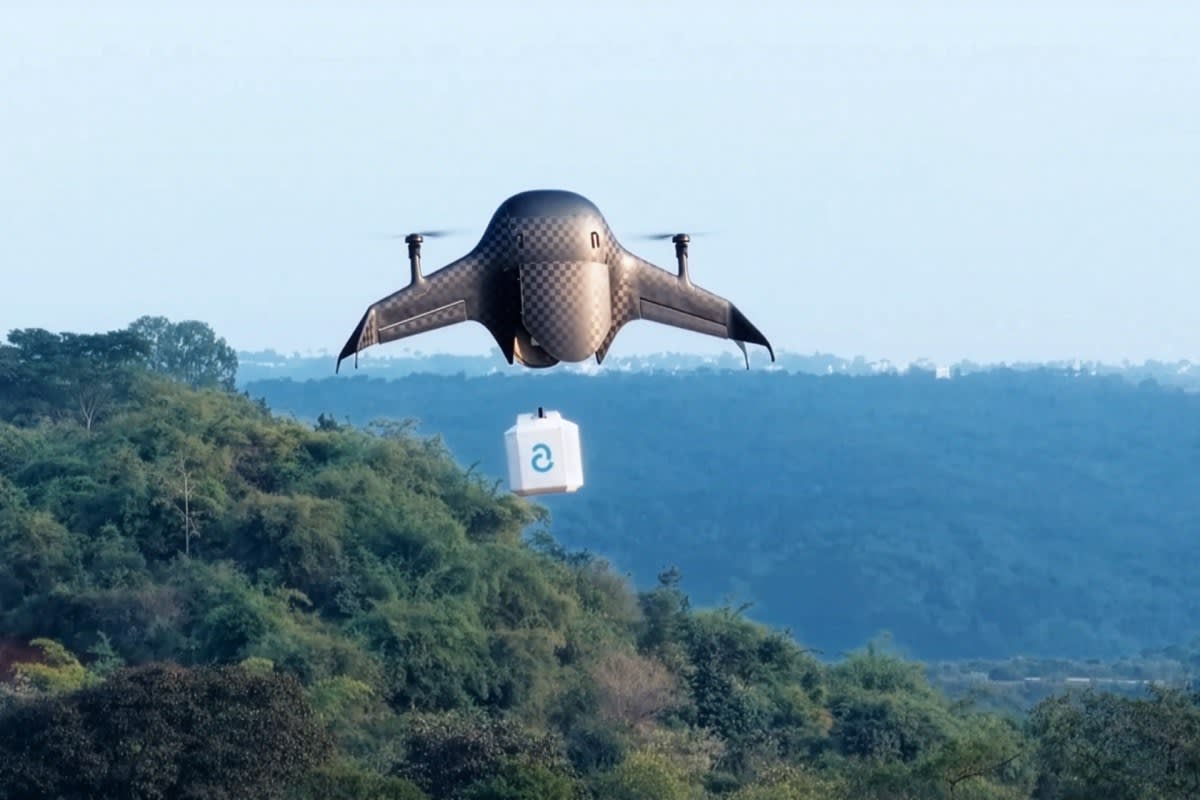
Indian drone startup Airbound has raised $37 million in Series A funding to develop autonomous drones aimed at making aerial delivery cost-competitive with road trucking. Backed by major investors like DoorDash and Greenoaks, the company seeks to disrupt logistics by redesigning aircraft for increased efficiency.
The Rise of Autonomous Aerial Logistics
Indian startup Airbound has successfully secured $37 million in Series A funding, a significant milestone that underscores the growing investor appetite for autonomous aerial logistics. Led by Greenoaks, with notable participation from industry heavyweights including DoorDash and Silicon Valley investor Lachy Groom, this round brings the three-year-old company's total funding to nearly $50 million. This rapid capital accumulation, coming less than a year after an $8.65 million seed round, signals strong institutional confidence in Airbound’s specific mission: to make moving goods through the air as cost-effective as traditional road trucking.
Redesigning the Physics of Delivery
At the core of Airbound’s strategy is a fundamental redesign of drone architecture. The company is betting that the current limitations of drone delivery—namely, high costs and low payload versatility—can be solved by focusing on an ultra-lightweight approach. While many competitors focus on iterative improvements to existing drone models, Airbound is attempting to fundamentally alter the weight-to-efficiency ratio of their aircraft. This technical pivot is essential for achieving the scale required to challenge the dominance of terrestrial trucking, which currently remains the backbone of global supply chains.
The Logistics Gap: Drones vs. Trucks
Despite the excitement surrounding autonomous flight, the industry currently faces a stark reality: drone delivery is still far from matching the sheer scale, weather resilience, and payload versatility of road-based freight. The logistics industry is notoriously difficult to disrupt due to the massive infrastructure already in place for trucks. Airbound’s premise—that drones can eventually move goods faster and cheaper—relies on overcoming the 'last-mile' inefficiencies that plague traditional delivery fleets, particularly in congested urban environments where road transit is sluggish.
Strategic Backing and Market Validation
The participation of DoorDash in this funding round is particularly telling. As a leader in the food and local delivery space, DoorDash's investment suggests a strategic interest in integrating autonomous aerial solutions into their existing delivery ecosystem. By aligning with companies that already possess robust delivery networks, Airbound is positioning itself not just as a hardware manufacturer, but as a potential infrastructure provider for major e-commerce and delivery platforms looking to reduce delivery times and operational costs.
Future Trends in Autonomous Systems
Looking ahead, the success of Airbound will likely serve as a litmus test for the viability of high-frequency, low-cost drone delivery in India and potentially global markets. If the company can successfully demonstrate that their aircraft design significantly lowers the cost-per-delivery, we may see a shift in investment trends toward hardware-focused logistics startups. The broader implication is a potential evolution of the 'delivery economy,' where the sky becomes a primary lane for short-haul transport, eventually reducing the environmental and logistical burden on congested road networks.