As people wrap wallets and cards in aluminium foil, expert shares habits to protect your money better
Source Entity
The Indian Express
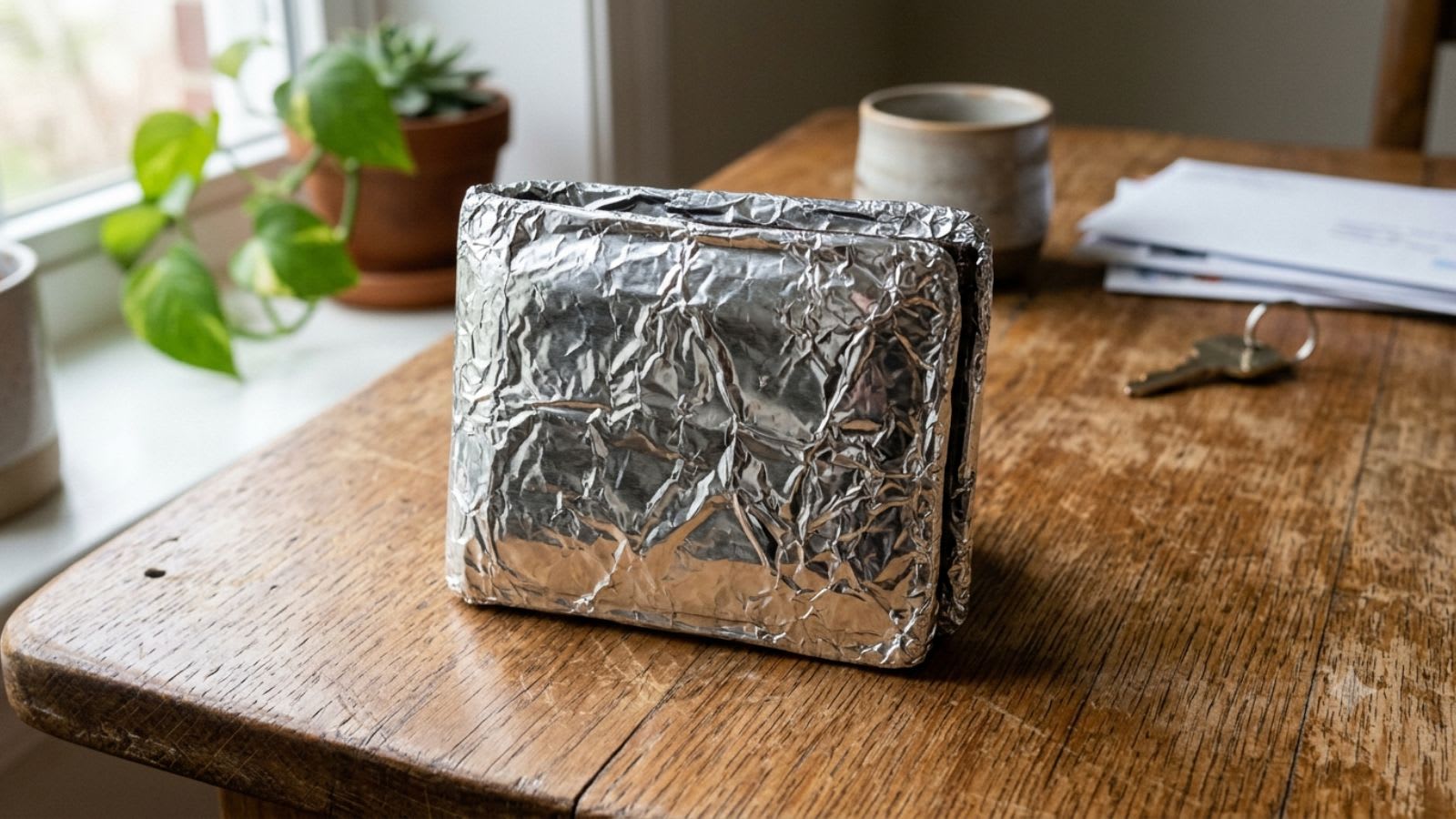
Social media users are using aluminium foil to block RFID signals and prevent contactless card theft. While scientifically grounded in the principle of a Faraday cage, experts suggest more reliable alternatives for long-term security.
The Aluminum Foil Trend: Science or Social Media Fad?
Recent trends circulating on social media platforms feature individuals wrapping their wallets and credit cards in aluminium foil to prevent wireless theft. While this may appear to be a bizarre internet stunt, it is rooted in legitimate physics. The technique attempts to create a makeshift Faraday cage, utilizing the conductive properties of aluminium to disrupt radio-frequency signals. By encasing a contactless card in this material, users aim to block the communication between their RFID-enabled chips and unauthorized scanners.
Understanding the Faraday Cage Principle
The efficacy of this hack stems from the Faraday cage effect. When a conductive material—like aluminium—fully surrounds an object, it creates an electrostatic shield that blocks external electromagnetic fields. In the context of modern contactless payments, RFID readers transmit signals to activate the chip within a card. If the card is properly shielded by a conductive barrier, the signal is significantly weakened or entirely blocked, theoretically preventing a thief from 'skimming' sensitive data from the chip.
The Reality of Modern Wireless Theft
Wireless theft, often referred to as RFID skimming, involves criminals using portable readers to capture card details from a close distance. While the threat is technically real, the practical success of such attacks is often overstated in public discourse. Most modern payment systems utilize encryption and tokenization, meaning even if a card's data is intercepted, the information is often useless for making fraudulent transactions without further authorization or dynamic authentication codes.
Limitations of DIY Solutions
Despite the scientific basis, relying on aluminium foil is a flawed long-term strategy. To function as a true Faraday cage, the shield must be complete and unbroken; even a small gap can allow radio-frequency leakage. Furthermore, aluminium foil is fragile and degrades quickly with daily use, resulting in tears and gaps that render the 'protection' ineffective. Relying on a crumpled piece of household foil provides a false sense of security that may lead users to become complacent regarding more significant digital hygiene practices.
Better Alternatives for Financial Security
Rather than relying on kitchen supplies, security experts recommend using dedicated RFID-blocking sleeves or wallets specifically engineered for this purpose. These products are designed to be durable and are tested to ensure they effectively attenuate specific frequency ranges used by payment cards. For consumers concerned about wireless theft, investing in purpose-built hardware is a more reliable and professional approach than utilizing temporary, makeshift fixes.
Conclusion: A Lesson in Digital Awareness
Ultimately, the viral nature of the aluminium foil trend highlights a growing public awareness regarding personal data security in an increasingly contactless world. While the method demonstrates a clever application of physics, it serves better as an educational tool than a primary security protocol. As digital threats evolve, the most effective defense remains a combination of hardware protections, such as purpose-built blocking wallets, and vigilant monitoring of personal financial accounts.