Amazon uses union-busting AI surveillance to monitor union risk in UK warehouses
Source Entity
Hacker News
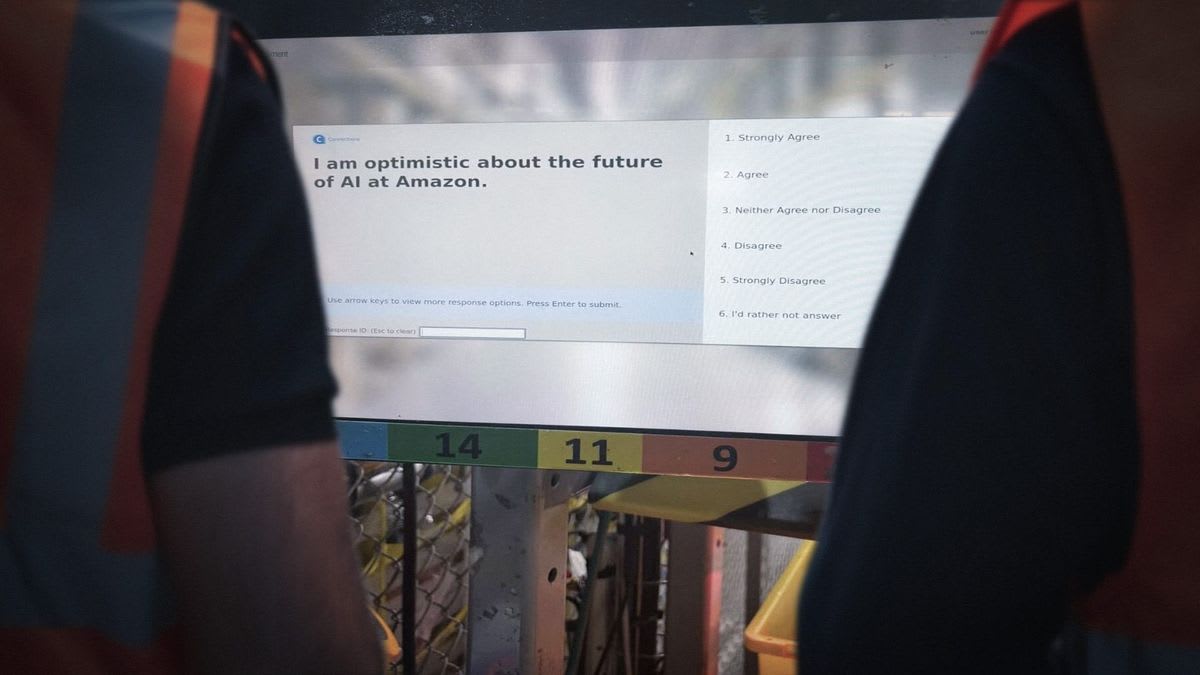
Amazon is reportedly utilizing an AI tool called Atlas to monitor warehouse staff for potential union activity. The software tracks social media and internal bulletin boards to predict and mitigate collective labor organization efforts.
The Digital Panopticon: Amazon’s AI-Driven Labor Surveillance
Recent revelations have cast a spotlight on the sophisticated intersection of artificial intelligence and labor relations within Amazon’s global warehouse network. Internal documents, brought to light during legal proceedings in Canada, indicate that the retail giant employs an in-house AI tool known as 'Atlas.' This system is designed to go beyond traditional productivity tracking, extending its reach into the realm of behavioral prediction to identify and neutralize potential unionization efforts before they gain momentum.
Beyond Productivity: The Evolution of Monitoring
For employees like 62-year-old Garfield Hylton, the physical reality of Amazon’s surveillance is already well-documented. Workers endure a relentless cycle of digital oversight where every scan, movement, and idle second is logged to refine productivity metrics. However, the shift toward using AI to monitor 'dissent' represents a significant escalation in how the company manages its human capital, effectively turning the workplace into a predictive environment where the mere inclination toward collective bargaining is flagged as a corporate risk.
The Role of Atlas in Union Suppression
Atlas functions as a predictive analytics engine that aggregates data from various sources, including internal staff bulletin boards and external social media platforms. By analyzing patterns of communication and sentiment, the AI attempts to forecast the likelihood of sit-ins, strikes, or formal attempts to organize. This integration of sentiment analysis into the management stack suggests a strategic effort to preemptively quell labor unrest by identifying 'risk' areas within the company’s vast UK, US, and Canadian warehouse infrastructure.
Broader Implications for Global Labor Rights
This development raises profound ethical questions regarding the right to organize in the age of algorithmic management. When AI is weaponized to surveil the private or semi-private speech of employees, it creates a chilling effect that can severely undermine the fundamental ability of workers to advocate for safer conditions or better pay. The reliance on automated systems to identify 'dissent' transforms the labor-management dynamic from a negotiation process into a data-driven containment strategy.
The Future of Workplace Privacy
As technology continues to outpace existing labor laws, the use of tools like Atlas highlights a critical gap in worker protections. If companies are permitted to use AI to profile employees based on their political or organizational leanings, it could set a dangerous precedent for the future of the digital workforce. The ongoing legal battles in Canada and the UK serve as a litmus test for how regulators might eventually constrain the use of invasive surveillance tech in the modern workplace.
Conclusion
In summary, the use of AI to monitor union sentiment represents a pivotal moment for Amazon and the broader tech industry. While the company maintains its focus on efficiency and operational continuity, the human cost of such pervasive monitoring is becoming increasingly clear. As these legal cases progress, they will likely force a necessary national and international conversation about the boundaries of corporate surveillance and the protection of fundamental labor rights in a digitized economy.