Anthropic CEO to Microsoft, Nvidia: We're not seeking a ban on Chinese AI models
Source Entity
TOI TECH DESK
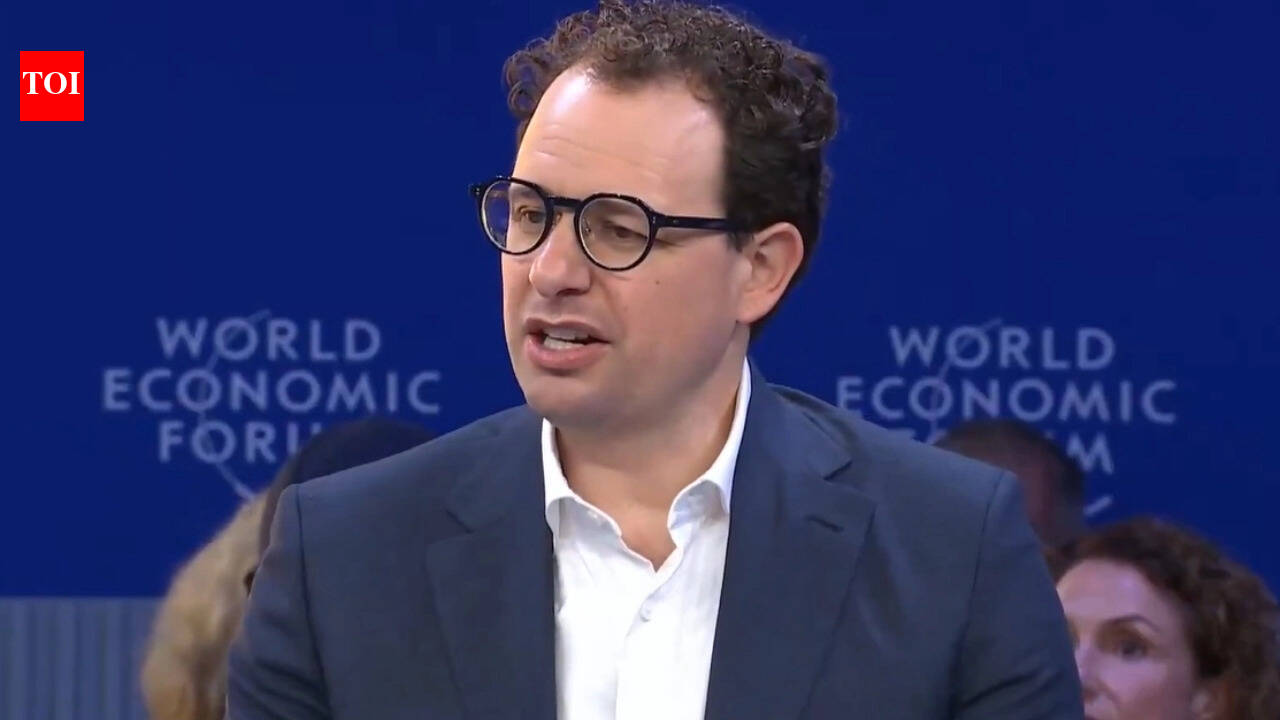
Anthropic CEO Dario Amodei has clarified that his company does not support a ban on open-weight AI models, despite not signing a recent industry letter. Instead, he advocates for targeted security measures, including restricted chip access and mandatory safety testing for powerful models.
Anthropic Clarifies Stance on Open-Weight AI Models
Dispelling the Rumors of a Ban
Anthropic CEO Dario Amodei has recently moved to clarify his company’s position regarding open-weight artificial intelligence models. Following widespread speculation that Anthropic was lobbying for government-imposed bans on open-source or open-weight models—specifically those originating from China—Amodei issued a definitive statement. He emphasized that Anthropic has never advocated for such prohibitions, viewing open-weight models as a potential public good that provides significant value to developers, researchers, and businesses without the costs associated with closed-source proprietary systems.
The Context of the Industry Letter
The clarification arrives in the wake of an open letter shared by Nvidia CEO Jensen Huang, which was signed by a coalition of major AI entities including Microsoft, Meta, Mistral, and Hugging Face. This letter urged policymakers to avoid premature restrictions on open-weight models. Anthropic’s conspicuous absence from the signatory list fueled industry rumors that the company was angling for regulatory protectionism. Amodei’s response serves as an attempt to decouple Anthropic from these accusations, framing the company's silence not as an endorsement of bans, but as a commitment to a nuanced regulatory framework.
A Shift Toward Targeted Security
Rather than supporting broad bans, Amodei outlined a more surgical approach to AI policy that prioritizes national security without stifling innovation. His proposed strategy focuses on three core pillars: restricting authoritarian access to high-end computing chips, preventing 'industrial-scale distillation'—the process where smaller models are trained on the outputs of larger, more powerful ones—and implementing mandatory safety testing for all sufficiently capable models. This framework suggests that the risk, in Amodei's view, lies not in the availability of model weights themselves, but in the misuse of compute power and the proliferation of models that exceed specific safety thresholds.
Balancing Innovation and Risk
The debate highlights the growing friction between the proponents of open-source AI and those concerned about the rapid escalation of dangerous capabilities. By advocating for safety testing across both open and closed-source models, Amodei is positioning Anthropic as a champion of 'responsible scaling.' This strategy aims to satisfy security hawks concerned about foreign actors leveraging powerful AI, while simultaneously maintaining the collaborative nature of the AI research community.
Future Implications for AI Policy
Looking ahead, the industry is likely to see a shift in regulatory focus from the 'open vs. closed' binary to a more granular assessment of compute resources and safety benchmarks. If regulators adopt the 'distillation' and 'chip access' controls proposed by Amodei, it could effectively create a tiered system for AI development. This would place the burden of proof on developers to demonstrate that their models do not possess 'dangerous capabilities,' regardless of whether the underlying weights are available to the public. The ongoing dialogue between frontier AI companies and policymakers will remain critical in shaping the future of global AI governance.
Multiple Citing Sources