Regulatory Capture by Anthropic Through METR
Source Entity
Hacker News
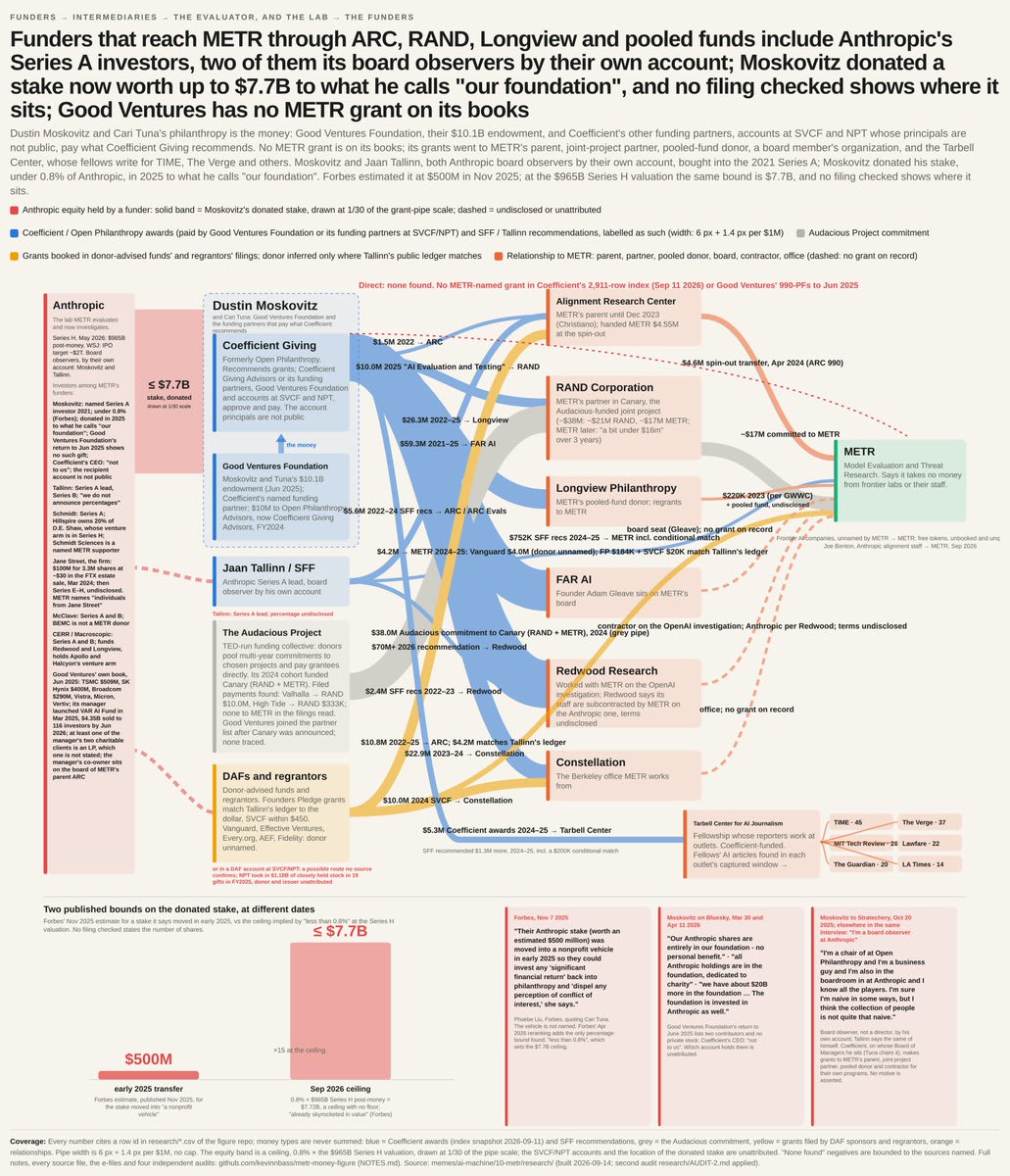
Allegations have surfaced claiming Anthropic is utilizing METR for regulatory capture by leveraging financial ties between the firm and the non-profit evaluator. Critics argue these structural incentives create a conflict of interest that could compromise AI safety oversight.
The Allegations of Regulatory Capture at Anthropic
Recent claims regarding Anthropic suggest a sophisticated mechanism of regulatory capture, centered on the company's reliance on METR, a third-party organization tasked with evaluating AI safety. Critics, including researcher Kevin Bass, have raised alarms regarding the financial architecture underpinning this relationship, suggesting that the evaluators are not as independent as publicly presented. The core of the concern lies in the potential for these safety assessments to be influenced by the financial success of the models they are meant to regulate.
The Role of METR and Financial Interdependency
The controversy hinges on the role of METR as an external auditor for Anthropic's large-scale AI models. While third-party oversight is generally encouraged in the AI industry to mitigate existential risks, the argument here is that the independence of METR is compromised by its financial ties. Reports indicate that METR’s operational capacity is linked to the broader financial success of Anthropic, specifically through the valuation of its equity. This creates a circular incentive structure where the evaluator has a vested interest in the continued growth and deployment of the very technology it is meant to objectively assess.
The Influence of Good Ventures and Dustin Moskovitz
A critical component of this narrative is the involvement of Dustin Moskovitz, a significant investor who channeled substantial stock holdings into the Good Ventures Foundation. The claim suggests that because these assets are tied to the performance of Anthropic, any regulatory outcome that slows or limits the company's growth could negatively impact the financial foundations supporting these entities. This financial entanglement is being framed as an "AI doom cycle," where the pressure to maintain high valuations overrides the objective need for rigorous safety standards.
Implications for AI Governance
The broader implications for AI governance are profound. If the entities responsible for auditing AI safety are financially beholden to the companies they monitor, the entire framework of self-regulation and external oversight becomes suspect. This mirrors historical instances of regulatory capture in industries like finance and energy, where the "revolving door" or financial dependency between corporations and their regulators led to the erosion of public interest protections. If these allegations are substantiated, it could necessitate a total restructuring of how AI safety audits are funded and conducted.
Historical Context and Future Trends
Historically, the tech industry has often sought to preempt government intervention by proposing voluntary safety standards and independent auditing bodies. However, this case suggests that when those bodies are birthed from the same capital pools as the companies themselves, they may serve more as a protective barrier against external regulation than as a genuine safety mechanism. Moving forward, policymakers are likely to scrutinize the funding sources of AI safety organizations, potentially demanding a clear separation of financial interests to ensure that safety benchmarks remain independent of corporate valuation.
Conclusion and Call for Investigation
Given the gravity of these accusations, the demand for a Congressional investigation serves as a signal that the era of "trust-based" AI regulation may be coming to an end. The complexity of these financial ties warrants a transparent audit to determine if the integrity of the safety evaluation process has indeed been compromised. As AI continues to integrate into critical infrastructure, ensuring that the watchdogs are truly independent will be the defining challenge for future tech policy.