CJP alleges delay in release of leaders, four sureties rejected
Source Entity
India Latest News: Top National Headlines Today & Breaking News | The Hindu
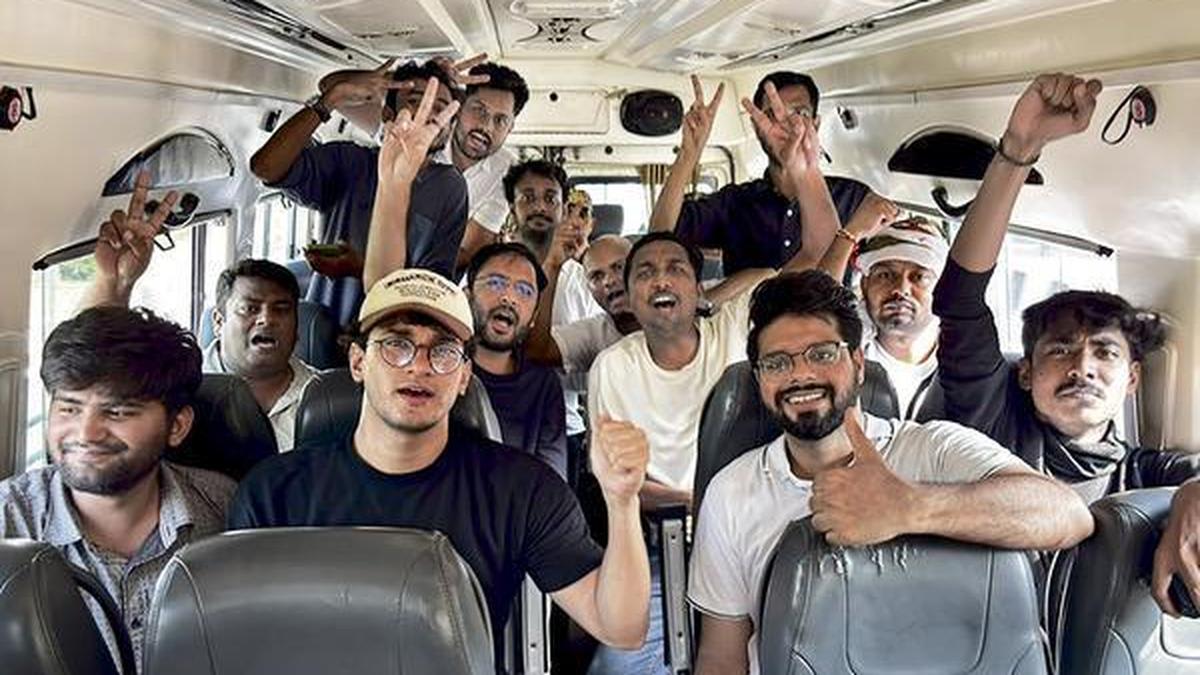
The Cockroach Janta Party's Abhijeet Dipke has been released on a peace bond amid ongoing protests against the Chief Election Commissioner. Meanwhile, the Delhi Police has permitted a major Congress-led opposition rally at Ramlila Maidan for November 1.
Turmoil Over Election Integrity: An Analysis of the Anti-CEC Protests
The Legal and Political Landscape
The political climate in Delhi has intensified significantly as the Cockroach Janta Party (CJP) continues its vocal opposition against Chief Election Commissioner (CEC) Gyanesh Kumar. The recent release of CJP founder Abhijeet Dipke from judicial custody, following the signing of a peace bond, marks a pivotal moment in the ongoing agitation. Dipke’s release, alongside the anticipation of the return of other key members like Saurav Das and Ashutosh Ranka, suggests that the CJP is currently in a phase of strategic recalibration. The party has signaled its intent to regroup and determine its next steps, indicating that the pressure on the Election Commission of India (ECI) is far from dissipating.
Contentious Voter Roll Revisions
At the heart of these protests lies the allegation of irregularities within the Election Commission’s Special Intensive Revision (SIR) of voter rolls. This technical process, which determines the electoral integrity of the nation, has become a lightning rod for political conflict. The opposition, led by the Congress and the broader INDIA bloc, is utilizing the "Vote Bachao, Desh Bachao" campaign to highlight these concerns. By demanding the resignation of the CEC, the opposition is challenging the institutional impartiality of the ECI, framing the SIR exercise as a failure of democratic oversight.
The Battle for Public Space
The Delhi Police's decision to grant permission for a massive Congress rally at Ramlila Maidan on November 1 acts as a critical development in this standoff. This authorization provides a legitimate, high-profile platform for the opposition to coalesce and voice their grievances against the current state of electoral administration. This move is being viewed as a significant "shot in the arm" for the INDIA bloc, allowing them to transform localized, sporadic protests—such as those led by women activists over the past week—into a unified, national-level political statement.
Legal Challenges to Preventive Detention
Parallel to the street protests, a significant legal battle is unfolding in the Supreme Court. Academician and columnist Apporvanad Jha has challenged the state's use of preventive detention, arguing that the authorities are conflating the fundamental right to peaceful protest with a breach of peace. This constitutional challenge strikes at the core of the state's response to the CJP and other activists. The outcome of this hearing will likely set a major precedent for how future political dissent is managed by law enforcement agencies in the capital.
Broader Implications and Future Trends
The situation in Delhi reflects a deeper polarization within the Indian political ecosystem. While the CJP remains focused on the specific mechanics of the SIR, the Congress and its allies are leveraging these grievances to build momentum against the BJP-led government. As the November 1 rally approaches, the tension between the state's security apparatus and the democratic right to dissent will likely remain at the forefront. The international dimension, evidenced by diaspora counter-protests in London, further underscores that the debate over India's electoral integrity has transcended national borders, evolving into a complex narrative of institutional trust and democratic advocacy.
Multiple Citing Sources
Verification Required?