Anti-CEC protests LIVE: ‘Har gali mein Jantar Mantar’ march scheduled today; Abhijeet Dipke, Neha Bora invited
Source Entity
Latest News: Todays Latest News Headlines from India & World | Hindustan Times | Hindustan Times
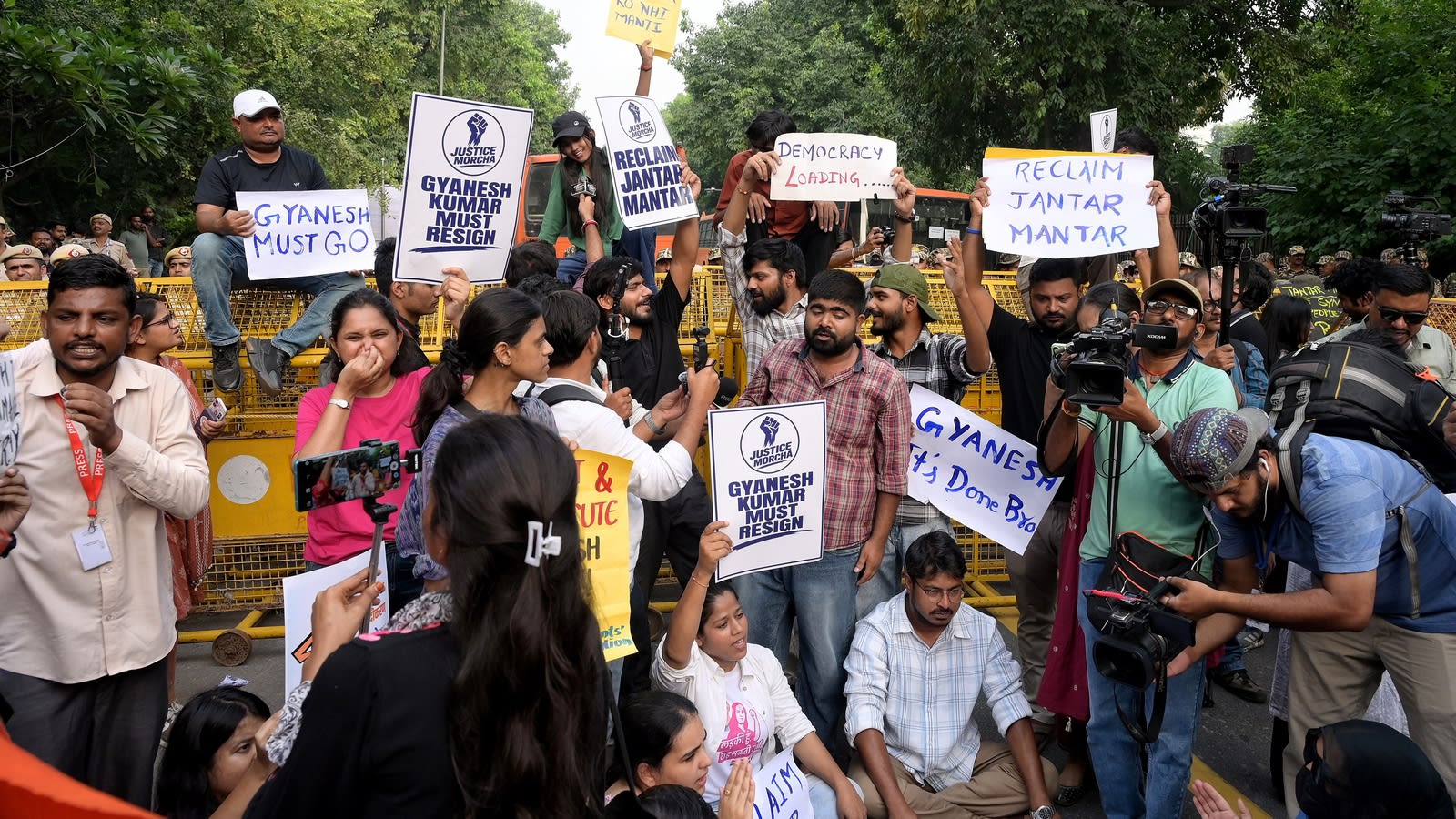
Activists and farmers groups are marching to the Election Commission office in Delhi to protest the Special Intensive Revision of electoral rolls. The movement demands the resignation of CEC Gyanesh Kumar, alleging irregularities in the electoral process.
The 'Har Gali mein Jantar Mantar' Movement: A Challenge to Electoral Processes
A significant wave of civil unrest is unfolding in New Delhi today as the platform 'People Against SIR' and the Samyukt Kisan Morcha (SKM) lead a march to the Election Commission’s headquarters. The protest, centered on the slogan "Har Gali mein Jantar Mantar," represents a collective push by farmers, students, and activists to challenge the current Special Intensive Revision (SIR) of electoral rolls. By decentralizing their protest sites, the organizers aim to symbolize that the demand for democratic transparency is not confined to traditional protest hubs but is a nationwide imperative.
The Core Demands and Institutional Friction
The protesters have clearly defined objectives, most notably the demand for the resignation of Chief Election Commissioner (CEC) Gyanesh Kumar. The movement alleges that the SIR process is fraught with irregularities that threaten the integrity of the electoral roll. By calling for the scrapping of this revision process, the coalition is effectively questioning the administrative mechanisms currently employed by the Election Commission of India (ECI), viewing them as potential instruments of democratic erosion rather than standard procedural updates.
Coalition of Diverse Stakeholders
The strength of this protest lies in its broad-based coalition. The inclusion of prominent figures such as CJP founder Abhijeet Dipke, actor Prakash Raj, student leaders Neha Bora and Aishe Ghosh, senior advocate Prashant Bhushan, farmer leader Rakesh Tikait, and activist Tushar Gandhi indicates a multi-sectoral dissatisfaction. The involvement of student organizations like the All India Students’ Association (AISA) and the Students’ Federation of India (SFI) alongside the influential SKM suggests that the movement is attempting to bridge the gap between agrarian labor concerns and urban civil rights advocacy.
Strategy of Civil Disobedience
A notable element of this mobilization is the organizers' explicit stance on police permissions. By declaring on October 18 that the "People’s March to Reclaim Democracy will not request police permission," the platform has adopted a strategy of civil disobedience. This decision sets the stage for a potential confrontation with Delhi authorities, as the group has also issued a pre-emptive warning to police and paramilitary forces against the use of force. This indicates a high level of tension and a willingness by activists to test the boundaries of public assembly rights in the capital.
Historical Context and Future Implications
The formation of the 'People Against SIR' group on October 14 at Surjeet Bhavan serves as the structural foundation for these protests. Historically, movements that combine the organizational weight of farmers' unions—which previously demonstrated massive political leverage during the 2020-2021 farm laws protests—with student and civil society activism often exert significant pressure on the ruling establishment. If this movement gains momentum, it may force the Election Commission to reconsider its current electoral roll revision policies or at least provide greater transparency to mitigate public distrust.
Conclusion
As the march proceeds from key landmarks like Connaught Place and Gurudwara Bangla Sahib toward the Election Commission, the event remains a litmus test for the relationship between independent oversight bodies and civil society. Whether this movement succeeds in its demand for the CEC's resignation or leads to a broader dialogue on electoral accountability, it marks a critical moment in contemporary Indian political discourse where the procedural nature of democracy is being actively challenged by the public.
Verification Required?