His photos on protests taken down by Bikaner House, Vadra son Raihan: Wrong to curb art
Source Entity
Anusree K C
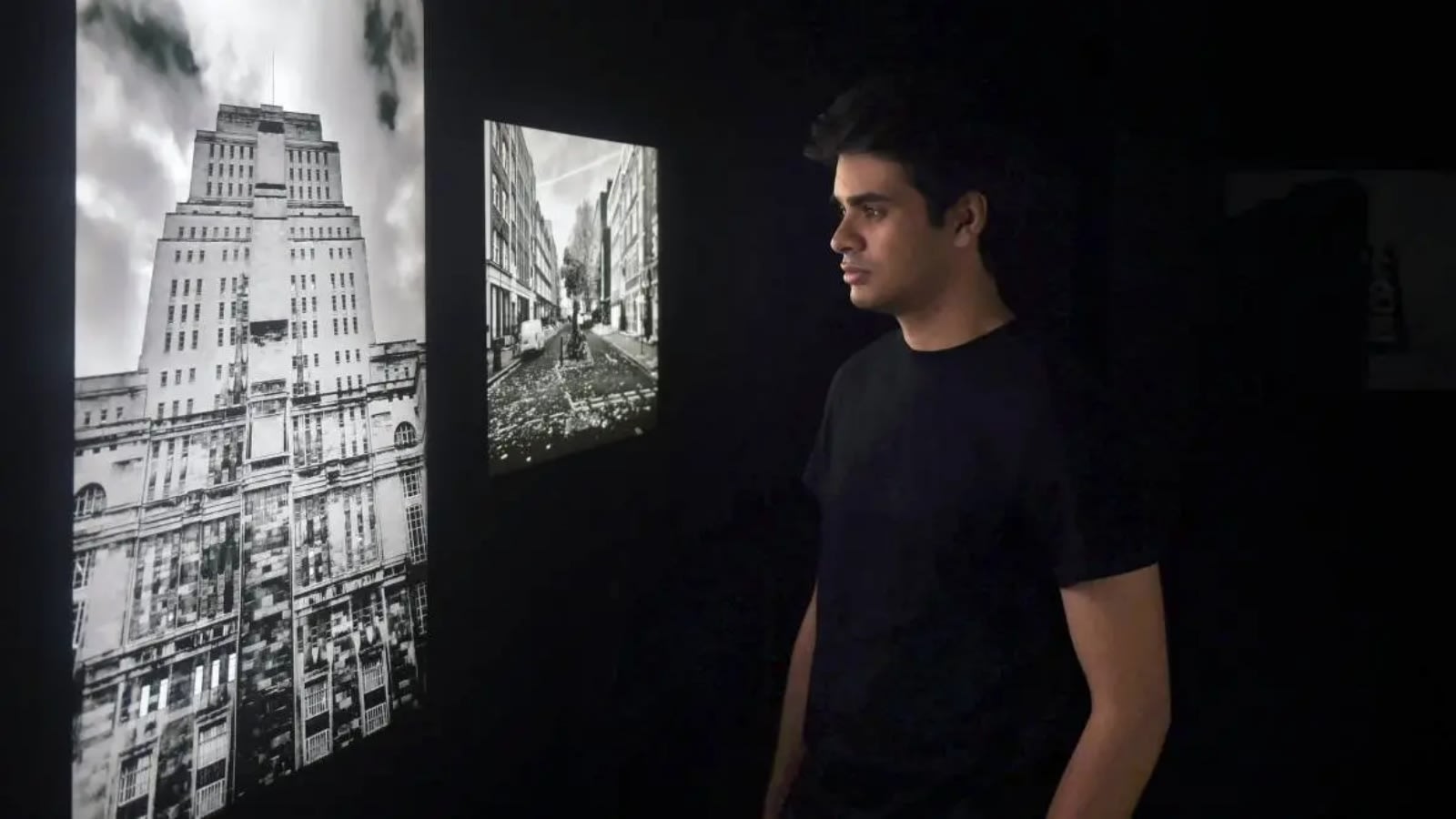
Raihan Rajiv Vadra's art exhibition at Bikaner House faced censorship after authorities ordered the removal of 74 photographs depicting student protests. Priyanka Gandhi Vadra publicly supported her son, emphasizing the importance of freedom of expression.
Censorship Concerns at Bikaner House
The recent controversy surrounding Raihan Rajiv Vadra’s exhibition, No Idea Is Final, at the Bikaner House in New Delhi highlights the ongoing tension between artistic expression and administrative oversight in public cultural spaces. Vadra, a visual artist and the son of Congress leader Priyanka Gandhi Vadra, reported that he was instructed to remove 74 out of 105 photographs just hours before the exhibition’s opening. The photographs in question documented recent student and youth-led protests in the capital, an act that has sparked a broader debate on the boundaries of political art in government-managed venues.
The Mechanics of Artistic Suppression
The incident escalated when, despite the initial removal of images, authorities further objected to the presence of empty frames that had been left in the place of the censored works. This move suggests an attempt to sanitize the exhibition space entirely of the protest-related content. By demanding the removal of even the placeholders, the management of Bikaner House signaled a restrictive stance toward visual narratives that challenge or depict sensitive political realities, effectively narrowing the scope of what is considered 'permissible' content for public display.
Artistic Defiance and the Artist's Duty
Raihan Vadra has framed his work as a civic and artistic duty, asserting that the restriction of his images is both wrong and ultimately futile. His perspective reflects a long-standing tradition of protest art, where the act of suppression often draws more attention to the subject matter than the original display might have. By maintaining that art will 'find a way to reach the people,' Vadra positions his creative output as an irrepressible force that transcends the physical limitations imposed by administrative authorities.
Political Backing and Free Speech
Priyanka Gandhi Vadra’s public support for her son adds a significant political dimension to this cultural event. In a statement shared on social media, she argued that those in power weaken their own authority when they fear the expression of others. This narrative frames the censorship incident not merely as a local dispute over art, but as a symptom of a broader societal struggle regarding the tolerance for dissent and the protection of freedom of expression within the democratic framework of India.
Implications for Public Cultural Spaces
This incident raises critical questions regarding the autonomy of curators and artists working within government-owned or state-managed institutions. When public venues like Bikaner House act as arbiters of political content, it creates a chilling effect on the creative community. The controversy underscores the need for clear guidelines that protect artistic independence, ensuring that these spaces remain platforms for diverse perspectives rather than instruments of state-sanctioned censorship.
Conclusion: The Future of Protest Art
As the discourse around this exhibition continues, it serves as a case study for the resilience of political art in the digital age. Regardless of the physical removal of frames or photos, the underlying themes of the protests—and the subsequent reaction to their depiction—have gained heightened visibility. The episode serves as a reminder that in an era of rapid information exchange, the suppression of artistic expression often leads to a paradoxical amplification of the very message the authorities sought to silence.
Multiple Citing Sources