‘Vote bachao, desh bachao’: Hundreds form human chain against EC, SIR in Hyderabad
Source Entity
Sreenivas Janyala
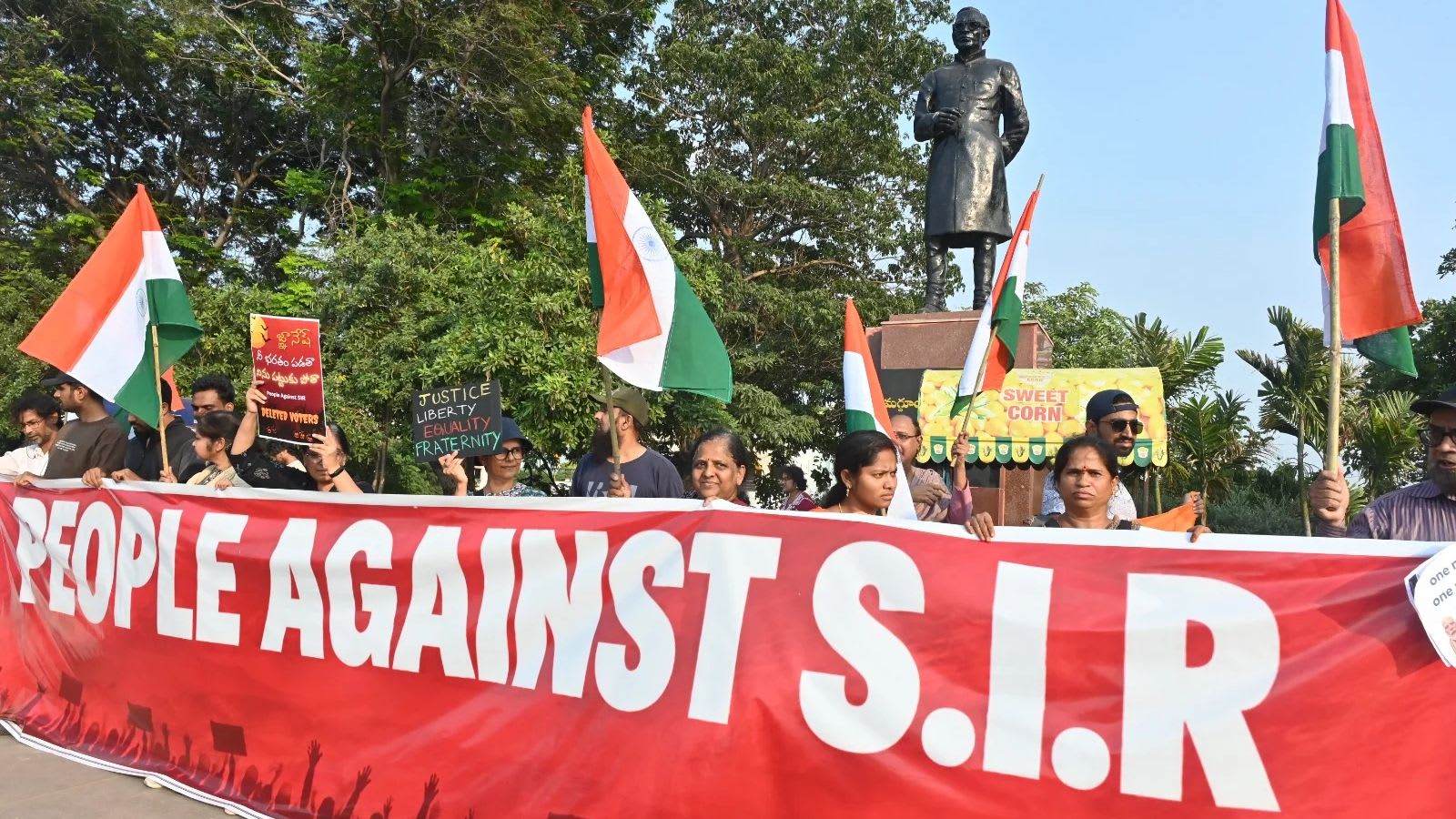
Protesters in Hyderabad formed a human chain to oppose the Special Intensive Revision (SIR) of electoral rolls, citing concerns over mass disenfranchisement. Concurrently, CJP leaders have challenged the Election Commission of India following their recent detention at Jantar Mantar.
The Growing Resistance Against Electoral Roll Revisions
The political landscape in India is witnessing a surge of organized dissent centered on the Special Intensive Revision (SIR) of electoral rolls. Activists and citizens, represented by organizations like the CJP (Citizens for Justice and Peace), argue that this administrative exercise risks the mass disenfranchisement of voters. The movement, which has gained significant traction in Hyderabad, reflects a broader anxiety regarding the integrity of the electoral process and the perceived erosion of institutional independence within the Election Commission of India (ECI).
The Jantar Mantar Flashpoint
The recent legal challenges faced by CJP leaders, including Das and Ashutosh Ranka, highlight the tension between state-imposed restrictions on public assembly and the democratic right to dissent. After being detained for entering Jantar Mantar—a site previously de-notified as a protest venue—the leaders were released on judicial bail. Their commitment to maintain peace while continuing their agitation signifies a strategic pivot in their protest methodology, moving from localized site-based demonstrations to broader, multi-city mobilization efforts.
Hyderabad’s Human Chain Mobilization
In Hyderabad, the movement manifested as a large-scale “human chain” at Tank Bund, where hundreds of citizens gathered to voice their opposition. The protesters specifically demanded the scrapping of the SIR, the removal of Chief Election Commissioner Gyanesh Kumar, and the repeal of the CEC Act of 2023. By targeting the legislative framework governing the Election Commission, the protesters are signaling that their grievances extend beyond administrative errors to the fundamental structure of election oversight in the country.
Claims of Disenfranchisement and Institutional Capture
Central to the protestors' argument is the claim that the SIR exercise could lead to the deletion of a significant portion of Telangana’s electorate. Economist Parakala Prabhakar, who participated in the Hyderabad protest, underscored the necessity of reconstituting the ECI to restore institutional integrity. These accusations are bolstered by reports suggesting that other Election Commissioners have previously raised formal objections, fueling public narratives that the Commission is operating under undue influence.
The Evolution of Democratic Dissent
The protest in Hyderabad, which saw participation from a diverse demographic, including a 70-year-old woman, suggests that the movement is not merely a fringe political activity but a cross-generational concern. The rhetoric used by participants—asserting that “every person who questions SIR is a walking Jantar Mantar”—indicates a shift in the philosophy of protest. It suggests that dissent is no longer confined to government-sanctioned spaces but is becoming decentralized and embedded in the daily lives of citizens.
Future Outlook and Implications
As the movement continues to gain momentum, the government faces a delicate balance between maintaining public order and addressing the growing demand for electoral transparency. The persistent nature of these protests suggests that unless the Election Commission addresses the specific concerns regarding voter roll deletions and the transparency of the SIR, political friction is likely to intensify. The outcome of this standoff will have profound implications for future electoral credibility and the public’s trust in democratic institutions.