‘Sri Lanka, Bangladesh happen when protests are not allowed’: Sonam Wangchuk
Source Entity
KARAN MANRAL
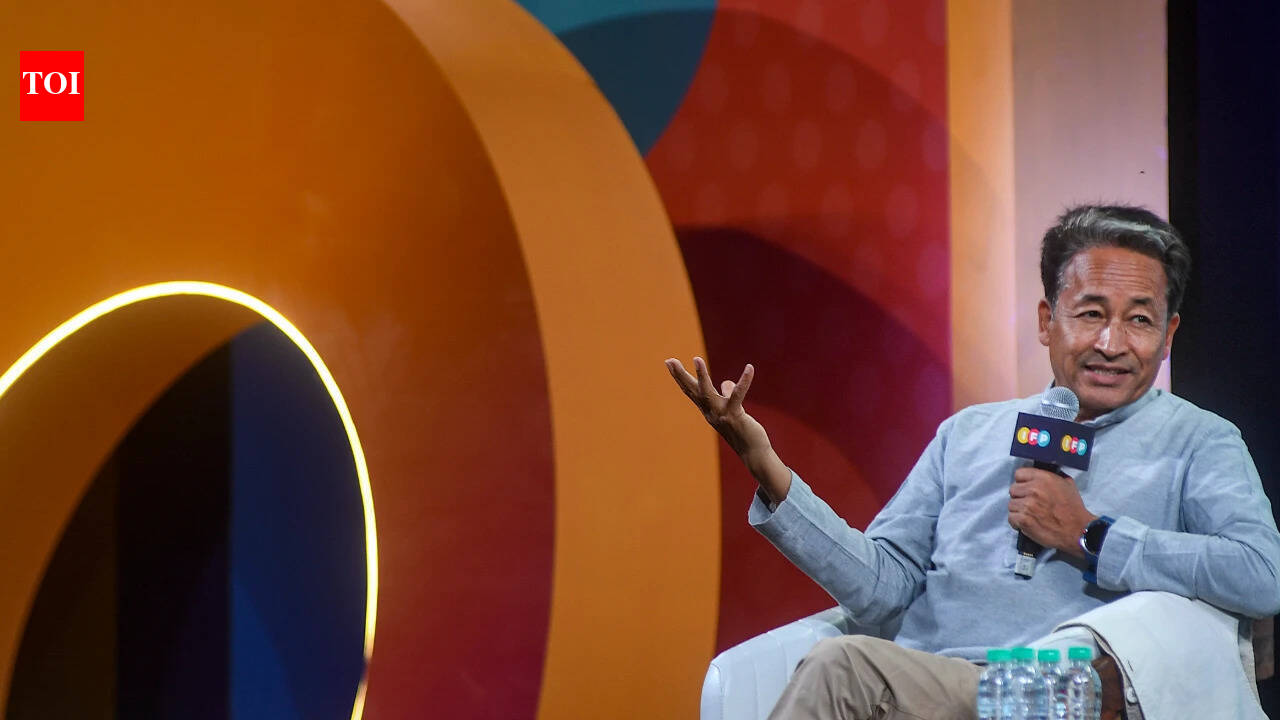
Climate activist Sonam Wangchuk and educationist Gitanjali Angmo have criticized government crackdowns on protests, citing regional instability as a consequence of stifled dissent. They emphasize that democratic dialogue is essential for addressing grievances and maintaining stability.
The Imperative of Democratic Dialogue in Modern Governance
Recent statements from climate activist Sonam Wangchuk and educationist Gitanjali Angmo have ignited a critical conversation regarding the intersection of protest, democratic expression, and state stability. Drawing parallels to the recent political upheavals in Sri Lanka and Bangladesh, Wangchuk highlighted the dangers of suppressing dissent. His argument suggests that when a state systematically closes the avenues for peaceful protest, it risks creating a pressure cooker environment that can lead to radical systemic instability.
The 'Pressure Valve' Theory of Democracy
Gitanjali Angmo, speaking at the Khushwant Singh Lit Fest, underscored the necessity of dialogue as a 'pressure valve' for democracy. By restricting protests to specific, often isolated venues like Jantar Mantar, the state risks alienating those it governs. Angmo posits that when governments prioritize the containment of dissent over meaningful engagement, they inadvertently signal to the public that their grievances are not being heard, thereby escalating tensions rather than resolving them.
Ladakh and the Struggle for Representation
Central to this discourse is the ongoing situation in Ladakh. Angmo clarified that the struggle in the region is fundamentally about the right of the people to self-determination through elected representatives. By framing the movement as a democratic aspiration rather than a partisan conflict, she effectively distanced the regional movement from national political branding, specifically noting that 'Sanatan' should not be equated with the BJP. This distinction is crucial for understanding the grassroots nature of the current agitation.
Historical Context and Regional Precedents
Wangchuk’s invocation of Sri Lanka and Bangladesh serves as a stark historical warning. Both nations experienced profound governance crises where the perceived inability of the state to address public demands through formal channels led to mass movements that fundamentally altered the political landscape. By referencing these neighbors, the speakers are suggesting that the current approach to handling protests—characterized by crackdowns and spatial restrictions—is a strategic misstep that ignores the lessons of recent South Asian history.
Implications for Future Policy
The critique offered by Wangchuk and Angmo points toward a growing disconnect between state policy and public expectation. If the government continues to view protest as a law-and-order issue rather than a component of democratic feedback, the likelihood of long-term resolution for issues like Ladakh’s governance decreases. The path forward, as suggested by these voices, lies in the restoration of open, transparent, and direct dialogue between the center and the regions.
Conclusion
Ultimately, the discourse surrounding the anti-SIR (Statehood and Inclusion Requirements) stir in Ladakh serves as a microcosm for broader democratic challenges. Whether through the lens of climate activism or educational advocacy, the message remains consistent: a healthy democracy requires the freedom to dissent. Without a genuine commitment to addressing the root causes of public frustration, the state risks not only the alienation of its citizens but the erosion of the very democratic institutions that define its legitimacy.
Multiple Citing Sources