Congress leader seeks action against Chief Secretaries of six States for skipping PAC hearing
Source Entity
India Latest News: Top National Headlines Today & Breaking News | The Hindu
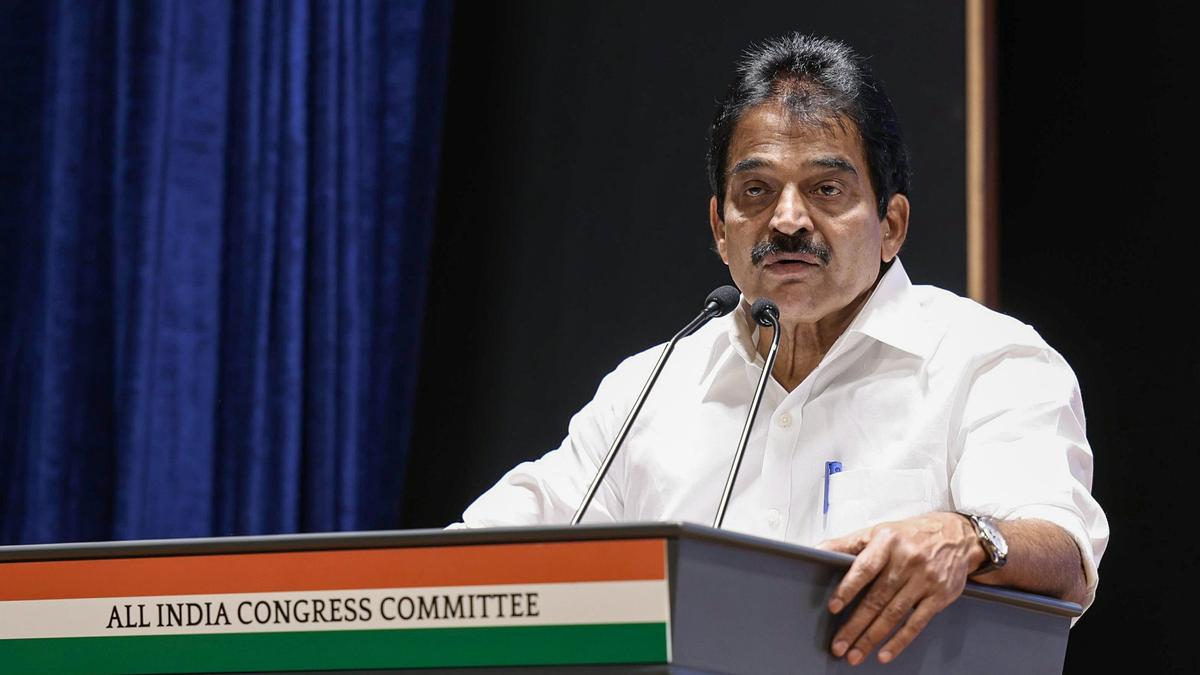
Congress leader K.C. Venugopal has requested Lok Sabha Speaker Om Birla to take action against six state Chief Secretaries for failing to appear before the Public Accounts Committee. The officials were summoned to address reported irregularities in scholarship schemes for Scheduled Caste students.
Breach of Legislative Privilege in PAC Proceedings
The decision by K.C. Venugopal, chairperson of the Public Accounts Committee (PAC), to seek intervention from Lok Sabha Speaker Om Birla marks a significant escalation in the ongoing friction between parliamentary oversight bodies and state-level administrative machinery. By formally labeling the absence of six Chief Secretaries as a 'breach of privilege,' the PAC is asserting the sanctity of its constitutional mandate to hold the executive branch accountable for the implementation of centrally sponsored schemes.
The Scope of the PAC Inquiry
At the heart of this conflict is the PAC's investigation into 'fraud markers' identified by the Comptroller and Auditor General (CAG) regarding pre-matric and post-matric scholarship schemes for Scheduled Caste (SC) students. These programs are vital for ensuring educational equity for marginalized communities. When the CAG flags irregularities, the PAC is tasked with scrutinizing the utilization of funds and the efficacy of delivery mechanisms. The failure of the Chief Secretaries from Uttar Pradesh, Karnataka, Punjab, Odisha, Bihar, and Madhya Pradesh to attend suggests a breakdown in the cooperative federalism structure required to manage these welfare initiatives.
Accountability and Constitutional Mandates
Parliamentary committees like the PAC derive their power from the Constitution to examine financial accounts and audit reports. When officials are summoned, it is not merely a formality but a core function of legislative oversight. The absence of top state bureaucrats—the highest-ranking civil servants in their respective states—hinders the committee's ability to cross-examine how funds meant for vulnerable SC populations were handled, potentially masking systemic administrative failures or corruption.
Broader Implications for Federal Oversight
This standoff raises critical questions about the power dynamics between the Union and the States. While states are responsible for the implementation of these scholarship programs, the funds are often part of centrally sponsored schemes, necessitating adherence to central audit standards. The refusal or failure of state officials to appear before a federal parliamentary panel challenges the central government's ability to enforce fiscal discipline and program transparency across state lines.
Future Trends in Parliamentary Procedure
If the Lok Sabha Speaker takes punitive action, it could set a powerful precedent for future legislative oversight, signaling that administrative non-compliance will no longer be tolerated. Conversely, if this issue is left unresolved, it may embolden state administrations to bypass federal oversight mechanisms, leading to a weakening of the PAC's authority. This incident will likely necessitate a clarification of the rules governing summons to state officials to prevent similar administrative gridlocks in the future.
Conclusion
The current impasse underscores the critical necessity for transparency in welfare spending. As the PAC awaits a response from the Speaker, the focus remains on whether the government can ensure that the rights of Scheduled Caste students—who rely on these scholarships to access education—are protected through robust, unimpeded legislative scrutiny.
Verification Required?